
As an Amazon Associate I earn from qualifying purchases. All claims are strictly my personal opinion.
My top pick
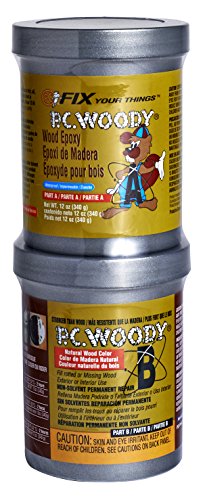
A two-part epoxy paste mixed 1:1 by volume that the maker aims at exterior wood cavities, sills and trim, and that sands, paints and takes screws once cured.

Regular wood filler is made to hide small defects. Epoxy wood filler is made to rebuild missing wood. The best epoxy wood filler for most rot and large-gap repairs is a two-part epoxy paste that mixes by volume, bonds to the surrounding wood and can be sanded, drilled and painted once cured, such as PC-Woody. For small repairs and fast jobs, a hand-kneaded epoxy putty stick such as J-B Weld KwikWood is easier to handle.
Below are five epoxy wood fillers for rotted sills, door frames, trim and other outdoor repairs, a comparison table that shows only what the makers publish, short reviews, and a plain explanation of how to repair rot with a consolidant first and filler second. Where a maker does not state a figure, the table says so.
Best Epoxy Wood Fillers: Comparison
The table lists what each maker states on its own page or on its Amazon listing (marked “listing”). Working time, the minutes you have after mixing, and time to sand both change with temperature, so treat any figure as a starting point and read the label. Several makers do not publish a working time at all.
| Product | ⭐ PC-Woody 🏆 EDITOR’S CHOICE |
Abatron WoodEpox | J-B Weld KwikWood | J-B Weld Wood Restore | System Three SculpWood |
|---|---|---|---|---|---|
| Image | |
 |
 |
 |
 |
| Price | $$ | $$$ | $ | $$$ | $$$ |
| Form | Two-part paste, parts A and B | Two-part kit, mixed by hand | Putty stick, hand-kneaded | Hand-mixable epoxy putty kit | Two-part paste |
| Mix ratio | 1:1 by volume | Not stated | Knead the stick | Not stated | Not stated |
| Working time | Not stated | 20 to 30 minute pot life (listing) | Sets in 15 to 25 minutes | Not stated | Not stated |
| Cure and sanding | Mechanical sanders work best after 48 hours | Not stated | Cures in 1 hour | Sandable after 60 minutes (listing) | Sandable in 6 to 8 hours at 70°F (listing) |
| Sand and paint | Sand, prime, paint or stain | Painted, stained, drilled and sanded (listing) | Sanded, drilled, tapped and painted once cured | Sanded, tapped, filed and painted (listing) | Primer and paint once sandable (listing) |
| Aimed at rot | Exterior wood cavities, with a hardener first for soft wood | Rebuilds missing sections; LiquidWood hardener sold separately | Dry rot repairs, hinges, gouges | Damaged or rotted wood | Cracks, dings and exterior architectural repairs |
| Buy | Shop Now | Shop Now | Shop Now | Shop Now | Shop Now |
Key takeaways
- Epoxy filler is for rebuilding wood: rot, large voids and outdoor trim. For nail holes and small cracks, a regular filler is easier to sand and stain.
- On soft, decayed wood, harden it first with a consolidant (a liquid hardener), then fill. Filler over punky wood only hides the problem.
- PC-Woody is the one I’d start with for exterior cavities, and KwikWood for small jobs.
- Epoxy is easiest to hide under paint. Some listings call their epoxy stainable, but PC Products warns that semi-transparent stains often do not match, so test before a stained finish.
Editor's ChoiceTwo-part epoxy paste
PC-Woody
PC-Woody
A two-part epoxy paste mixed 1:1 by volume, aimed by the maker at exterior wood cavities, sills and trim.
Check price on AmazonSpecs: PC Products, PC-Woody product page
Best for
Homeowners rebuilding rotted sills, trim and frames who will paint the repair.
- Two-part epoxy paste for exterior wood
- Sands, drills and paints once cured
- Maker names a hardener to use first on soft wood
Skip it if
You need a small, fast repair or a stained natural finish.
- Mechanical sanding best after 48 hours
- Semi-transparent stains often do not match
Read full review
Best Epoxy Wood Filler for Exterior Cavities
PC Products describes PC-Woody as a two-part epoxy paste for filling cavities in wood, sold as a resin and a hardener that you mix 1:1 by volume. The maker positions it for permanent repairs that will not shrink, crack or pop out of exterior wood, and lists window sills, beams, rafters, columns, decorative trim and deck joists among its uses. It also bonds replacement wood and can fill panel holes. The 12 oz kit linked here comes in two cans, and its listing gives an application range of 35 to 115°F and tells you to mix parts A and B in equal volumes on a flat surface with a stiff putty knife, not with gloved hands.
The maker’s own advice matters here. For soft or decayed wood it recommends hardening the wood first with PC-Petrifier or PC-Rot Terminator, which are separate products. Once cured, the filler can be sanded (the maker suggests 80 grit, with 120 to 180 also usable), and it says mechanical sanders work best after 48 hours. Screws and nails can be driven in, with a small pilot hole drilled first. PC Products notes that you can prime and paint it, or stain it, but advises a solid stain because semi-transparent stains often do not match. For critical structural work the maker tells you to consult an engineer, and a working time is not stated on its page.
Longest working timeTwo-part epoxy wood replacement compound
Abatron WoodEpox
Abatron WoodEpox
A hand-mixed epoxy wood replacement compound with a 20 to 30 minute pot life for rebuilding missing sections.
Check price on AmazonSpecs: Amazon listing (Abatron WoodEpox 2 Pint Kit, Creators API, November 2026)
Best for
Larger rot repairs where you pack and shape a lot of material in one go.
- Longest published working time here
- Rebuilds missing sections of windows, doors and trim
Skip it if
You want published sanding times before you buy.
- Time to sand and mix ratio not stated on the listing
Read full review
Best Epoxy Wood Filler Paired with a Consolidant
Abatron WoodEpox is a two-part epoxy wood replacement compound. The 2 pint kit’s listing says it fills and rebuilds missing sections of windows, doors, trim, columns and posts, has a 20 to 30 minute pot life, can be mixed and applied by hand, and can be painted, stained, drilled, carved, nailed and sanded once cured. Abatron also sells LiquidWood, listed as a wood hardener and consolidant, for the step before the filler.
That working time is the longest published on this page, which is what I’d want on a big rebuild where you are packing and shaping a lot of material in one go. Time to sand and the mix ratio are not on the listing, and Abatron’s own page would not open for me, so check the label on the kit and make a small test patch at the temperature you will be working in. Cold slows epoxy down, and that is true of every product in this roundup.
Best for small repairsEpoxy putty stick
J-B Weld KwikWood
J-B Weld KwikWood
A hand-kneaded putty stick that sets in 15 to 25 minutes and cures in 1 hour.
Check price on AmazonSpecs: J-B Weld FAQ and Amazon listing B002NJDAJY
Best for
Quick repairs to door jambs, trim edges and screw holes.
- No measuring or mixing board
- Sets in 15 to 25 minutes
- Sanded, drilled, tapped and painted once cured
Skip it if
You have a long run of rot or a deep cavity.
- Small stick, not for big cavities
- Cures light tan
Read full review
Best Epoxy Wood Filler for Small, Fast Repairs
J-B Weld KwikWood is an epoxy putty stick: you cut off a piece, knead it until the colour is even, and press it in. J-B Weld says it sets in 15 to 25 minutes and cures in 1 hour, and that once cured the putty can be sanded, drilled, tapped and painted. The 1 oz stick’s listing adds that it will not shrink or rot, can be stained, and cures a light tan, so plan on a test patch if the repair has to blend with darker wood.
This is the one I’d keep in a toolbox for a chewed door-jamb corner, a rotted edge on a window stool or a hole around a hinge screw. The stick is small, so it is the wrong choice for a long run of rot or a deep cavity: the amount runs out and the working window is short. J-B Weld notes that set and cure times shift with temperature and humidity.
Hand-mixable epoxy putty kit
J-B Weld Wood Restore Premium Epoxy Putty
J-B Weld Wood Restore
A 32 oz epoxy putty kit for damaged or rotted wood that can be sanded and painted after 60 minutes.
Check price on AmazonSpecs: Amazon listing (J-B Weld 40006, Creators API, November 2026) and J-B Weld FAQ
Best for
Rotted wood where you want the hardener and putty from one brand.
- Sandable after 60 minutes
- Maker describes it for damaged or rotted wood
- Liquid Hardener from the same brand
Skip it if
You want a small stick for a quick fix.
- Liquid Hardener sold separately
- Line also includes a non-epoxy repair putty
Read full review
Best Epoxy Wood Filler System for Rotted Wood
J-B Weld sells a Wood Restore line built around rot. Its Premium Epoxy Putty is described by the maker for “structural repair and filling of damaged or rotted wood,” and its Liquid Hardener as a product that “seals and reinforces decayed or rotted wood.” A separate Wood Restore Repair Putty is listed for filling holes and cracks and preparing for painting; that one is not the epoxy, so check which tub you are buying.
The link here is the 32 oz Premium Epoxy Putty kit. Its listing calls it a hand-mixable epoxy putty that cures to the same density as wood, contains no solvents, and after 60 minutes can be sanded, tapped, machined, filed and painted. It names doors, windows, sills, exterior columns and posts among its uses. The Wood Restore Liquid Hardener is a separate 16 oz brush-on product, listed for sealing and reinforcing decayed wood before the putty goes on. That follows the usual order, harden first and then fill, with both products from one maker.
Two-part epoxy paste
System Three SculpWood Paste
System Three SculpWood
A creamy two-part epoxy paste that is sandable in 6 to 8 hours at 70°F and then takes primer and paint.
Check price on AmazonSpecs: Amazon listing (System Three SculpWood Paste 1 Quart Kit, Creators API, November 2026)
Best for
Spreading over cracks, dings and shallow damage on trim you will paint.
- Spreads and fairs easily
- Primes and paints once sandable
Skip it if
You need to sand and paint within the hour.
- Working time not stated on the listing
- Slower to sand than the putty sticks
Read full review
Best Epoxy Wood Filler Paste for Spreading and Fairing
SculpWood is System Three’s epoxy wood filler line, sold as a spreadable paste and as a firmer putty. The link here is the 1 quart Paste kit, which its listing describes as a smooth, creamy two-part epoxy paste that you spread over the surface, slightly overfilling voids and cracks so there is material left to sand.
The listing says it reaches a sandable state in 6 to 8 hours at 70°F, that cold extends the cure and warmth shortens it, and that once sandable it can be primed and painted with most water or solvent-based primers and paints. It also pairs the paste with System Three’s Wood Putty: the paste for spreading and fairing, the putty for building up. Working time is not on the listing, and I could not open System Three’s own page, so read the label before you mix a batch.
Epoxy vs Regular Wood Filler
The two are different tools. A regular wood filler, such as a latex formula like Minwax Stainable Wood Filler (which the maker lists for interior and exterior use on cracks, small gouges and nail holes), dries in a couple of hours for shallow repairs, sands easily and accepts penetrating stain. It is meant to hide a defect in sound wood.
Epoxy is meant to replace wood. It bonds to the wood around it and, per PC Products, lets you drive a screw once cured, but it does not take stain the way a stainable filler does: PC Products itself advises a solid stain and warns that semi-transparent stains often do not match. If you are filling a nail hole in a stained trim board, you want the regular filler. If you are rebuilding the bottom six inches of a rotted door frame, you want epoxy.
For the full range of regular fillers, my page on the best wood filler compares them, and how to use wood filler walks through the application. For floor repairs specifically, see my picks for the best wood filler for hardwood floors.
Repairing Rot: Consolidant, Then Filler
Rot repair is a sequence. The filler is the last step, not the first. The makers of the products above describe the same order: remove what is loose, harden what is soft, fill what is missing. If the moisture that caused the rot is still there, the repair will fail no matter which epoxy you pick, so fix the leak, the gutter or the missing flashing first.
Step 1: Cut Back to Sound Wood
J-B Weld’s own instructions start by removing loose and rotted wood. Scrape, chisel or pick out everything that crumbles, until you reach wood that is firm. Work gently around the edges so you keep as much good wood as you can.
Step 2: Harden Soft Wood with a Consolidant
Wood that is soft but still in place is the job of a liquid hardener, also called a consolidant. PC Products recommends PC-Petrifier or PC-Rot Terminator for soft or decayed wood under PC-Woody, J-B Weld sells a Liquid Hardener for decayed wood, and Abatron sells LiquidWood for the same step. Follow the can’s instructions on how long to let it soak in and how long to wait before the filler goes on.
Step 3: Mix and Pack the Epoxy
Mix the filler the way the maker says: 1:1 by volume for PC-Woody, or kneading the stick for KwikWood. Mix only what you can place before it stiffens, since working time is short and varies with temperature. Press the epoxy into the cavity firmly so it bonds to the wood and leaves no air pockets, then build it slightly proud of the surface so you have material to sand back.
Step 4: Shape, Cure and Sand
Let it cure for as long as the maker says. PC Products suggests 80 grit for cured PC-Woody and says mechanical sanders work best after 48 hours; J-B Weld says KwikWood is ready to sand after a 1-hour cure. Then prime and paint.
⚠️ Structural Parts
Epoxy filler fixes the surface and shape of wood. It does not make a failed load-bearing part safe. PC Products says to consult an engineer for critical structural work, and I’d extend that to any beam, post or joist that carries weight.
Sanding Epoxy Wood Filler
Start with a coarse grit and let the abrasive do the work, then step up. PC Products’ suggestion for PC-Woody is 80 grit, with 120, 150 and 180 also usable after that. A sanding block keeps the repair flat; a power sander is faster for large areas once the filler has fully cured. Wear a dust mask: epoxy dust is a fine powder, and the maker’s safety data sheet is the place to read the specifics.
My guide on how to sand epoxy resin covers grits and technique for cured epoxy in general, and the sandpaper grit chart shows how to step up from 80 to a paint-ready surface.
Not Every Two-Part Filler Is Epoxy
Some two-part wood fillers are sold as a can of paste with a tube of cream hardener, so they look like the epoxies above. Bondo Wood Filler is one: 3M’s data sheet calls it a two-part wood filler, not an epoxy, and gives it a 3 to 4 minute working time. Read the label for the word epoxy before you assume. My page on Bondo wood filler covers that product and when it makes sense.
🏆 The Verdict
For rotted exterior wood, I’d pick PC-Woody with a consolidant under it. For a small, fast repair, J-B Weld KwikWood is the easy choice. If you want the hardener and the putty from one brand, look at J-B Weld Wood Restore. For the longest published working time, Abatron WoodEpox, and for spreading over cracks and dings, System Three SculpWood Paste.
