


As an Amazon Associate I earn from qualifying purchases. All claims are strictly my personal opinion.

Floor sanding is one of those jobs where the right machine makes a staggering difference. I’ve seen people attempt large floor projects with a modest random orbital or a small sheet sander — and what should be a single day’s work turns into three days of frustration with mediocre results. Floor sanding demands large, powerful, purpose-built machines. Get that right and the whole job becomes fast, manageable, and genuinely satisfying. If you want to go deeper on technique before you buy, I’ve put together a full guide on How to Sand Wood Like a Pro (Complete 2026 Guide) that pairs perfectly with this roundup. Over on the Blog you’ll also find guides on related topics from deck refinishing to furniture sanding.
I’ve sanded more floors than I care to count — both my own and professionally — and these are the machines I actually trust to get the job done properly. Below you’ll find my top five picks plus two honorable mentions for lighter stand-up work.
⚡ Quick Pick
In a hurry? My top choice is the Makita 9403 4″ x 24″ Belt Sander — its 11A motor and wide belt make it the fastest, most capable handheld floor sander you can buy.
For a precision swirl-free finish on final passes, the Bosch GET75-6N Orbital Sander is the tool I reach for — a true workhorse with dual-mode performance for floors.
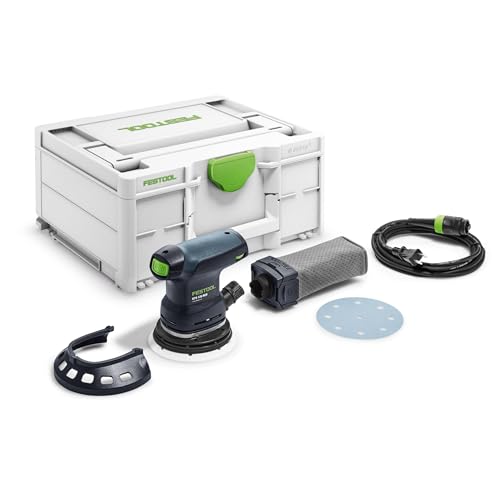
For the ultimate premium experience with best-in-class dust extraction, consider the Festool ETS 125 REQ-Plus — it’s a splurge, but nothing else comes close for comfort and finish quality over long sessions.
Best Sanders for Floors Comparison
I’ve tested each of these machines on real floor projects, weighing power, coverage, dust control, and overall finish quality. Here’s how they stack up side by side before I dive into the full reviews.
| Product | ⭐ Makita 9403 Belt Sander 🏆 EDITOR’S CHOICE |
Bosch GET75-6N | Festool ETS 125 REQ-Plus | Bosch OS50VC |
|---|---|---|---|---|
| Image | 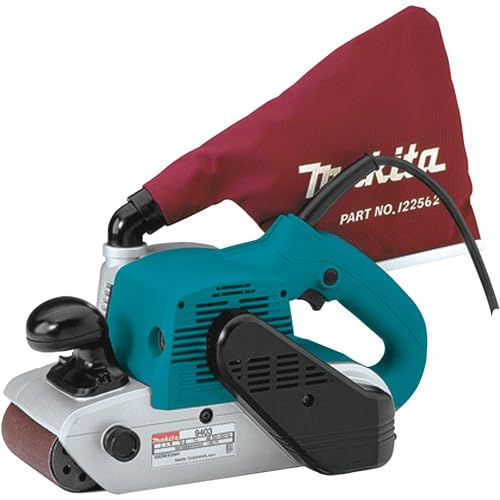 |
 |
 |
 |
| Price | $ | $$$$ | $ | $ |
| Type | Belt Sander | Random Orbital | Random Orbital | Sheet / Orbital |
| Motor / Power | 11A | 7.5A | N/A (variable) | 3.4A |
| Pad / Belt Size | 4″ x 24″ | 6″ disc | 5″ disc | 1/2-sheet |
| Variable Speed | ❌ | ✅ | ✅ | ✅ |
| Dust Collection | ✅ Built-in bag | ✅ Passive/vacuum | ✅ Jetstream | ✅ Micro-filter canister |
| Best Use | Heavy removal + edges | Final finish passes | Fine finishing | Light to mid sanding |
| Warranty | 1 year | 1 year | 1 year | 1 year |
| Availability | Shop Now at Amazon | Shop Now at Amazon | Shop Now at Amazon | Shop Now at Amazon |
⚡ Key Takeaways
- My top pick is the Makita 9403 Belt Sander — the most powerful handheld floor sander available, with an 11A motor and wide 4″×24″ belt that makes fast work of even the roughest boards.
- Best for final finishing: the Bosch GET75-6N Orbital Sander — a powerhouse with 7.5A motor, dual-mode Turbo performance, and a swirl-free 6″ pad that leaves floors picture-perfect before finishing.
- Best premium pick: the Festool ETS 125 REQ-Plus — best-in-class dust extraction, balanced vibration control, and Festool’s unmatched build quality justify the premium price.
⚠️ Important
Floor sanding generates enormous amounts of fine dust that hangs in the air for hours. Before you start, seal off doorways with plastic sheeting, remove or cover all furniture and soft furnishings, and switch off any forced-air HVAC — it will spread dust throughout the entire house. Always connect your sander to a shop vacuum where possible, and wear a properly rated dust mask. Fine wood dust is a genuine respiratory hazard over extended exposure.
Best Sanders for Floors Reviews
Each of these machines earned its place through real-world floor sanding performance — not just spec sheets. Here’s my full take on each one, from the heavy-duty belt sander you’ll want for first passes to the precision orbital that leaves your floor gleaming before the finish coat goes on.
Makita 9403 4″ x 24″ Belt Sander
Best Belt Sander for Floors
Widely regarded as the best 4″×24″ belt sander in the world, the Makita 9403 is an absolute powerhouse — and its strongest features map directly onto what floor sanding demands. The 11A motor drives a 4″×24″ belt at 1,640 FPM, which is a staggering speed for a handheld tool. On rough or heavily worn floorboards, that combination of belt width and velocity removes material faster than anything else you can hold in your hands.
For floors specifically, the wide belt means fewer passes to cover a plank, and the robust body handles sustained hard use without complaint. The handles are well-positioned for floor-level two-handed work, and Makita’s legendary build quality means this machine will outlast almost anything you can compare it to. The 9403 is my go-to for the initial heavy-cut passes on floors that need serious material removal before finishing with a finer tool.
- ✅ Industry-renowned 11A motor — exceptional power for rapid removal
- ✅ 4″×24″ belt — wide coverage, dramatically fast material removal
- ✅ Belt speed of 1,640 FPM — fastest of the handheld options tested
- ✅ Labyrinth construction seals motor and bearings from dust and debris
- ✅ Excellent two-handle ergonomics purpose-suited to floor work
- ✅ Innovative design allows sanding flush to walls on nose and side
- ❌ Heavy — arm and back fatigue on very large rooms
- ❌ Requires more technique to avoid gouging than an orbital sander
Best For:
DIYers and professionals tackling initial heavy-cut passes on rough, worn, or previously finished hardwood floors — especially where speed and material removal rate matter most.
BOSCH Orbital Sander, GET75-6N Electric Orbital Sander, Polisher – 7.5 Amp, Corded, 6 Inch Disc Size – Dual-Mode: Random Orbit & Turbo for Floor Sanding
Best Random Orbital Sander for Floors
The Bosch GET75-6N is a serious dual-mode machine, and its feature set maps almost perfectly onto what floor sanding demands. The 7.5A motor and 6″ pad put it well above the typical random orbital in raw power. The Turbo mode engages a direct-drive rotation that delivers three times the stock removal of standard random-orbit mode — genuinely aggressive material removal that’s a legitimate alternative to a belt sander for intermediate passes. Variable speed lets you dial back for fine finishing, while the multi-hole pad system accepts a wide variety of 6″ abrasive discs so you’re never stuck for consumables.
For floor work, the large pad covers ground efficiently, and the random orbital motion guarantees a swirl-free finish — critical for a floor viewed from standing height at low angles of light where every scratch shows. The passive dust collection system connects to a shop vacuum (Bosch VAC001, VAC009, or VAC010 hoses, or the included VAC002 adapter), keeping fine floor dust under control throughout the job. The build quality is exceptional — this is genuinely a tool built to Bosch’s highest standards. Check out my broader guide on the best random orbital sander options if you want to see how it compares across all use cases, not just floors.
- ✅ 7.5A motor with Turbo mode — genuine power in a random orbital
- ✅ 6″ pad for fast, efficient floor coverage
- ✅ Swirl-free random orbital finish — essential for floors viewed at low angles
- ✅ Dual-mode: standard random orbit for finishing, Turbo for aggressive removal
- ✅ Turbo delivers 3x stock removal of standard random-orbit mode
- ✅ Multi-hole pad system accepts a wide variety of 6″ abrasive discs
- ✅ Passive dust collection system with included VAC002 hose adapter
- ❌ Large and heavy for a random orbital — noticeable on long sessions
- ❌ Requires a separate shop vacuum for dust collection
Best For:
Anyone wanting a single orbital sander powerful enough for both intermediate and final passes on hardwood floors — particularly where a flawless, swirl-free surface is the goal before applying finish.
Festool 576070 Random Orbital Sander ETS 125 REQ-Plus
Best Premium Sander for Floors
The Festool ETS 125 REQ-Plus represents Festool’s engineering philosophy at its finest — a compact, ergonomic random orbital that genuinely earns its premium price tag for serious floor sanding work. The ergonomically formed body fits comfortably in any size hand and is compact and lightweight enough for extended overhead and vertical use, making the sustained crouching and pushing motion of floor sanding noticeably less taxing. Step-less variable speed lets you dial in exactly the right pace for each stage of the job.
The balanced vibration stop (VS) design is the standout feature for floor work — it delivers smoother operation, greater comfort over long sessions, and measurably better finish results. Festool’s Jetstream dust removal system is best-in-class, pulling dust away so efficiently that abrasives last noticeably longer — a significant benefit given the dust volume a full floor job produces. It arrives in Festool’s new SysGen3 Systainer for organized storage. It’s a splurge, no question, but the finish results are genuinely unmatched at this level.
- ✅ Ergonomic, compact, lightweight body — comfortable for hours of floor sanding
- ✅ Step-less variable speed — dial in the perfect pace for every stage
- ✅ Balanced VS design — smoother operation, better comfort, superior finish
- ✅ Jetstream dust removal — best-in-class dust extraction efficiency
- ✅ Festool’s unmatched build quality and long-term reliability
- ✅ Comes in SysGen3 Systainer for organized storage and transport
- ❌ Very high price — a serious financial commitment
- ❌ Festool proprietary pads increase ongoing running costs
Best For:
Professional woodworkers and serious DIYers who want the absolute best finish quality and comfort on demanding floor sanding sessions, and who will use the tool regularly enough to justify the investment.
Bosch OS50VC Electric Orbital Sander
Best Sheet Sander for Floors
The Bosch OS50VC’s 1/2-sheet pad gives it one of the largest contact areas of any handheld floor sander, which translates directly into fewer passes and faster work on large surfaces. For floor sanding specifically, the two-grip design — ergonomic palm grip at the rear plus a removable front handle — gives you proper two-handed control when pushing across a big floor area, reducing fatigue considerably compared to a single-grip orbital. This is also one of the most versatile sanders I’ve tested; for more on that topic, see my comparison of Why You Should Use a Sander Over an Oscillating Tool.
Bosch’s vibration control system is outstanding and makes a real, tangible difference during extended floor sessions — the motor suspension absorbs significant oscillation before it reaches your hands, which matters when you’re going for hours. Variable speed lets you dial back for fine final passes, the translucent micro-filter dust canister is effective even without a vacuum connection, and the flat pad action produces a grain-aligned scratch pattern that suits hardwood flooring well. The SheetLoc Supreme Paper Clamping System ensures a perfect paper fit, and it also accepts stick-on paper for convenience.
- ✅ Large 1/2-sheet pad — maximum handheld surface coverage
- ✅ Two-grip design with removable front handle for proper floor control
- ✅ Outstanding vibration management — engineered for extended use
- ✅ Variable speed for dialing in different stages of the job
- ✅ Translucent micro-filter dust canister — effective without a vacuum
- ✅ Grain-aligned scratch pattern — well-suited to hardwood flooring
- ✅ Flush sanding ability on 3 sides — great for edges and corners
- ❌ Slower material removal than a belt sander on rough or deeply worn stock
- ❌ Handheld size means many passes on very large rooms
Best For:
Homeowners tackling small to medium floor areas, or anyone needing a capable, comfortable sheet sander for intermediate and finishing passes without stepping up to a belt sander’s learning curve.
Honorable Mentions
These two machines didn’t make the main top five — their multi-purpose designs mean they can’t match the raw performance of the dedicated tools above. But they offer one unique advantage: you can use them while standing upright at full height. For light sanding work — a scuff sand before refinishing or maintenance buffing between recoats — they’re genuinely capable and much kinder on your body.
Oreck Orbiter All-In-One Hard Floor Cleaner Machine

Swap the standard pad for sandpaper and you have a stand-up sander that covers large areas comfortably from full height. The random orbital brush head glides over the floor to prevent brush marks and swirls, and the multi-purpose capability is a genuine bonus — switch back to a polishing pad after sanding and you can buff the floor to a shine with the same machine. The 30-foot cord allows room-to-room cleaning without unplugging, and it’s effective on all hard floor types. A smart, low-effort tool to own for keeping maintained floors looking fresh between full refinishes.
Oreck Commercial ORB550MC Commercial Orbiter Floor Machine

The commercial version of the Oreck above, stepping up to a ¾HP motor and a 50-foot power cable for noticeably more sanding capability on harder stock and a genuine quality-of-life improvement on room-sized jobs. It’s ideal for use in bathrooms, under sinks, and tight kitchen spaces thanks to its compact footprint, and it buffs and polishes hardwood floors equally well. The random orbital drive prevents brush marks and gouges, keeping results clean even in less experienced hands. If you’re using a floor buffer in a professional or commercial setting, this is the version to reach for.
How to Sand a Hardwood Floor: A Complete Guide
Floor sanding is one of the most impactful home improvement tasks you can tackle yourself, but it rewards careful preparation and a methodical approach. Here’s the process I follow on every floor job, whether it’s a single room or a whole house.
Step 1: Prepare the Room Thoroughly
Clear every piece of furniture. Remove all door thresholds and floor registers. Check every square foot of the floor for raised nail heads or protruding screws — use a nail set to drive nails flush or slightly below the surface, and countersink any screws. A single raised nail will tear a sanding belt in seconds and can gouge the floor badly. Seal the room from the rest of the house, switch off the HVAC, and protect anything you can’t remove.
Step 2: First Pass — Rough Grit Along the Grain
Start with 36 or 40 grit for floors with old finish, deep scratches, or significant unevenness. If the floor is in good condition and simply needs refreshing, 60 or 80 grit is often sufficient. Work with the grain along the length of the boards, overlapping each pass by a few inches. On a drum sander, keep moving at all times. On a belt or orbital, the same rule applies — never stop with the tool in contact with the floor. This pass removes the old finish and levels the surface.
💡 Pro Tip
If you’re working with an orbital sander on the first pass, don’t rush. Slow, overlapping passes produce more consistent material removal than fast, scattered ones — especially important when leveling boards with significant height variation.
Step 3: Edge Sanding
Every drum or walk-behind sander leaves an unsanded strip around the room perimeter that the machine can’t reach. Use your Makita 9403 belt sander, the Bosch OS50VC, or a dedicated edge sander for these border areas, working with the grain where possible. The corners where two walls meet require hand sanding with a folded piece of sandpaper. Edge sanding is the most physically demanding part of the job and cannot be skipped — an unsanded perimeter strip will be clearly visible once the finish goes down. My full guide on How To Sand Hardwood Floors With Orbital Sander (2026 Guide) goes deep on this step if you need it.
Step 4: Second Pass — Medium Grit
Step up to 60 or 80 grit (depending on where you started) and repeat the process across the whole floor including the edges. By the end of this pass the old finish should be completely gone and you should be seeing clean, bare wood everywhere. If you’re tackling a floor as part of a larger furniture refinishing project, my guide on the Best Sanders for Furniture 2026 covers the overlap well.
Step 5: Final Pass — Fine Grit
Finish with 100 or 120 grit for the final smoothing pass. The Bosch GET75-6N or the Festool ETS 125 REQ-Plus in random orbital mode are my favorites for this stage — the swirl-free orbital action produces the cleanest possible surface for finishing. Work the whole floor including edges, and hand sand any corners or tight spots the machines couldn’t reach.
Step 6: Clean and Finish
Vacuum the entire floor thoroughly, then wipe down with a slightly damp microfibre cloth to pick up any remaining fine dust. Let it dry completely before applying any finish. Apply your chosen floor finish — hardwax oil, polyurethane, or water-based varnish — following the manufacturer’s instructions. Most finishes require two to three coats with a light 220-grit sand between each coat once dry. The result, if the sanding was done properly, will be a floor that looks genuinely new.
ℹ️ Did You Know?
The Best Sanders for Removing Paint 2026 guide on this site covers a very similar grit progression to floor sanding — if your floor has old paint rather than varnish, the advice in that guide applies directly. You can read it at Best Sanders for Removing Paint 2026.
🏆 The Verdict
For most readers tackling a hardwood floor refinish, the Makita 9403 is the outstanding all-round choice — its 11A motor, wide 4″×24″ belt, and proven durability make it the fastest, most capable handheld machine available. For a swirl-free finish on well-prepared surfaces, the Bosch GET75-6N is the tool I’d reach for — a powerhouse dual-mode orbital with a 7.5A motor and Turbo mode that handles everything from intermediate stock removal to final finishing passes. If budget is no object and comfort matters as much as results, the Festool ETS 125 REQ-Plus is simply in a class of its own. Pair whichever main sander you choose with a handheld for perimeter edges, and you have everything needed for a floor that looks genuinely new.
❓ Frequently Asked Questions
What is the best type of sander for hardwood floors?+
What grit sandpaper should I use on hardwood floors?+
Is it worth renting a drum floor sander rather than buying one?+
How do I sand the edges of a room that my main floor sander can’t reach?+
Can I sand engineered hardwood floors the same way as solid hardwood?+
Conclusion
Floor sanding sounds intimidating, but it becomes entirely manageable once you have the right tools and understand the process. The results — a beautiful, freshly sanded hardwood floor under a new finish — are among the most dramatic home improvements you can make yourself, and with the machines on this list they’re absolutely achievable. Start with the Makita 9403 for heavy initial passes, finish with the Bosch GET75-6N for a flawless surface, and you’ll have everything you need for a floor that looks genuinely new.
If you’ve got a wooden deck that also needs attention, check out my list of the best sanders for decks for a focused selection. Any questions about your specific floor project, drop a comment below — I’m always happy to help. Thanks for reading!
