


As an Amazon Associate I earn from qualifying purchases. All claims are strictly my personal opinion.
Editor’s Choice
Short on time? Of the 4 sanders I tested for stairs, this is the one I'd buy.

The most powerful and refined sheet sander on this list, built to handle even heavily worn staircases with ease.
- Budget pick Makita BO4556
- Also recommended BLACK+DECKER BDEMS600 Mouse Detail Sander

Stairs are one of the most awkward sanding jobs in any home — and they’re awkward in all the ways that matter most. The tight junction between tread and riser, the confined space between each step, the balusters and stringers that box you in, and the sharp right-angle corners that most sanders simply can’t follow cleanly. Anyone who’s tried to sand a staircase with the wrong tool knows exactly how quickly it turns from a manageable job into a full-day ordeal with a disappointing result. If you’re researching sanders and tools for your next project, you’ll find plenty more helpful guides over on the Blog.
The key is using the right type of sander for each zone of the staircase — and knowing that no single tool covers everything. I’ll break it down by sander type, explain where each one excels on stairs specifically, and give you my top picks in each category. Get this combination right and staircases stop being a headache.
⚡ Quick Pick
In a hurry? My top overall choice is the Bosch OS50VC Sheet Sander — the most powerful and refined sheet sander on this list, built to handle even heavily worn staircases with ease.
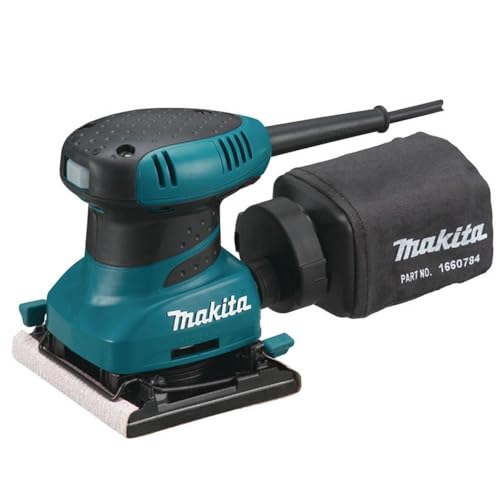
On a tighter budget, the Makita BO4556 is a smart, capable choice that punches well above its price point and fits into tight stair spaces beautifully.
For corners, edges, and anywhere else larger tools can’t reach, the BLACK+DECKER BDEMS600 Mouse Detail Sander is the one tool I consider genuinely non-negotiable on any staircase job.
ℹ️ Did You Know?
The winning approach for any staircase is a two-tool setup — a sheet sander or orbital for the open tread and riser faces, and a detail sander for the corners, edges along the stringers, and anywhere the larger tool can’t fit. The detail sander is what takes you from “mostly done” to “perfectly finished.”
Best Sanders for Stairs Comparison
To help you choose quickly, I’ve put together a side-by-side comparison of all four sanders reviewed below. Each tool has a distinct role on a staircase, so scan the feature rows to match the right one to your specific needs.
| Product | ⭐ Bosch OS50VC Sheet Sander 🏆 EDITOR’S CHOICE |
Makita BO4556 | Bosch GEX34-6N | BLACK+DECKER BDEMS600 |
|---|---|---|---|---|
| Image | |
 |
 |
 |
| Price | $$$$ | $$ | $$$ | $ |
| Sander Type | 1/2 Sheet Orbital | 1/4 Sheet | 6″ Random Orbital | Detail / Mouse |
| Motor Power | 3.4 Amp | 2 Amp | 3.5 Amp | 1.2 Amp |
| Variable Speed | ✅ Yes | ❌ No | ✅ Yes | ❌ No |
| Vibration Control | ✅ Yes | ❌ No | ✅ Yes | ❌ No |
| Dust Collection | ✅ Yes | ✅ Yes | ✅ Yes | ✅ Yes |
| Best Role on Stairs | Primary tread + riser | Primary tread + riser | Open tread faces | Corners + edges |
| Warranty | 1 Year | 1 Year | 1 Year | 2 Years |
| Availability | Shop Now at Amazon | Shop Now at Amazon | Shop Now at Amazon | Shop Now at Amazon |
⭐ Bosch OS50VC Sheet Sander
🏆 EDITOR’S CHOICE
- Price
- $$$$
- Sander Type
- 1/2 Sheet Orbital
- Motor Power
- 3.4 Amp
- Variable Speed
- ✅ Yes
- Vibration Control
- ✅ Yes
- Dust Collection
- ✅ Yes
- Best Role on Stairs
- Primary tread + riser
- Warranty
- 1 Year
Makita BO4556
- Price
- $$
- Sander Type
- 1/4 Sheet
- Motor Power
- 2 Amp
- Variable Speed
- ❌ No
- Vibration Control
- ❌ No
- Dust Collection
- ✅ Yes
- Best Role on Stairs
- Primary tread + riser
- Warranty
- 1 Year
Bosch GEX34-6N
- Price
- $$$
- Sander Type
- 6″ Random Orbital
- Motor Power
- 3.5 Amp
- Variable Speed
- ✅ Yes
- Vibration Control
- ✅ Yes
- Dust Collection
- ✅ Yes
- Best Role on Stairs
- Open tread faces
- Warranty
- 1 Year
BLACK+DECKER BDEMS600
- Price
- $
- Sander Type
- Detail / Mouse
- Motor Power
- 1.2 Amp
- Variable Speed
- ❌ No
- Vibration Control
- ❌ No
- Dust Collection
- ✅ Yes
- Best Role on Stairs
- Corners + edges
- Warranty
- 2 Years
⚡ Key Takeaways
- My top overall pick is the Bosch OS50VC Sheet Sander — the most powerful, most refined sheet sander for tackling heavy staircase work from start to finish.
- Best budget sheet sander: the Makita BO4556 — compact, capable, and surprisingly affordable for homeowners refinishing stairs on a budget.
- Best orbital option: the Bosch GEX34-6N — premium swirl-free finishing on open tread faces with excellent pad-dampening and multi-hole dust collection.
- The essential corner tool: the BLACK+DECKER BDEMS600 Mouse — no staircase refinish is truly complete without it.
Best Sanders for Stairs — By Type
There are three types of sander that suit stair work, each with a distinct role on the staircase. Understanding where each one fits will help you build the right two-tool combination for your job.
- Sheet Sanders — The classic choice for stair treads. The rectangular pad matches the flat rectangular surface of a stair tread almost perfectly, reaching right to the edges and into the back corners with the riser. The go-to primary tool for most staircase jobs. See my dedicated guide to Best Sheet Sanders 2026 for a deeper look at this category.
- Random Orbital Sanders — Versatile and excellent on the open tread face, but the round pad can’t follow corners cleanly. A great choice if you already own one, but pair it with a detail sander for the corners or you’ll be finishing those by hand. I cover the full category in my random orbital sander guide.
- Detail Sanders — The indispensable finisher. The pointed triangular pad reaches into the tight junction between tread and riser, along the stringer, around balusters, and into any corner that stops everything else cold. Don’t attempt a full staircase refinish without one. My full Best Detail Sanders 2026 guide goes into more depth on this category.
💡 Pro Tip
If you want to eliminate cord management on a staircase entirely — a genuine quality-of-life improvement when you’re moving up and down steps — consider a cordless option. Slightly less powerful, but the freedom of movement on stairs is hard to argue with. My Best Sanders for Wood 2026 guide includes cordless recommendations across all categories.
Best Sheet Sanders for Stairs Reviews
Sheet sanders are the most popular primary tool for stair treads — the rectangular pad fits the geometry of a tread naturally, covering the full width in fewer passes than a round pad and following straight edges right to the corner. Here are my two top picks in this category, at very different price points.
Makita BO4556 1/4 in. Sheet Finishing Sander
Best Budget Sheet Sander for Stairs
The Makita BO4556 is perfectly suited to stair work in a way that its spec sheet doesn’t fully reveal. Yes, the 2A motor is modest, but on a stair tread you’re never working a huge surface area — you’re making short, controlled passes on a confined space where precision and maneuverability matter more than raw power. The ultra-compact body is a genuine asset here: it fits between the balusters more easily than a larger tool, and the comfortable one-handed grip means you can brace yourself on the staircase with the other hand while working.
The built-in dust collection keeps the tread surface clear so you can see your progress. For a homeowner refinishing their staircase on a budget, this is a smart, capable choice that won’t let you down.
Key Features:
- ✅ Ultra-compact body — fits into tight stair spaces easily
- ✅ Comfortable one-handed grip — essential for working on stairs
- ✅ Square pad reaches tread-to-riser corners cleanly
- ✅ Effective built-in dust collection
- ✅ Outstanding value for the price
- ❌ Modest 2A motor — slower on very rough or heavily painted treads
- ❌ No variable speed control
Best For:
Homeowners refinishing a standard residential staircase on a budget who want a compact, easy-to-handle sheet sander that fits between balusters and delivers clean results without breaking the bank.
Bosch OS50VC Electric Orbital Sander — 3.4 Amp 1/2 Sheet
Best Premium Sheet Sander for Stairs
This is one of my favourite sanders of all time, and for stair work the Bosch OS50VC brings meaningful upgrades over the Makita. The 3.4A motor is significantly more powerful — it handles rough, heavily worn treads with ease where a lighter tool would slow down and struggle. The larger 1/2-sheet pad covers each tread in fewer passes, which matters on a full flight of stairs where the cumulative time savings add up. Variable speed is genuinely useful for treads with softer wood sections or when transitioning from stripping to fine finishing.
Bosch’s vibration management is excellent — on a staircase you’re often working in slightly awkward positions, and a tool that doesn’t beat up your hands and wrists over an extended session is a real advantage. Build quality is exceptional and this sander will outlast most alternatives many times over. If you’re doing a quality staircase refinish and want the very best sheet sander for the job, this is it.
Key Features:
- ✅ 3.4A motor — handles rough and heavily worn treads confidently
- ✅ Large 1/2-sheet pad covers treads faster with fewer passes
- ✅ Variable speed for controlled stripping through to fine finishing
- ✅ Outstanding vibration management — comfortable in awkward positions
- ✅ Exceptional build quality and long-term durability
- ❌ Larger body — slightly less nimble in very tight stair spaces
- ❌ Premium price point compared to budget alternatives
Best For:
DIYers and professionals who want the most capable sheet sander available for a serious staircase refinish — powerful enough for heavily worn treads, refined enough for the final finishing passes.
Best Orbital Sanders for Stairs Reviews
Random orbital sanders are versatile all-rounders that work particularly well on stair treads for final smoothing passes, where the swirl-free finish they produce is a genuine advantage. The limitation is the round pad, which can’t follow corners cleanly — always pair an orbital with a detail sander on a staircase. Here’s my top pick in this category.
BOSCH GEX34-6N 6 In. Multi-Hole Random Orbit Sander/Polisher
Best Premium Orbital Sander for Stairs
The Bosch GEX34-6N is the premium orbital option on this list — and it’s the natural companion to the Bosch OS50VC sheet sander if you want to run a full Bosch setup. The 6″ pad is larger than most 5″ orbitals, which speeds up coverage on wider open treads significantly. Its sander/polisher flexible design combines a pad that both orbits and rotates, while the multi-hole pattern means it’s compatible with virtually any brand of sandpaper on the market. The integral pad-dampening system helps prevent swirl marks for a consistently fine finish, and the rugged die-cast aluminum gear housing with exclusive dual-bearing pad mount eliminates wobble and vibration for a longer service life. This is a truly refined machine that will last a lifetime of use.
The finish quality it produces is excellent — the larger pad with random orbital motion leaves a beautifully clean, swirl-free surface that’s ideal for a stair tread taking heavy foot traffic. The microfilter dust canister with integrated paper filter and vacuum-hose connection keeps the work area clear and dust under control. I’d also recommend checking out the broader Best Sanders for Wood 2026 guide if you’re planning other woodworking projects alongside your staircase.
Key Features:
- ✅ 6″ pad — faster coverage on wider stair treads
- ✅ Multi-hole design — compatible with virtually any sandpaper brand
- ✅ Integral pad-dampening system — prevents swirl marks for a fine finish
- ✅ Microfilter dust canister with integrated paper filter and vacuum-hose connection
- ✅ Rugged die-cast aluminum gear housing with dual-bearing pad mount — eliminates wobble and vibration
- ❌ Round pad still requires a detail sander for corners
- ❌ 6″ body is less nimble in very confined stair spaces
Best For:
Anyone who prefers the swirl-free finish of a random orbital and wants the best-in-class version for wide stair treads — ideal as a companion tool alongside a detail sander for a professional-quality result.
Best Detail Sanders for Stairs Reviews
A detail sander isn’t optional on a staircase — it’s the tool that determines whether the job is truly finished or just mostly finished. The tight corners where tread meets riser, the edges along the stringer, the sections around balusters, any profile on the nosing — these are exactly the spots a detail sander was designed for, and where every other tool on this list reaches its limit.
BLACK+DECKER BDEMS600 Mouse Detail Sander
The Essential Stair Sander — The One That Completes the Job
There are other detail sanders on the market — but none come close to the BLACK+DECKER BDEMS600 Mouse at this price point, and very few match it at any price. It’s solidly built, surprisingly powerful at 16,000 OPM, and the pointed triangular pad is the exact shape you need for stair corner work. It reaches the tight junction between tread and riser, works neatly along the stringer edge, and with the detail finger attachment it gets into spots that would otherwise require tedious hand-folded sandpaper work.
I only list one detail sander here because this one is so far above the competition in both performance and value that there’s genuinely no reason to consider anything else. Whether you use it as a companion to a sheet or orbital sander — which I strongly recommend — or as a standalone on a smaller staircase, this is the tool that turns a good stair refinish into a perfect one. For a deeper look at the detail sander category, my Best Detail Sanders 2026 guide covers all the top options.
Key Features:
- ✅ Pointed triangular pad — perfect for tread-to-riser corners
- ✅ 16,000 OPM — genuinely powerful for a detail sander
- ✅ Detail finger attachment for tight spots around balusters
- ✅ Compact and comfortable grip — easy to control in confined stair spaces
- ✅ Includes dust collector
- ✅ Outstanding value — so affordable there’s no reason not to own one
- ❌ Small pad means slower coverage on open flat tread faces
- ❌ Not a standalone replacement for a sheet or orbital on large treads
Best For:
Every single staircase refinish project — this is the essential companion tool that handles every corner, edge, and tight spot that a sheet or orbital sander physically cannot reach. Don’t start a stair job without one.
How to Sand a Staircase: A Step-by-Step Guide
Having the right tools is only half the battle — using them in the right order makes the difference between a professional result and a frustrating one. Here’s the exact process I follow on every staircase job.
Step 1: Prepare the Staircase
Remove any carpet, carpet grippers, and staples before you start — this is non-negotiable. Carpet staples will destroy sandpaper and can damage your sander’s pad. Check every tread for raised nail heads, countersink any protruding fixings, and give the whole staircase a thorough vacuum. If the staircase has a handrail, tape off the wall beside it and any spindles or balusters you want to protect.
💡 Pro Tip
Work Top to Bottom: Always sand a staircase starting from the top step and working your way down. Dust and debris fall downward — if you start at the bottom you’ll be constantly re-dirtying already-sanded treads. Top to bottom keeps everything moving in the right direction.
Step 2: Grit Progression for Stair Treads
Stairs take heavy foot traffic and often have thick buildup of old paint, varnish, or wax. Here’s the grit sequence I use on every staircase refinish:
- 60–80 grit — Strip the old finish, remove paint or varnish, and level any worn areas. This is the heavy lifting stage. Work with the grain along the length of each tread.
- 100–120 grit — Remove the coarse scratch pattern and continue leveling. By the end of this pass, bare wood should be visible everywhere.
- 150–180 grit — Smooth the surface and prepare for finishing. Run your hand along the grain — it should feel genuinely smooth.
- 220 grit — Final pass and between coats once your finish is applied.
Step 3: Sand the Tread Faces
Use your sheet sander or orbital on the open flat face of each tread — this is where these tools excel. Work along the grain from back to front on each tread, overlapping passes by about an inch. Keep the sander moving and apply only light pressure. On very narrow stairs where the sander barely fits, the compact Makita BO4556 is the better choice over the wider Bosch OS50VC.
Step 4: Sand the Risers
The vertical riser faces between treads are often overlooked — but they’re clearly visible when you look down the staircase and they need the same treatment as the treads. Use the sheet sander on these, working up and down with the grain if the risers have a vertical grain, or across if they’re painted MDF. Take care not to catch the top edge of the riser and round it over.
Step 5: Detail Sand All Corners and Edges
This is where the BLACK+DECKER BDEMS600 Mouse earns its place. Work through every corner where tread meets riser, the back edge of each tread where it meets the riser above, along both sides where the treads meet the stringers, and around any balusters or newel posts. These are exactly the areas that catch the eye when someone walks past a staircase — unsanded corners under a coat of varnish look messy and unfinished.
💡 Pro Tip
Nosing Tip: The rounded nosing at the front edge of each tread is one of the trickiest spots on a staircase. Use the detail sander on the flat sections of the nosing, then wrap a piece of 120-grit sandpaper around a dowel or round pencil and work the curved underside by hand. It takes a minute per tread but makes a huge difference to the finished look.
Step 6: Final Hand Sand and Clean
Once all machine work is done, do a final light pass by hand with 180–220 grit on all surfaces, working with the grain. This removes any remaining machine marks. Vacuum the entire staircase thoroughly, then wipe down with a tack cloth before applying your finish.
⚠️ Important
For stair treads specifically, use a finish rated for floor traffic — not standard furniture varnish. Treads take constant impact and abrasion, and a standard varnish will wear through in months. Look for a floor-grade polyurethane or hardwax oil specified for heavy foot traffic. Apply at least three coats, lightly sanding with 220 grit between each one once fully dry.
How to Choose the Best Sander for Stairs
Not every sander is suited to staircase work, and buying the wrong one is a frustrating and avoidable mistake. Here’s what I think about when I’m putting together a stair sanding kit — and what I’d recommend you consider before you buy.
Pad Shape: Rectangular vs. Round vs. Pointed
Pad shape is the single most important factor for stair work. A rectangular pad (sheet sander) naturally follows the geometry of a stair tread — it covers the full width efficiently and reaches right to the straight back edge where tread meets riser. A round pad (orbital) leaves crescent-shaped unsanded zones at every corner and edge. A pointed triangular pad (detail sander) is the only shape that reaches right into a 90-degree corner. Understanding this geometry means you know exactly which tool to reach for in each zone of the staircase.
Motor Power and Variable Speed
For the primary tool — sheet sander or orbital — more power means faster material removal on worn, painted, or rough treads. Variable speed adds real versatility: dial back for softer woods or fine finishing, push up for the initial stripping passes. For the detail sander, raw power matters less than pad speed (OPM) — higher OPM means cleaner, faster work in tight corners. If you’re curious how these sanders compare to other power tool options for wood projects, my piece on Why You Should Use a Sander Over an Oscillating Tool is worth a read.
Body Size and Ergonomics
On a staircase, a compact body is a genuine advantage — you’ll be working in confined spaces between balusters, often in slightly awkward positions. A tool that’s too wide won’t fit between spindles; a tool with poor balance will fatigue your hand and wrist quickly on a full flight of stairs. One-handed operation is important for the sheet and orbital stages, since you’ll often be steadying yourself with the other hand.
Dust Collection
Stair sanding generates a lot of fine dust in a confined space — good dust collection isn’t just a convenience, it keeps the tread surface visible so you can judge your progress, and significantly reduces cleanup time. All four sanders on this list include built-in dust collection. For serious dust management on a full staircase refinish, connect your sander to a shop vacuum for even better results. You can also explore the Best Disc Sanders 2026 guide if you’re building out a complete workshop tool collection.
The Two-Tool Rule
Never plan a staircase refinish around a single sander. The most important buying decision is committing to a two-tool setup: one primary tool (sheet sander or orbital) for the open tread and riser faces, and the BLACK+DECKER BDEMS600 Mouse for every corner and edge the primary tool can’t follow. The detail sander is what elevates a good result to a perfect one — and at its accessible price point, there’s no good reason to skip it.
🏆 The Verdict
For most staircase refinish jobs, I’d build around the Bosch OS50VC Sheet Sander as the primary workhorse — it’s the most powerful, most refined sheet sander on this list and handles everything from heavy stripping to fine finishing with equal confidence. Pair it with the BLACK+DECKER BDEMS600 Mouse Detail Sander for every corner and edge, and you have a combination that covers the entire staircase properly. If budget is the priority, swap the Bosch OS50VC for the excellent Makita BO4556 — it’s more affordable, wonderfully compact, and more than capable on a standard residential staircase.
❓ Frequently Asked Questions
What is the best type of sander for stairs?+
Can I use a belt sander on stairs?+
How do I sand the corners where the tread meets the riser?+
Do I need to remove carpet before sanding stairs?+
How many coats of finish should I apply to stair treads?+
Conclusion
A staircase done properly is one of the most impactful refinishing jobs in any home — the transformation is dramatic and visible every single day. The key insight I always come back to is simple: no single sander covers a staircase completely, and the two-tool approach — a sheet or orbital sander for the open surfaces, the BLACK+DECKER BDEMS600 Mouse for every corner and edge — is what separates a professional result from a frustrating one.
If I had to pick just one combination for most homeowners in 2026, it would be the Bosch OS50VC as the primary tool and the BLACK+DECKER BDEMS600 Mouse as the essential companion. Budget-conscious? Swap in the Makita BO4556 — it’s a genuinely excellent tool that will serve you well. If you’re planning other woodworking projects beyond the staircase, my Best Sanders for Cabinets 2026 guide is the natural next read.
Any questions about your specific staircase — leave a comment below. Thanks for reading!

Hi, what would you recommend to remove stain and poly off stair treads so I can restain and poly again? And banisters and handrails? And the grit paper to use? I’m a beginner at this
We are trying to color match our Shaw LVP flooring.
Hello, please could you recommend a block sheet sander that isn’t too heavy to sand the stair risers. I’m thinking of hiring something as only a few stairs to complete. Also which is best to purchase. Cord or cordless. The mouse sander used hasn’t been able to get into the corners of the treads and the large edger is to heavy to hold up to do the risers!!!! Thank you.
Carole
Hey Carole,
For the risers, the Makita BO4556 would be a perfect fit – it’s small and lightweight while still being potent and highly effective. To get the corners the BLACK+DECKER BDEMS600 is the best choice as even if the regular shape can’t reach a tight corner, the tip expands into a precise sanding “finger” that can reach anywhere with ease. When it comes to cord vs cordless, it’s all about personal preference and type of work. I’d always go with corded tools for more demanding or long tasks but if it’s a more casual or quick ordeal then the cordless variety would be a great fit. Hope that helps Carole and good luck with the stair refinishing!
Hi just came across your site and it has a lot of great information…thank you for sharing. I do have a question though. I have a staircase which consist of two open stringers and treads with carpet wrapped around them. The treads butt up to the wall on one side and are open on the other side all four sides of the tread are rounded. Could you advise best sander to tackle this I know at this point the edge against the wall will require hand sanding. Also could you advise proper sandpaper grades to use the stairs current have a clear stain. When finished I hope to paint the strings and do a dark stain on the treads.
Mike
Hey Mike, taking into consideration the details of your staircase, I’d go with a random orbital sander – they’re the most versatile type of machine and they’ll guarantee that everything gets smoothly sanded even if rounded, at an angle or hard to reach. In the end, just as you mentioned, I’d definitely give a manual finish to all the pesky edges to ensure I get a perfect result. Since they currently have a clear stain I’ll imagine the stairs are in pretty good shape – if this is the case, you can skip the rougher grits and go right to around 80 or 120. It’ll not only make the whole process faster but it also ensures that you eliminate the old clear stain without damaging the wood’s grain or integrity. After that, you can either go right to staining or, if you want a highly polished look, you can move on up to a very fine grit like 200+ and perform another pass.
Hope that helps Mike and I wish you the best of luck with the renovation!
I enjoy watching flipping shows like Stone House Revival, Rehab Addict and Home Town. I love old wood and enjoy watching them repair and rebuild trim, doors, floors and built-ins bringing them back to their former glory. Now I would like to stain and refresh my wooden stair railings. I found your site when researching electric sanders and wood finishes.
I am thinking of using dutch oil for a finish and a palm sander. What would you recommend for my first project.
Hey Kathleen, you’re not the only one – it’s always satisfying to watch experts take an old piece of wood and breathe a new life into it. For your stair railing renovation, Dutch oil is a great choice as you can’t go wrong with it, it always looks beautiful. When it comes to the sanding machine, you’re also spot on – a palm sander is nimble, small enough to fit anywhere and produces great results without tiring your arms which is great when dealing with railings. I recommend that you go with a circular orbital palm sander due to their outstanding capability of producing an excellent, scratch-free finish, even if you’re an absolute beginner. The DEWALT D26453K shown above is great, and so is the Bosch ROS20VSC, you’ll be well armed with either one of them.
Hope that helped and good luck with your very first project Kathleen, have fun!