
As an Amazon Associate I earn from qualifying purchases. All claims are strictly my personal opinion.
Best air sander overall

A vacuum-ready 6" random orbital with a 3/16" orbit that averages 8 CFM, so a home compressor can run it.

An air sander, or pneumatic sander, runs on compressed air instead of an electric motor. The motor is small and simple, so the tool is lighter and cooler than an electric sander of the same size, and it keeps running all day in a body shop or a finishing room. For most shops, the best air sander is the Ingersoll Rand 4151: a vacuum-ready 6″ random orbital with a 3/16″ orbit that averages only 8 CFM, so a home compressor can keep up. The 3M 20317 is the premium 5″ finisher, the Astro 888C is the straight-line sander for body filler, and the ZFE kit is the budget pick.
Below are seven pneumatic sanders, one for each job: dual-action (DA) sanders for finishing, a mini sander for spot repairs, a straight-line air file and an air belt sander. You’ll find a comparison table, short reviews from the makers’ specifications, and how to size your compressor, which decides more than the sander itself. If you’re sanding a car, my best sander for auto body guide compares air and electric DAs for body work.
Best Air Sanders: Comparison
Specs come from the makers’ product pages; ZFE has none, so its column comes from the Amazon listing. Air use is what each maker publishes, and makers measure it differently (average, free speed or under load), so treat it as a guide. I don’t print prices: each review gives a market tier, and the Amazon buttons show the live price.
| Product | ⭐ Ingersoll Rand 4151 🏆 EDITOR’S CHOICE |
3M 20317 | Dynabrade 59025 | Chicago Pneumatic CP7200S | Astro 888C | Astro 3037 | ZFE 5″/6″ kit |
|---|---|---|---|---|---|---|---|
| Image | |
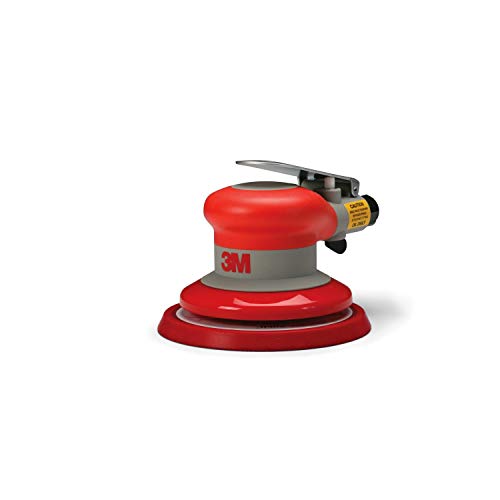 |
 |
 |
 |
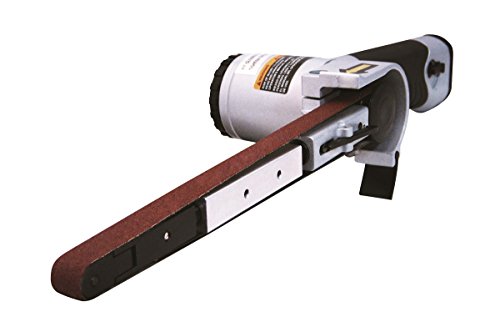 |
 |
| Type | Random orbital (DA) | Random orbital (DA) | Random orbital (DA) | Mini random orbital | Straight-line (air file) | Belt (finger) sander | Random orbital (DA) |
| Pad | 6″, 3/16″ orbit | 5″ Stikit, 3/16″ orbit | 6″, 3/16″ orbit | 2″ and 3″, 3/32″ orbit | 2-3/4″ x 15-3/4″ | 1/2″ x 18″ belt | 5″ and 6″ |
| Speed | 12,000 RPM | 12,000 RPM | 12,000 RPM | 15,000 RPM | 2,400 strokes/min | 16,000 RPM | Up to 10,000 RPM |
| Air use | 8 CFM average | Not listed by 3M | 14 SCFM | 21 CFM | 6 CFM average | 4 CFM | Not listed |
| Dust | Vacuum-ready | Non-vacuum | Non-vacuum, kits sold | Non-vacuum | Not listed | Not listed | Bag and hose |
| Availability | Shop Now at Amazon | Shop Now at Amazon | Shop Now at Amazon | Shop Now at Amazon | Shop Now at Amazon | Shop Now at Amazon | Shop Now at Amazon |
Best Air Sanders: Reviews
Every pick could be ordered on Amazon when I checked it. I left out disc grinders and angle sanders, which remove metal rather than sand, and polishers, which are a different tool.
Editor's Choice6" random orbital air sander
Ingersoll Rand 4151
Ingersoll Rand 4151 Random Orbital Air Sander
A vacuum-ready 6" air DA with a 3/16" orbit that averages 8 CFM, so a home compressor can run it.
Best for
Woodworkers and home body work on a compressor that can't feed a thirsty sander.
- Vacuum-ready, dust pulled through the pad
- Lowest average air use of the DA picks (8 CFM)
- Light at 1.92 lb
Skip it if
You want the smoothest premium finisher: the Dynabrade or 3M are built for all-day production.
- 0.2 HP: slower for heavy stock removal
- Vinyl PSA pad, not hook and loop
Read full review
Best Air Sander Overall
The 4151 is the air sander that suits the most shops, because it’s built for finish work and sips air compared with the others here. Ingersoll Rand rates it at 12,000 RPM with a 3/16″ (5 mm) random orbit, the standard geometry for a swirl-free finish, on a 6″ vinyl pad for adhesive discs. The motor is a modest 0.2 HP, but the published average air consumption is 8 CFM, which a mid-size two-stage or large single-stage compressor can keep up with. It’s vacuum-ready: dust is pulled through and around the pad and out through a hose to a central or portable vacuum, which keeps grit out of the motor and off your work. At 1.92 lb with a lever throttle, it’s light enough for a long session on panels or a car body. It sits in the mid-range price tier.
Best premium 5"5" random orbital air sander
3M 20317
3M Non-Vacuum Random Orbital Sander 20317, 5 in, 3/16 in Orbit
A 0.28 HP, 5" production sander with a 3/16" orbit and an aluminum body built for daily use.
Shop Now at AmazonSpecs: 3M
Best for
Pros and serious finishers who sand all day on 5" discs.
- 0.28 HP motor for production sanding
- Aluminum body with composite cover
- Low profile for control
Skip it if
You need dust extraction built in: the vacuum-ready Ingersoll Rand 4151 does it.
- Non-vacuum
- Premium price tier
Read full review
Best Premium 5-Inch Air Sander
3M designs its sanders around its own abrasives, and the 20317 is the 5″ model built for production finishing. It has a 0.28 HP motor, more than the 6″ Ingersoll Rand and Dynabrade picks, a 3/16″ (5 mm) orbit and a 5″ Stikit pad for 3M’s adhesive-backed discs. The motor is precision balanced for smooth running, and the aluminum body with a composite cover is meant to resist the cracked housings that end many cheaper air tools. The low-profile shape keeps your hand close to the work for control on edges and curves. 3M labels it for industrial and occupational use, and it is a non-vacuum model, so plan on a respirator or a separate extractor. It’s in the premium price tier.
Best for comfort6" random orbital air sander
Dynabrade 59025
Dynabrade 59025 Dynorbital-Spirit 6″ Non-Vacuum Random Orbital Sander
A 6" 0.25 HP air DA with a 3/16" orbit, thumb speed control and Dynabrade's Comfort Platform.
Shop Now at AmazonSpecs: Dynabrade
Best for
Finishers sanding for hours with a compressor that delivers 14 SCFM.
- Lever throttle with thumb speed control
- Comfort Platform and muffled exhaust
- Vacuum conversion kits available
Skip it if
Your compressor is a small single-stage: the Ingersoll Rand 4151 averages 8 CFM.
- 14 SCFM needs a big compressor
- Non-vacuum as sold
Read full review
Best Air Sander for Long Sessions
Dynabrade’s Dynorbital-Spirit line is built around the hand. The 59025 puts a 0.25 HP motor at up to 12,000 RPM behind a 6″ (152 mm) pad with a 3/16″ (5 mm) orbit, and Dynabrade lists its air use at 14 SCFM. The throttle is a lever with thumb speed control, so you press on the work rather than on a valve, and the optional Comfort Platform supports the hand and wrist and shields it from the cold exhaust air. A floating five-blade rotor, a one-piece motor shaft and counterbalance and a muffled exhaust keep it smooth and quieter than cheap air sanders. It’s a non-vacuum model, but Dynabrade sells self-generated and central vacuum conversion kits. Dynabrade says the line sands wood, metal, plastics, fiberglass, composites and solid surface. Premium-lower tier.
Best mini sander2"/3" mini air sander
Chicago Pneumatic CP7200S
Chicago Pneumatic CP7200S 3″ Air Random Orbital Sander Kit
A 1.5 lb pistol-grip mini sander with 2" and 3" pads and a fine orbit for spot repairs and tight spots.
Best for
Spot repairs, small parts and tight curves on cars, furniture and turnings.
- 2" and 3" hook-and-loop pads in the kit
- 15,000 RPM, 3/32" fine orbit
- Light 1.5 lb pistol grip
Skip it if
Your compressor is small: a mini sander still needs 21 CFM.
- 21 CFM: the thirstiest here
- Small pad: slow on big panels
Read full review
Best Mini Air Sander
A mini air sander reaches places a 5″ or 6″ pad can’t: inside corners, small repairs, edges of moldings and the curves on a car body. The CP7200S is Chicago Pneumatic’s pistol-grip mini random orbital, sold as a kit with 2″ (50 mm) and 3″ (75 mm) hook-and-loop pads. It spins at 15,000 RPM with a fine 3/32″ (2.5 mm) orbit, has a progressive throttle and an adjustable power regulator, and weighs 1.5 lb. Chicago Pneumatic designed it for body-shop spot repair and surface preparation, and the listing adds woodworking and detailing. Plan your air supply: CP rates consumption at 21 CFM at 90 psi and asks for a hose of at least 0.38″ inside diameter. Mid-range price tier.
Best straight-linestraight-line air sander
Astro 888C
Astro Pneumatic 888C Dual Piston Straight Line Sander
A twin-piston straight-line sander with a 15-3/4" pad that blocks filler flat on 6 CFM.
Best for
Blocking body filler and flattening long panels and edges.
- Long 15-3/4" pad keeps panels flat
- Twin pistons resist stalling
- Only 6 CFM average
Skip it if
You're finishing wood: a random orbital leaves a better surface.
- 6-1/2 lb, two-handed
- Straight strokes leave linear scratches to finish out
Read full review
Best Straight-Line Air Sander
A straight-line sander, also called an air file or long board, moves a long pad back and forth instead of in circles. That keeps a large surface flat, which is what you want when blocking body filler on a car panel or truing a long edge. The 888C has a 2-3/4″ x 15-3/4″ pad, two pistons for steady power without stalling, a 1″ stroke and 2,400 strokes per minute. Astro lists average air use at just 6 CFM at 90 to 120 psi, and two handles give you control over its 6-1/2 lb. Astro says it works on plastic fillers at any stage of hardening and feathers edges smoothly. Mid-range price tier.
Best air belt sanderair belt sander
Astro 3037
Astro Pneumatic 3037 Air Belt Sander (1/2″ x 18″)
A 0.5 HP finger belt sander with a 1/2" x 18" belt for welds, slots and tight corners on 4 CFM.
Best for
Metal work, weld cleanup and shaping tight spots in wood.
- Reaches slots, corners and weld seams
- Only 4 CFM
- Takes thicker belts, quick tension lever
Skip it if
You need to flatten a surface: use a DA or straight-line sander.
- Aggressive: not a finishing tool
- 1/2" belt covers a small area
Read full review
Best Air Belt Sander
An air belt sander, sometimes called a finger sander, runs a narrow belt around a slim arm so you can grind into slots, corners and weld seams. The 3037 uses a 1/2″ x 18″ belt driven by a 0.5 HP motor at a free speed of 16,000 RPM, with variable speed control. A simple tension lever makes belt changes quick, and Astro widened the pulley space so it takes the newer, thicker belts. It’s light at 1.98 lb and Astro lists air use at 4 CFM at 90 psi, the lowest here. It comes with three belts in 40, 60 and 80 grit. Astro aims it at spot-weld removal and metal finishing; woodworkers use the same tool for shaping and cleaning up tight inside curves. Lower mid-range tier.
Best budgetbudget air palm sander
ZFE 5"/6" kit
ZFE Random Orbital Sander 5″ & 6″ Pneumatic Palm Sander Kit
A budget palm DA with 5" and 6" pads, speed control and a dust bag in a complete starter kit.
Shop Now at AmazonSpecs: Amazon listing (no maker page)
Best for
Occasional sanding and polishing for compressor owners on a tight budget.
- Budget tier, complete kit
- 5" and 6" backing plates
- Dust bag and hose included
Skip it if
You sand every day: a brand-name DA lasts longer and runs smoother.
- No maker spec sheet
- Not built for daily production use
Read full review
Best Budget Air Sander
If you own a compressor and only sand now and then, the ZFE kit costs a fraction of the brand-name DAs and comes with everything to start. ZFE has no product page of its own, so these details come from its Amazon listing: a palm-style random orbital with an integrated regulator for speed control up to 10,000 RPM, both a 5″ and a 6″ backing plate, an all-steel motor, and a dust bag with a 1 m hose that connects to the sander’s suction port. The kit adds 24 sanding sheets, three polishing pads and microfiber cloths. ZFE pitches it for wood, metal derusting, paint and fiberglass. It’s the budget tier; expect more vibration and a shorter life than the 3M, Dynabrade or Ingersoll Rand.
How I Chose These Air Sanders
I looked at the pneumatic sanders sold on Amazon from established air-tool makers (Ingersoll Rand, 3M, Dynabrade, Chicago Pneumatic and Astro) and picked one for each job a compressor owner is likely to have: an all-round DA, a premium finisher, a sander for long sessions, a mini sander, a straight-line sander, a belt sander and one budget kit. I compared the makers’ published speed, orbit, pad and air consumption, and I weighted air use heavily, because a sander your compressor can’t feed is the wrong sander. I don’t show customer ratings or prices. For how I pick products across the site, see how I choose.
Air Sander vs Electric Sander
Neither is better in general; the right one depends on your compressor and how many hours you sand.
Why Pros Use Air Sanders
An air motor has few moving parts and no windings, so the tool is small, light and runs cool: the 6″ Ingersoll Rand 4151 weighs 1.92 lb, less than most electric random orbits with the same pad size. Light weight and low height mean less fatigue over a shift and better control on vertical panels. Air sanders also tolerate dust and moisture well, which is why body shops wet-sand with them, and they cost less than premium electric sanders.
Why Most Home Shops Choose Electric
The catch is the compressor. A DA sander needs a steady flow of air, often 8 to 20 CFM at 90 psi, and most garage compressors can’t supply that continuously. When the tank runs down, the sander slows and the compressor runs nonstop. Air sanders are also louder at the exhaust and need oil and dry air. If you don’t already own a big compressor, a good electric random orbital sander is cheaper overall: see my best random orbital sanders and best palm sanders.
What Size Air Compressor Do I Need for an Air Sander?
Size the compressor by flow, not by tank or horsepower. Find the sander’s air consumption in CFM (or SCFM) at 90 psi on the maker’s spec sheet, then choose a compressor whose rated output at 90 psi is at least that much, ideally 25 to 50% more, because a sander runs continuously, unlike a nail gun.
Matching CFM to the Sander
From the picks above: the Astro 3037 belt sander needs 4 CFM and the Astro 888C straight-line sander 6 CFM, so a mid-size single-stage compressor runs them. The Ingersoll Rand 4151 averages 8 CFM, which is the edge of what a large single-stage unit sustains. The Dynabrade 59025 (14 SCFM) and the Chicago Pneumatic CP7200S (21 CFM) need a two-stage shop compressor rated for that flow at 90 psi.
Hose, Fittings and Pressure
A long, thin hose starves a sander even when the compressor is big enough. Use a 3/8″ inside-diameter hose for runs up to about 25 ft (Chicago Pneumatic specifies at least 0.38″ for 16 ft), full-flow couplers and a regulator set to 90 psi at the tool while it runs. A larger 1/2″ line helps on long runs from a fixed compressor.
Air Quality: Oil and Water
Most air sanders need a few drops of air-tool oil in the inlet before each use or an inline lubricator; check your manual, because some are designed to run oil-free. Water from the tank rusts the motor and can spot a finish, so drain the tank daily and fit a water separator or filter near the tool, especially if you’ll paint after sanding.
Types of Air Sanders
Random Orbital (DA) Air Sanders
The round pad spins and orbits at the same time, so no scratch pattern repeats. A 3/16″ (5 mm) orbit is the all-round choice for wood and body work; 3/32″ (2.5 mm) is finer and used for finishing and paint prep; larger 5/16″ orbits remove material faster. 5″ pads suit furniture and edges; 6″ pads cover panels faster.
Mini Air Sanders
Mini DAs with 1″, 2″ or 3″ pads reach inside corners, small repairs and turnings. They spin faster than full-size DAs but still need plenty of air: the CP7200S needs 21 CFM.
Straight-Line Sanders and Air Files
A long rectangular pad moves back and forth. It keeps a large surface flat, which is why body shops use it to block filler and primer. Twin-piston models like the Astro 888C hold their speed under load.
Air Belt Sanders
Narrow belts of 3/8″ to 3/4″ run around a slim arm. They grind welds, clean up slots and shape tight inside curves, and they’re aggressive, so follow them with a DA. For full-size electric belt sanders, see my best belt sanders.
Pneumatic Palm Sanders
Palm-style air sanders put your hand right over the pad for control on flat work. The Dynabrade Dynorbital-Spirit line, including the 5″ 59020 reviewed on my palm sanders page, and budget kits like the ZFE are this type.
💡 Pro Tip: Start the Sander on the Work
Set a DA flat on the surface before you open the throttle, and lift it only after it stops. A free-spinning pad touching down at an angle gouges the surface and leaves deep pigtail scratches. Let the pad’s weight do the work and move slowly; pressing hard slows the orbit and wastes air.
Air Sanders for Wood, Metal and Auto Body
Wood: a 5″ or 6″ DA with a 3/16″ orbit and dust extraction. The Ingersoll Rand 4151 connects to a vacuum, and dust matters more on wood than on metal; my guide to dust extractors covers the vacuum side. Metal: a DA for paint and rust removal, an air belt sander for welds and edges; my guide on how to sand metal covers the grits. Auto body: a DA for feathering and primer, a straight-line sander for blocking filler and a mini sander for spot repairs; see what grit sandpaper for car paint.
🏆 The Verdict
The best air sander for most shops is the Ingersoll Rand 4151: vacuum-ready, light and easy on the compressor. For production finishing on 5″ discs, the 3M 20317; for long sessions with a big compressor, the Dynabrade 59025. For spot repairs, the Chicago Pneumatic CP7200S; for blocking filler, the Astro 888C; for welds and tight spots, the Astro 3037; and on a budget, the ZFE kit.
❓ Frequently Asked Questions
What is an air sander used for?+
Is an air sander better than an electric sander?+
What is the best air sander for wood?+
What size air compressor do I need to run an air sander?+
Can you use an air sander on metal?+
Do air sanders need oil?+
Conclusion
Choose an air sander by your compressor first and the job second. If your compressor delivers around 8 CFM at 90 psi, the vacuum-ready Ingersoll Rand 4151 is the all-rounder; with a two-stage shop compressor, the 3M and Dynabrade finishers are worth their price. Add a straight-line or belt sander when the work calls for it. Without a big compressor, an electric random orbital is the smarter buy. Questions about your setup? Ask in the comments.
