
As an Amazon Associate I earn from qualifying purchases. All claims are strictly my personal opinion.
Best for table saws
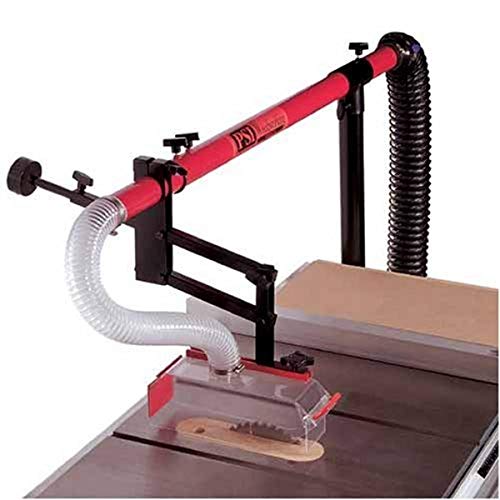
An overarm guard with a 4" hose connection that catches dust above the blade.

Dust collection for woodworking tools works tool by tool, because each machine throws its waste a different way. A table saw needs a 4″ collector on the cabinet and, ideally, a guard over the blade. A router table needs two pickups: one at the fence and one under the table. A sander needs a vacuum or dust extractor on its small port, never a dust collector. A planer or jointer needs a collector with a 4″ hose, because the chip volume clogs a shop vac.
Below is a quick tool-by-tool chart, then the setup for the table saw, router table, sander and planer in turn, how to connect several machines to one collector, and the guards, kits and collectors worth buying. The miter saw has its own guide: miter saw dust collection. If you’re still deciding between a vacuum and a collector, read dust extractor vs shop vac vs dust collector first.
⚡ Quick Picks
Table saw: the PSI TSGUARD – an overarm guard with a 4″ hose connection that catches dust above the blade.
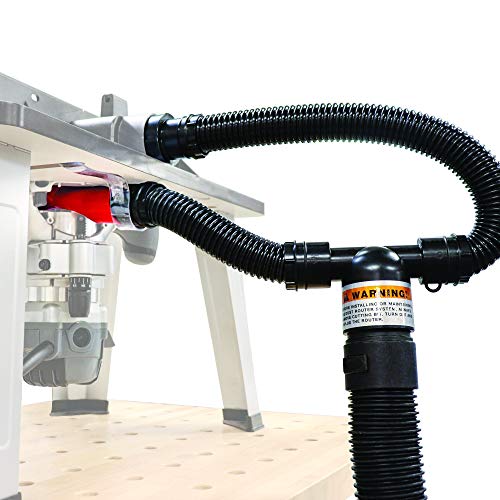
Router table: the Milescraft 1501 DustRouter, picking up at the fence and under the table.
One collector for several machines: the RIKON 60-100 with the POWERTEC 4″ fittings kit and its blast gates.
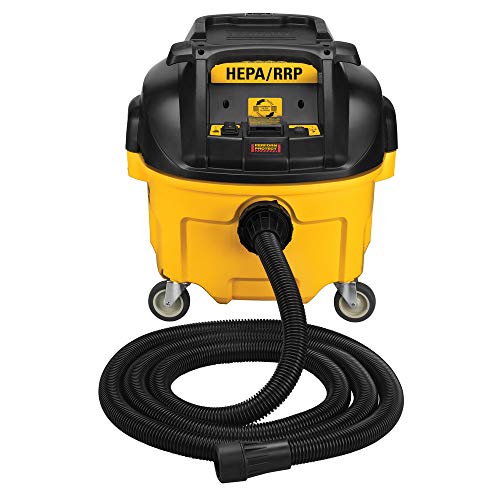
Sanders: a dust extractor; my best dust extractor picks start with the DEWALT DWV010.
Dust Collection by Tool at a Glance
| Tool | Where the waste goes | Machine | Add-on worth having |
|---|---|---|---|
| Table saw | Down into the cabinet, and up off the top of the blade | Dust collector, 4″ | Overarm guard with dust port |
| Router table | Behind the fence for edge cuts, below the table for grooves | Shop vac or extractor at the fence; collector below | Fence port plus under-table cup or box |
| Random orbital and sheet sanders | Through the holes in the pad | Dust extractor or shop vac | Multi-hole discs, port adapter |
| Benchtop belt, disc and spindle sanders | Down and out of a small port | Shop vac or extractor | Hood behind the abrasive |
| Planer and jointer | Large volume of chips out of a chute | Dust collector, 4″ | Cyclone separator in front of the collector |
| Miter saw | Into the guard and out the back | Vacuum on the port, collector on a hood | Hood behind the saw |
Table Saw Dust Collection
A table saw throws dust two ways. Most of it falls into the cabinet below, pushed down by the blade’s rotation. The rest is thrown up off the back of the blade, toward you and the ceiling, and that’s the fine dust you breathe. Good table saw dust collection handles both.
The Cabinet Port
Most cabinet and hybrid saws have a 4″ port at the back or bottom of the cabinet, and that port wants a dust collector, not a shop vac: the volume of sawdust from a full day of ripping overwhelms a vacuum. Jobsite saws usually have a smaller port at the blade shroud, where a shop vac with a cyclone is the practical match. Check your saw’s manual for the port size before you buy hoses.
Above the Blade: Overarm Guards
The dust that comes off the top of the blade can only be caught above the table. An overarm guard with a dust port, such as the PSI TSGUARD, hangs a clear hood over the blade on a boom and connects to a 4″ hose. It works with any saw that has an extension table, or from the ceiling. SawStop sells its own dust-collecting guards for its saws.
How to Seal a Table Saw for Better Dust Collection
On a contractor or hybrid saw, the cabinet leaks air through the slot where the blade tilts, the open back and the motor opening. Every leak lets the collector pull room air instead of dust-laden air from around the blade. Close the openings with magnetic sheet, thin plywood or a fabric cover that still allows the blade to tilt, and use a zero-clearance insert so less dust escapes around the blade. Leave the motor enough ventilation to stay cool, as your manual specifies.
Can You Use a Shop Vac for Table Saw Dust Collection?
On a jobsite saw with a small shroud port, yes, and a cyclone separator in front keeps the vac’s filter clear. On a cabinet saw with a 4″ port, a shop vac moves too little air to keep the cabinet clean, and chips pile up inside. My dust collector for a small shop guide covers 115V collectors that fit a garage.
Router Table Dust Collection
A router table creates waste in two places. When you cut an edge profile against the fence, the bit throws chips behind the fence; when you cut a groove or a dado in the middle of a board, the chips go down through the table around the bit. One pickup can’t catch both.
At the Fence
Most router table fences have a dust port behind the bit opening, often for a 2-1/2″ hose. A shop vac or extractor suits it, because the opening is small and needs suction rather than volume.
Below the Table
Under the table, a dust cup around the router base or an enclosed box with a port catches what falls through. Milescraft’s DustRouter does both from one hose: a silicone cup with a hook-and-loop fastening fits around most routers and lifts, a fence connector picks up behind the bit, and a T-connector joins the two to a 1-1/2″ or 2-1/2″ hose. Milescraft says the router base or lift needs an opening of at least 3-3/8″.
How to Collect Dust From a Handheld Router
For a handheld router, use the maker’s dust shroud or port adapter for your base and a dust extractor or vacuum. Plunge cuts and edge profiles throw chips in different directions, so expect to clean up some chips even with the hose connected.
Sander Dust Collection
Sanders produce the finest dust in the shop, and they extract it through small holes in the pad, so they need suction, not volume. That rules out a dust collector and makes a dust extractor the best match: auto-start through its outlet, a HEPA filter and, on many models, automatic filter cleaning. A shop vac with a fine-dust filter and a cyclone separator is the budget alternative. My best dust extractor and best shop vac for dust collection pages compare the machines.
Which Sander Is Best for Dust Collection?
The sanders that collect best are built around extraction: multi-hole pads that match multi-hole discs, a port that fits standard hoses, and a design meant for a vacuum rather than a bag. Festool and Mirka build their sanders around extractors; see my Festool vs Mirka comparison and the best dustless sanders. The on-board bag or canister on most sanders catches the heavier dust but lets fine dust escape.
Benchtop Sanders
Belt, disc, spindle and drum sanders have a dust port under or behind the abrasive. Spindle and small belt-disc sanders suit a shop vac; drum sanders move enough dust to need a collector. On an oscillating spindle sander, WEN’s manuals say running without dust collection voids the warranty, so connect something before the first cut.
Planer and Jointer Dust Collection
Planers and jointers produce the most waste by volume in a small shop: thick shavings, fast. They need a dust collector with a 4″ hose. DeWalt’s manual for its DW735 planer goes further and says a shop vac isn’t recommended, because most vacs can’t handle the volume of chips and the hose may clog. A cyclone separator in front of the collector catches the chips in a drum before they reach the bag or filter. If you’re comparing planers, my DW735 vs DW734 vs Makita 2012NB page covers how each handles chips.
💡 Pro Tip: Run One Machine at a Time
A 1 HP to 1.5 HP collector has enough airflow for one machine at a time. Put a blast gate at each machine and close every gate except the one you’re using, or roll the collector to the machine and connect it directly.
Connecting Several Machines to One Collector
A small shop doesn’t need a ducted system to share one collector. Two simple layouts work:
- Mobile: a collector on casters and one flexible 4″ hose that you move from the table saw to the planer to the jointer. Short hose, no losses, no fittings.
- Branch with blast gates: a short run with Y-fittings and a blast gate at each machine, so you open only the one you use. POWERTEC sells a three-machine kit with two Y-fittings, two 45° elbows, three blast gates and hose clamps.
Use Y-fittings and 45° elbows instead of T-fittings and 90° elbows where you can, and keep flexible hose short: both cost airflow. For the collector itself, see my best dust collector reviews and the dust separators that turn a single-stage collector into a two-stage one.
The Guards, Kits and Collectors Worth Buying
PSI Woodworking TSGUARD Table Saw Dust Collection Guard
Best for Dust Above the Table Saw Blade
Penn State Industries’ overarm guard catches the dust a cabinet port can’t reach. The hood is one piece of clear, shatterproof plastic on a steel mast and boom that extends to 83″, and it connects to a standard 4″ dust hose. PSI says it accepts blades up to 16″, works with dado blades, allows 45° tilts, accommodates a splitter and anti-kickback pawls, and adjusts to the thickness of the stock. A counterbalance lets it swing out of the way, and it mounts on an extension table or the ceiling.
- ✅ Catches dust thrown up off the blade
- ✅ Fits most saws with an extension table
- ✅ Swings clear when not needed
- ❌ Needs a dust collector, not a shop vac
- ❌ Takes space above the saw
Best For: Cabinet and hybrid table saws in shops that already have a collector.
Milescraft 1501 DustRouter for Router Tables
Best Router Table Dust Collection Kit
The DustRouter solves the router table’s two-pickup problem with one kit. A flexible silicone dust cup fastens around the router or lift with hook and loop, a fence connector picks up behind the bit, and 20″ and 35″ dust tubes join at a T-connector that takes a 1-1/2″ or 2-1/2″ hose. Milescraft lists a standard 1-1/2″ hose size for shop vacuums and dust collectors, says it works with or without the fence, and notes the base or lift needs an opening of 3-3/8″ or larger. The cup can be cut along a marked line to change bits.
- ✅ Fence and under-table pickup from one hose
- ✅ Fits most routers and lifts
- ✅ Lowest price tier here
- ❌ Base opening must be 3-3/8″ or larger
- ❌ Hook-and-loop needs a clean, flat surface
Best For: Open-base router tables connected to a shop vac or extractor.
DEWALT DWV010 8-Gallon HEPA Dust Extractor
Best for Sanders and Handheld Tools
For sanders, routers and the small ports on jobsite tools, the DWV010 is the machine. It lists 150 CFM, a HEPA filter pulsed clean every 30 seconds, and a tool-activated outlet so the extractor starts with the sander. The 15 ft, 1-1/4″ anti-static hose fits sander ports with the swiveling universal connector, and DEWALT’s own random orbital sanders are designed to fit it directly.
- ✅ Starts with the tool
- ✅ HEPA with automatic filter cleaning
- ✅ Hose sized for sanders
- ❌ Not for planer or cabinet saw chips
Best For: Random orbital, sheet and detail sanders, and handheld routers.
RIKON 60-100 1 HP Dust Collector

Best Collector to Share Between Machines
The RIKON 60-100 is a compact 1 HP collector with published numbers: 624 CFM at its 4″ inlet, 3.25″ of static pressure, a 9″ steel blower wheel and a 7 A, 115V TEFC motor. Its footprint is 32-1/4″ x 15″, it weighs 60 lb, and RIKON rates it under 78 dB at 3 feet. The bag filters to 5 microns and holds 2.1 cubic feet, a locking toggle switch prevents accidental starts, and RIKON gives it a 5-year warranty.
- ✅ Runs on a standard 115V outlet
- ✅ Small footprint
- ✅ 5-year warranty
- ❌ 5-micron bag: upgrade it for fine dust
- ❌ One machine at a time
Best For: A table saw, planer and jointer shared through blast gates or one moved hose.
POWERTEC DC5371 Wall Mount Dust Collector

Best Wall-Mount Collector
If floor space decides, the DC5371 hangs on a bracket and weighs 35.5 lb. A 1 HP induction motor moves 560 CFM on 120V at 12 A or 240V at 6 A, and the 1-micron bag has a window to check the level and a zipper to empty it. A single 4″ inlet takes a hose straight from the machine, and a grate behind it protects the impeller from offcuts; POWERTEC advises checking it regularly, because debris there cuts airflow.
- ✅ Takes no floor space
- ✅ 1-micron bag
- ✅ Runs on 120V or 240V
- ❌ 560 CFM, one machine at a time
- ❌ Inlet grate needs regular checks
Best For: A garage shop where the planer or table saw sits next to a wall.
POWERTEC 4″ Dust Collection Fittings Kit with Blast Gates

Best Kit to Connect Three Machines
This kit is the shortcut to sharing one collector between three machines. It includes two 4″ 45° elbows, two Y-fittings, three clog-resistant blast gates and twenty 4″ hose clamps, all in ABS plastic, for 4″ ID hoses and machines with 4″ ports. POWERTEC lists table saws, jointers, planers and router tables among the machines it suits. Using Ys and 45s instead of tees and 90s keeps airflow losses down.
- ✅ Everything for a three-machine branch
- ✅ Y-fittings and 45° elbows, not 90s
- ✅ Low price tier
- ❌ Hose sold separately
- ❌ Only for 4″ hoses and ports
Best For: Running a table saw, planer and jointer from one collector.
🏆 The Verdict
Match the machine to the tool. A dust collector such as the RIKON 60-100 handles the table saw cabinet, the planer and the jointer, shared through blast gates. Add the PSI TSGUARD for the dust above the table saw blade and the Milescraft DustRouter for the router table. Sanders and miter saw ports belong on a dust extractor or a shop vac with a cyclone.
❓ Frequently Asked Questions
What is the best dust collection system for table saws?+
Can you use a shop vac for table saw dust collection?+
How can I seal my table saw for better dust collection?+
How do you collect dust from a router?+
Which sander is best for dust collection?+
Do you need a dust collector for a planer?+
Setting up dust collection for a specific tool? Tell me what it is in the comments and I’ll suggest the simplest setup that works.

