


As an Amazon Associate I earn from qualifying purchases. All claims are strictly my personal opinion.
Editor’s Choice
Short on time? Of all the thickness planer: 6 benchtop planers compared I tested, this is the one I'd buy.
- Mid-range pick WEN PL1326
- Premium pick JET JWP-13BT

A thickness planer turns rough or uneven boards into stock of one exact thickness, with both faces parallel. It’s the machine that lets you buy cheaper rough lumber, reuse old boards and make parts that fit together without hours of sanding. For most home shops, the best thickness planer is the DeWalt DW735X: a 13″ benchtop planer with two feed speeds and a three-knife head. If you want a quieter machine with a better finish on figured wood, get one with a spiral or helical cutterhead, like the WEN PL1326 or the JET JWP-13BT.
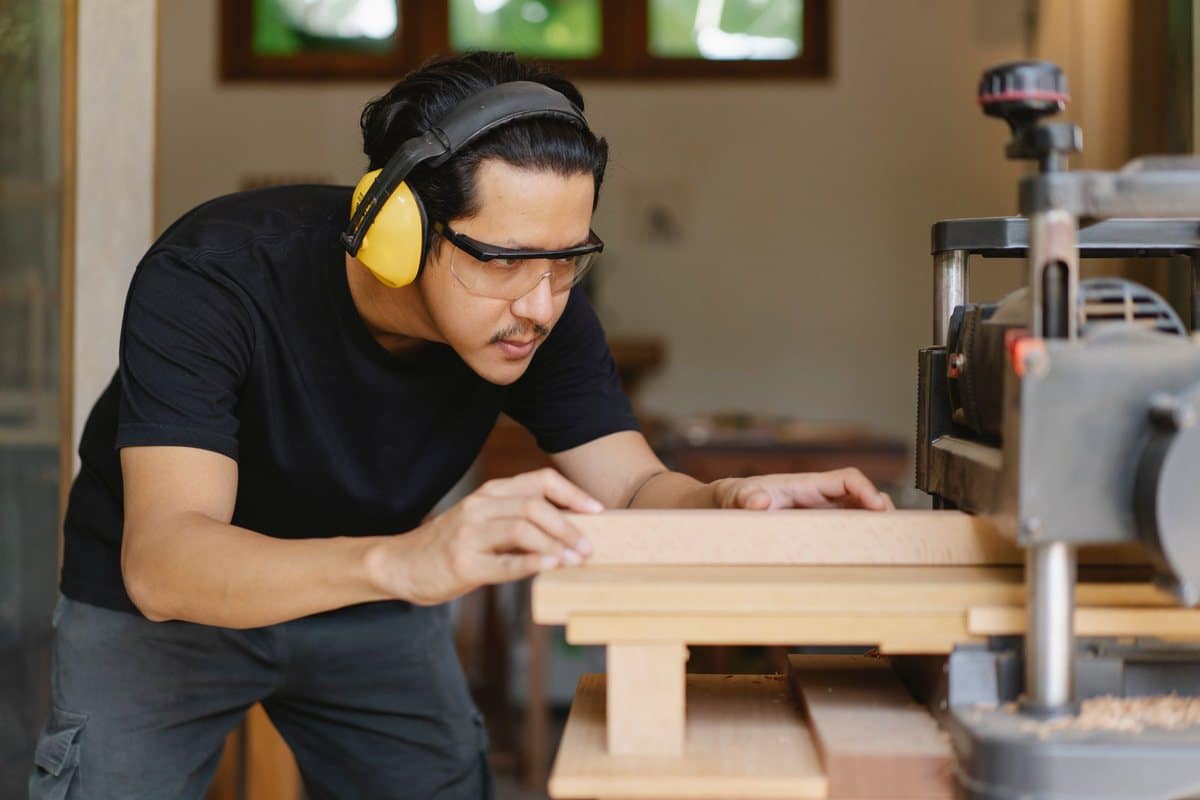
Below are my six picks, a comparison table, short reviews, and a guide to cutterheads, feed speed, snipe, dust collection and the question most people ask first: is a planer worth buying at all?
⚡ Quick Pick
Best all-round benchtop planer: DeWalt DW735X.
Spiral cutterhead at a mid-range price: WEN PL1326.
Premium helical head and cast iron bed: JET JWP-13BT.
Best Thickness Planers: Comparison
Specs are the makers’ own, from each listing. Tiers describe where each planer sits in the benchtop planer market today (budget, mid-range, upper mid-range, premium); I don’t print prices, and the Amazon buttons show the live one.
| Planer | Width | Cutterhead | Feed speeds | Listed weight | Tier |
|---|---|---|---|---|---|
| DeWalt DW735X | 13″ | 3 straight knives | 2 (96 or 179 CPI) | About 100 lb | Upper mid-range |
| WEN PL1326 | 13″ | Spiral, 26 HSS blades | 1 (26 ft/min) | About 81 lb | Mid-range |
| WEN PL1337 | 13″ | Spiral, 26 HSS blades | 2 (26 or 16 ft/min) | About 69 lb | Upper mid-range |
| JET JWP-13BT | 13″ | Helical, 6 rows of 26 HSS inserts | 2 (18 or 26 ft/min) | About 75 lb | Premium |
| Makita 2012NB | 12″ | 2 disposable double-edge blades | 1 | About 62 lb | Premium |
| Craftsman CMEW320 | Benchtop | 2 reversible steel knives | 1 | About 61 lb | Budget |
Width
- DeWalt DW735X
- 13″
- WEN PL1326
- 13″
- WEN PL1337
- 13″
- JET JWP-13BT
- 13″
- Makita 2012NB
- 12″
- Craftsman CMEW320
- Benchtop
Cutterhead
- DeWalt DW735X
- 3 straight knives
- WEN PL1326
- Spiral, 26 HSS blades
- WEN PL1337
- Spiral, 26 HSS blades
- JET JWP-13BT
- Helical, 6 rows of 26 HSS inserts
- Makita 2012NB
- 2 disposable double-edge blades
- Craftsman CMEW320
- 2 reversible steel knives
Feed speeds
- DeWalt DW735X
- 2 (96 or 179 CPI)
- WEN PL1326
- 1 (26 ft/min)
- WEN PL1337
- 2 (26 or 16 ft/min)
- JET JWP-13BT
- 2 (18 or 26 ft/min)
- Makita 2012NB
- 1
- Craftsman CMEW320
- 1
Listed weight
- DeWalt DW735X
- About 100 lb
- WEN PL1326
- About 81 lb
- WEN PL1337
- About 69 lb
- JET JWP-13BT
- About 75 lb
- Makita 2012NB
- About 62 lb
- Craftsman CMEW320
- About 61 lb
Tier
- DeWalt DW735X
- Upper mid-range
- WEN PL1326
- Mid-range
- WEN PL1337
- Upper mid-range
- JET JWP-13BT
- Premium
- Makita 2012NB
- Premium
- Craftsman CMEW320
- Budget
Best Thickness Planers: Reviews
The specs below are the makers’ own, from each product’s listing, with weights as Amazon lists them. Every pick could be ordered on Amazon when I checked it.
DeWalt DW735X 13″ Two-Speed Thickness Planer
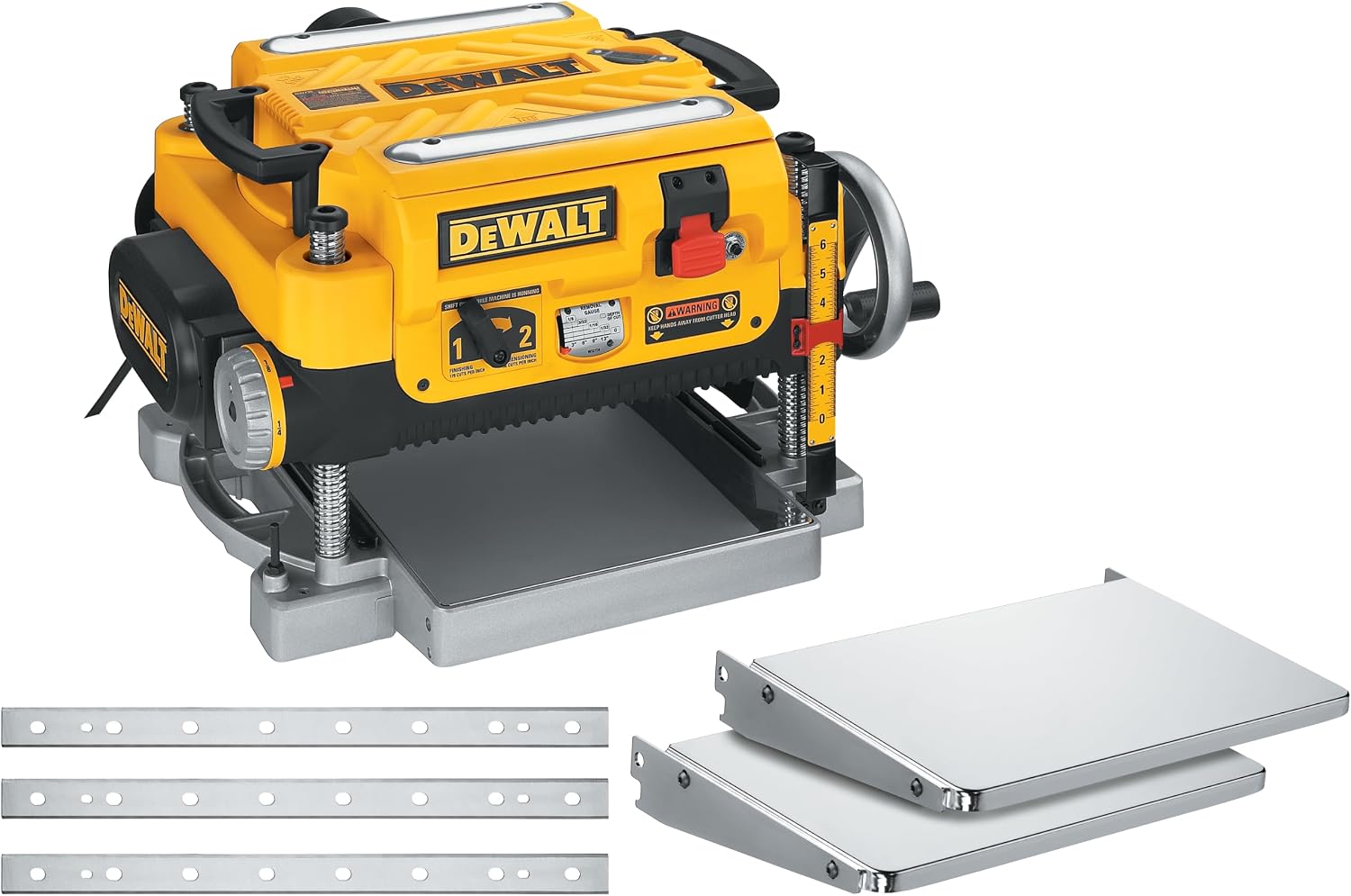
Best Thickness Planer Overall
The DW735X has been the benchmark benchtop planer for years because it does the basics very well. A 15 amp, 20,000 rpm motor drives the three-knife cutterhead at 10,000 rpm, and the two-speed gearbox lets you choose 96 or 179 cuts per inch: the fast speed for dimensioning rough stock, the slow one for a finish-ready surface on the last pass. DeWalt says the three-knife head gives 30% longer knife life and faster knife changes, and this X kit adds extra knives.
Two details make it easy to live with. An automatic carriage lock reduces the movement that causes snipe, without you having to engage it, and fan-assisted chip ejection blows chips out of the machine instead of letting them pile up on the bed. The 19-3/4″ cast aluminum base, a material removal gauge and a large thickness scale round it out. It’s heavy, at about 100 lb listed, and loud, like every straight-knife planer.
- ✅ Two feed speeds: 96 or 179 CPI
- ✅ Automatic carriage lock against snipe
- ✅ Fan-assisted chip ejection
- ✅ Extra knives included in the X kit
- ❌ Heavy: plan for a stand or a sturdy bench
- ❌ Straight knives are loud and can tear out figured wood
Best For: Home and small pro shops that dimension a lot of rough lumber and want one planer that does it all.
WEN PL1326 13″ Spiral Benchtop Thickness Planer

Best Value Spiral Cutterhead Planer
A spiral cutterhead used to be an expensive upgrade. The WEN PL1326 puts one in a mid-range benchtop planer: 26 staggered, rotatable HSS blades take a shearing cut instead of chopping the wood like straight knives, which helps on figured and interlocked grain. When a blade chips, you rotate that one insert to a fresh edge instead of replacing a whole knife.
It planes boards up to 13″ wide and 6″ thick, the 15 amp motor turns the head at 10,000 rpm, and the feed rate is 26 feet per minute. There’s an onboard material removal gauge, a depth stop and an adjustable dust port. It has one feed speed, so there’s no slow finishing pass.
- ✅ Spiral head with rotatable inserts
- ✅ 13″ x 6″ capacity
- ✅ Depth stop and removal gauge
- ✅ Mid-range tier for a spiral head
- ❌ Single feed speed
- ❌ HSS inserts, not carbide
Best For: Hobby woodworkers who plane figured or reclaimed wood and want a spiral head without a premium price.
WEN PL1337 13″ Two-Speed Spiral Thickness Planer
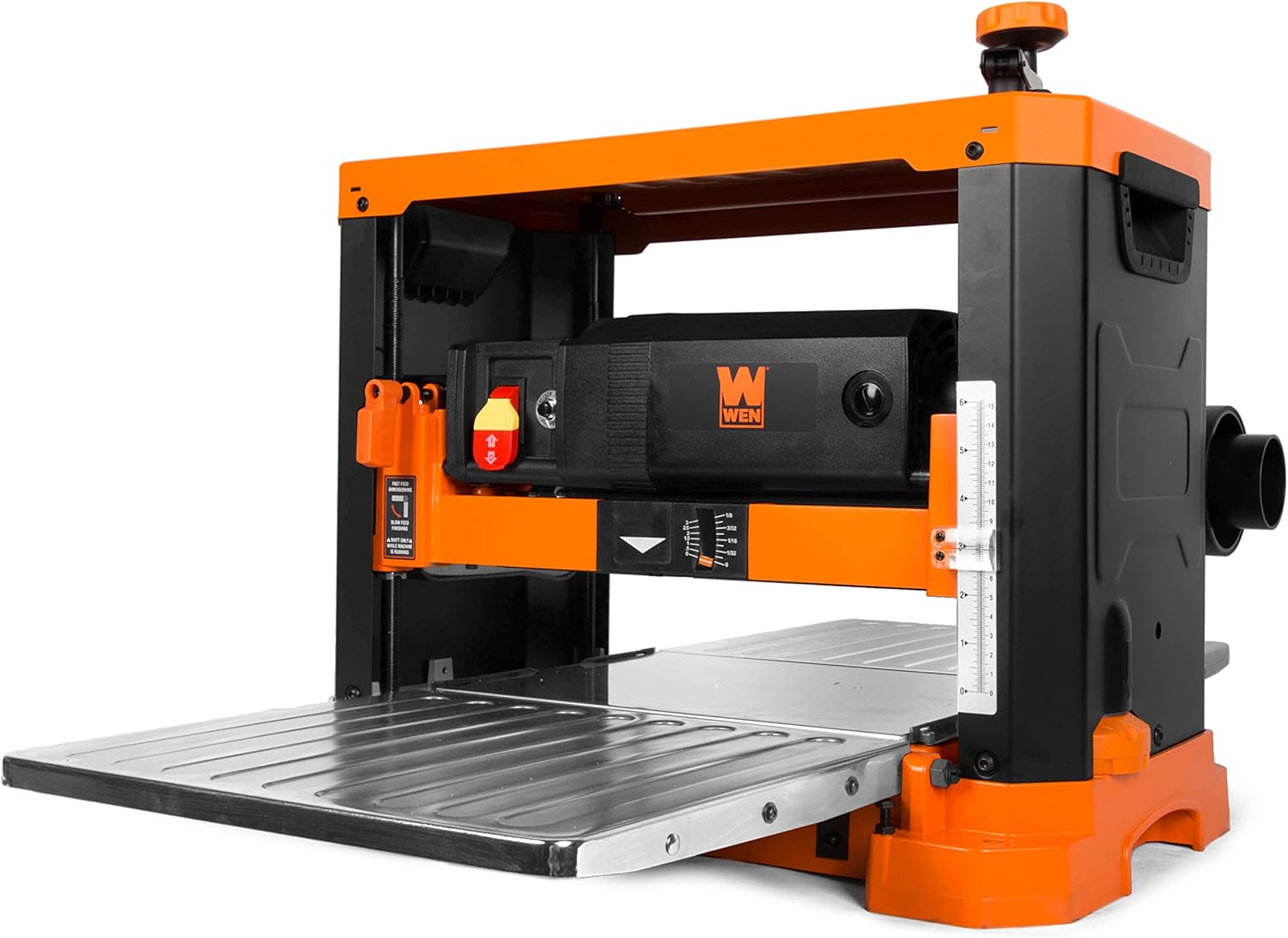
Best Two-Speed Spiral Planer
The PL1337 is WEN’s answer to the DeWalt: the same 26-blade spiral cutterhead as the PL1326, plus two feed speeds. Use 26 ft/min for quick dimensioning and 16 ft/min for the finish pass. WEN rates it at up to 1,354 cuts per inch, a figure that reflects the staggered inserts rather than a straight comparison with knife planers.
Capacity is 13″ wide and 6″ thick, and the box includes a depth stop, a material removal gauge, a combination 2-1/2″ and 4″ dust port, onboard wrench storage and workpiece return rollers on top. WEN backs it with a two-year warranty.
- ✅ Spiral head and two feed speeds
- ✅ Fits 2-1/2″ or 4″ dust hoses
- ✅ Return rollers on top
- ✅ Two-year warranty
- ❌ Upper mid-range tier, close to the DeWalt
- ❌ HSS inserts, not carbide
Best For: Anyone who wants the spiral-head finish and a slow finishing speed in one benchtop machine.
JET JWP-13BT 13″ Helical Benchtop Planer

Best Premium Benchtop Planer
The JET JWP-13BT is built like a small stationary planer. The helical cutterhead has six rows of 26 quick-change HSS inserts for a smoother, quieter cut, and the precision-machined cast iron bed with a steel cover helps keep boards flat and cut snipe. A four-post design supports the cutterhead carriage.
The 2 HP, 15 amp motor turns the head at 10,000 rpm, with two feed speeds of 18 and 26 ft/min. Capacity is 13″ wide by 6″ thick, with a maximum cut of 1/8″ per pass. The infeed and outfeed tables fold and adjust to the bed, and JET lists a five-year warranty for home use (two years for commercial use).
- ✅ Helical head, quieter and smoother
- ✅ Cast iron bed against snipe
- ✅ Two feed speeds
- ✅ Five-year warranty for home use (JET)
- ❌ Premium tier
- ❌ HSS inserts, not carbide
Best For: Serious hobbyists who plane figured hardwoods and want the best finish from a benchtop machine.
Makita 2012NB 12″ Portable Planer

Best Quiet, Portable Planer
The Makita 2012NB is the planer for people with neighbors. Makita rates it at 83 dB, which it calls the quietest in its class, and it’s compact and light enough to carry to a jobsite. A four-post design with diagonal cross supports keeps the head stable, and large table extensions support long boards.
Blade changes are quick: it uses disposable double-edge blades that drop into place. The trade-offs are a 12″ width, an inch narrower than the others, one feed speed, and a price in the premium tier. Makita lists a one-year warranty.
- ✅ 83 dB: quiet for a planer (Makita)
- ✅ Compact and portable
- ✅ Fast blade changes
- ✅ Four-post head support
- ❌ 12″ width
- ❌ Single speed
- ❌ Premium tier
Best For: Garage and apartment-adjacent shops, and anyone who moves the planer to the job.
Craftsman CMEW320 Benchtop Planer

Best Budget Thickness Planer
If you only plane now and then, the Craftsman CMEW320 is the lowest-tier planer here from an established tool brand. A 15 amp motor drives a two-knife, quick-change solid steel cutterhead mounted on ball bearings, through a poly-v belt drive. The high carbon steel knives are double-edged and reversible, so you get two edges before you buy new ones, and there’s a vacuum port for dust collection.
Two knives mean fewer cuts per inch than the DeWalt’s three, so expect to finish-sand a little more. Check the delivery time before you order: when I checked, Amazon listed it as shipping in one to four weeks.
- ✅ Budget tier
- ✅ Reversible double-edged knives
- ✅ Ball-bearing cutterhead
- ✅ Vacuum port
- ❌ Two knives: rougher finish than three-knife or spiral heads
- ❌ Longer delivery time when I checked
Best For: Occasional planing, reclaimed boards and first-time buyers on a budget.
How I Chose These Planers
I compared the benchtop thickness planers on sale on Amazon today from established tool brands, and picked the ones that stand out for a reason: the best all-rounder, the best value spiral head, the best two-speed spiral, a premium helical machine, a quiet portable one and a budget pick. I left out a DeWalt model that Amazon listed as temporarily out of stock, and unbranded planers with no maker specifications. I don’t show customer ratings or prices: prices change daily, so each pick has a market tier and the Amazon button shows the live price.
How to Choose a Thickness Planer
Straight Knives vs Spiral and Helical Cutterheads
Straight knives (two or three full-width blades) are cheaper and leave a very smooth surface on straight-grained wood, but they’re loud, and on figured wood like curly maple they can tear out chunks of grain. A nick in one knife leaves a line on every board until you replace it. Spiral and helical heads use rows of small square inserts set at an angle, which shear the wood. They’re quieter, tear out less, and when an insert chips you rotate just that one. Most benchtop models use HSS inserts; carbide inserts last longer and are sold as upgrades for some machines.
Width and Thickness Capacity
Benchtop planers are 12″ to 13″ wide and take boards up to about 6″ thick. That covers almost all furniture work. Wider boards need a stationary 15″ planer or a drum sander; see my best drum sanders for wide panels and glued-up tops, and drum sander vs planer for which one to buy.
Feed Speed and Cuts per Inch
Cuts per inch (CPI) is how many times the cutterhead hits each inch of board. More cuts per inch leave a finer surface. Two-speed planers let you run fast to remove stock and slow for the last pass, which saves sanding. With one speed, take a very light final pass.
Snipe
Snipe is a slightly deeper cut at the ends of a board, where only one feed roller holds it. Carriage locks, four-post heads and cast iron beds reduce it; so do level infeed and outfeed tables, lifting the far end of the board slightly as it enters and leaves, and planing boards a few inches longer than you need.
Dust and Chips
A planer makes more chips than any other tool in a small shop, fast enough to clog a hose in seconds. Connect it to a dust collector or a shop vac with a cyclone separator in front. My guides to the best dust collectors and the best dust separators cover both. And wear hearing protection: every planer is loud, even the quiet ones.
💡 Pro Tip
Plane both faces of a board in turns, a light pass on each, rather than taking all the wood off one side. Removing wood evenly from both faces releases stress evenly, so the board is much less likely to cup or bow after planing. Let rough lumber acclimate in your shop for a few days before you plane it.
Is a Thickness Planer Worth It?
If you build furniture regularly, yes. Rough lumber usually costs less than surfaced boards, reclaimed wood becomes usable, and you can plane parts to exactly the thickness a project needs instead of what the store stocks. If you only build a project or two a year from surfaced lumber, a planer will spend most of its time under a cover; a good random orbital sander and a belt sander will do. My belt sander vs planer guide explains when to plane and when to sand.

A thickness planer makes the two faces parallel; it does not make a twisted or cupped board flat. For that you need a jointer first, or a simple planer sled that holds the board steady while you flatten the top face. After planing, you still sand: start at 120 or 150 grit to remove the fine knife marks, then follow my grit chart for your finish. Planing throws fine dust too, so a respirator for woodworking is worth wearing.
🏆 The Verdict
For most shops, buy the DeWalt DW735X: two speeds, low snipe and the knives to keep it running. If you work with figured or reclaimed wood, choose a spiral head: the WEN PL1326 for value, or the WEN PL1337 if you want a slow finishing speed too. The JET JWP-13BT is the premium benchtop pick, the Makita 2012NB the quiet, portable one, and the Craftsman CMEW320 the budget choice for occasional use.
❓ Frequently Asked Questions
Which thicknesser is the best?+
Is the Harbor Freight planer any good?+
Is it worth buying a thicknesser?+
What is the best planer machine?+
What is the best thickness planer for the money?+
What is the best benchtop planer with a helical cutterhead?+
Conclusion
The best thickness planer is the one that matches the wood you use. Straight-grained boards and a lot of rough stock: the DeWalt DW735X. Figured and reclaimed wood: a spiral or helical head. Whatever you choose, give it good dust collection, feed boards carefully to limit snipe, and plan to finish-sand after the last pass. For the sanding that follows, start with my picks for the best random orbital sanders. Questions? Ask in the comments.
