
As an Amazon Associate I earn from qualifying purchases. All claims are strictly my personal opinion.
Most deck stains cover 150 to 400 square feet per gallon per coat, depending on the type of stain and how thirsty the wood is. To work out how much you need, measure the deck boards (length times width), add the railings and stairs, divide by your stain’s coverage for each coat, and add about 10% for end grain, gaps and spills. The deck stain calculator below does all of that for one or more deck sections, railings, stairs or a fence, then turns it into cans to buy and a cost estimate.

I built it because the calculators I found either ignore railings and stairs or use a single coverage number for every stain, and a gray, rough deck can drink twice what new boards take. Every coverage figure here comes from a stain maker’s technical data sheet, and you can override it with the number on your own can.
⚡ Quick Answers
12 x 12 deck (144 sq ft): about 1 gallon for one coat, 2 gallons for two coats of semi-transparent on weathered boards.
16 x 20 deck (320 sq ft): about 3 gallons for two coats, before railings and stairs.
100 ft privacy fence, 6 ft tall, both sides: about 7 gallons for one coat, 12 for two.
One gallon: roughly 150 to 400 sq ft per coat. Rough or weathered wood sits at the low end.
Deck Stain Calculator
Enter each part of the deck as a rectangle: add a section for an L-shape, a landing or a second level. The result updates as you type. Switch to A fence for the fence stain calculator.
Deck and fence stain calculator
Your estimate
You need about
1.6 gallons
Buy 2 × 1-gallon cans · about $90 at $45 a gallon
- Area to stain
- 192 sq ft
- Coverage used
- 225 sq ft/gal, then 338 on coat 2
- Coats
- 2
- Cost per sq ft
- $0.47
Many oil-based semi-transparents (Olympic Maximum, SuperDeck oil-based, Behr’s penetrating oil) are one-coat products. If your label says one coat, switch to 1 coat.
Show the math
- Deck boards: 192 sq ft
- Coat 1: 192 ÷ 225 = 0.85 gal
- Coat 2: 192 ÷ 338 = 0.57 gal
- Plus 10% for end grain, gaps and spills: 1.42 × 1.1 = 1.56 gal
- Rounded up to containers: 2 gal
- Cost: 2 gal × $45 = $90
Coverage rates are typical figures from Behr, Cabot, Olympic, Thompson’s and Ready Seal data sheets (sources below the calculator). Your can’s label always wins: type its rate into the box above. Prices are editable estimates, not quotes.
How Much Deck Stain Do I Need?

The answer depends on three things: the area you are staining, the coverage of your stain, and how many coats it needs. The area is the part you measure. Coverage and coats come from the can, and they vary more than most people expect, even between products sold side by side.
Deck Stain Coverage by Product
These are the coverage rates the makers publish in their technical data sheets, per gallon and per coat unless the note says otherwise.
| Stain | Type | Coverage per gallon | Coats |
|---|---|---|---|
| Cabot Australian Timber Oil | Translucent, oil | 400-600 smooth, 250-350 rough | 1 only |
| Behr Premium Transparent Waterproofing Wood Finish | Transparent, oil | 350-400 | 1 only |
| Behr Premium Semi-Transparent Stain & Sealer No. 5077 | Semi-transparent, water | 300 first coat, 500 second coat | 2 required |
| Olympic Maximum Semi-Transparent | Semi-transparent, acrylic/oil | 250-350, depending on texture | 1 |
| Thompson’s WaterSeal Waterproofing Stain | Transparent, semi or solid, water | 150-400 | 1 (second within 4 hours if needed) |
| Ready Seal | Semi-transparent, oil | 150 (treated pine deck) to 175 (cedar deck) for both coats | 2 light coats |
| Cabot Solid Color Acrylic Stain + Sealer | Solid, water | 400-500 smooth, 200-300 rough | 2 (1 on new wood) |
The calculator’s default rates sit inside these ranges: 350, 275 and 200 sq ft per gallon for transparent and solid stains on smooth, weathered and rough wood, and 300, 225 and 175 for semi-transparent. A second coat of a transparent or semi-transparent stain goes further, so the calculator counts it at 1.5 times the first-coat rate, close to Behr’s 300 then 500. Solid stain keeps the same rate on both coats, as Cabot’s sheet gives one figure for both. If your can gives a single number, type it into Coverage on your label and the calculator uses it for every coat.
Smooth, Weathered or Rough Wood
Wood condition changes coverage more than anything except the stain type. Cabot’s rough-surface figures are about half to two thirds of its smooth ones. Ready Seal says older wood is more porous and tells you to add 20-25% to its figures, and Sherwin-Williams notes on SuperDeck that new wood normally takes less product than old, weathered wood. As a rule of thumb:
- New or smooth boards: the top of the label range. New, dense boards may not take a second coat at all.
- Weathered boards that have turned gray, or a deck you just sanded: the middle of the range.
- Rough-sawn, very old or very dry wood: the bottom of the range, sometimes below it. Stain one board and time how far a quart goes before you buy for the whole deck.
One Coat or Two?
Follow the label, because the makers disagree. Cabot Australian Timber Oil, Behr Transparent, Olympic Maximum and Sikkens Cetol SRD are labeled for one coat, and a second coat on a horizontal surface can stay tacky or turn glossy. Behr’s water-based semi-transparent No. 5077 requires two coats, Cabot’s solid stain wants two on weathered wood, and Ready Seal is applied as two light coats with its coverage already counting both. Thompson’s allows a second coat only within four hours of the first. Pick 1 coat or 2 coats in the calculator to match your product.
How to Measure Your Deck for Stain
You need a tape measure and five minutes. Round each measurement up to the next half foot; the calculator adds 10% on top for end grain, the gaps between boards and the stain that ends up on your shoes.
Deck Boards: Length Times Width, Section by Section
Measure the floor as one or more rectangles. A plain rectangular deck is one section. An L-shaped deck is two: measure the long leg the full length, then the short leg from the inside corner out, so you don’t count the corner twice. A landing between levels or a second deck level is another section. The calculator takes up to six.
Railings and Balusters
Railings take more stain than people expect, because every baluster has four faces. Measure the total length of railing once along the top rail, not both sides. The calculator converts that length into area with these allowances, which are my own estimates from standard railing dimensions:
- Wood balusters: 5 sq ft per foot of railing. A 36-inch railing with 2×2 balusters about 4 inches apart has a little over two balusters per foot, each with about 1.5 sq ft of surface on four faces, plus the top and bottom rails.
- Horizontal wood boards: 5 sq ft per foot, both faces of the boards plus the posts.
- Solid wood panels: 6 sq ft per foot, both faces of a 3-foot panel.
- Metal or cable infill: 2 sq ft per foot, for the wood cap, bottom rail and posts only.
Some online calculators use 3 sq ft per foot (length times height), which undercounts baluster railings. If your railing is unusual, measure one section and divide its stained area by its length.
Stairs
Count the steps and measure the stair width. For each step the calculator counts a tread and a riser, about 1.6 sq ft per foot of width (an 11-inch tread plus a 7.5-inch riser), plus 1 sq ft for its share of the two outer stringers. Four steps 4 feet wide come to about 30 sq ft. Add a landing as its own deck section.
What the Calculator Leaves Out
Board edges inside the gaps are covered by the 10% allowance. Skirting, fascia boards, benches, planters and pergolas are not: measure them as extra deck sections or add them to the railing length. If you stain the underside of boards or joists, measure them separately; most people don’t.
Fence Stain Calculator: Measuring a Fence
For a fence, choose A fence at the top of the calculator, then enter the total length of the fence line and its height. The face area is length times height, doubled if you stain both sides.
Privacy, Board-on-Board and Picket Fences
- Solid privacy fence: the full face area on each side.
- Board-on-board or shadowbox: the face area plus 15%, for the overlapping board edges you can see and brush into.
- Spaced pickets: 60% of the face area, which allows for the gaps between pickets and adds back the picket edges.
Both Sides, Posts and Rails
The back of most fences shows the posts and two or three horizontal rails, which add real area. With Include posts and rails ticked, the calculator adds 15% to the fence face area. A 100-foot, 6-foot privacy fence stained on both sides comes to 1,200 sq ft of face, about 1,380 sq ft with posts and rails. At a typical semi-transparent rate on weathered wood that is about 7 gallons for one coat.
Deck Stain Cost
The calculator multiplies the gallons you buy by a price per gallon you can change. The defaults are $50 a gallon for transparent stain, $45 for semi-transparent and $42 for solid, the middle of what I found in October 2026.
What a Gallon of Deck Stain Costs
Mass-market water-based stains from Thompson’s and Behr sell for roughly $35 to $48 a gallon at the big home centers. Penetrating oils and premium brands cost more: on the day I checked, Wood Defender Semi-Transparent was $58.25 a gallon on Wood Defender’s site, DEFY Extreme $60.59, Penofin Red Label $50.41 and Sikkens ProLuxe Cetol SRD $73.27 at The Paint Store. Prices move with color, region and season, so put in the number from your own store.
5-Gallon Pails vs Gallon Cans
A 5-gallon pail usually costs about four times the gallon price, so the fifth gallon is close to free: Wood Defender, for example, listed $235.53 for 5 gallons against $58.25 for one. The calculator prices a pail at 4.2 times your gallon price, and it switches to a pail once you would otherwise buy more than four single gallons. Buying all the stain at once has another advantage: Cabot tells you to mix every container together when a job needs more than one, so the color matches from board to board.
Before You Stain: Sand and Clean the Deck
Coverage figures assume clean, sound wood. Old, failing stain, gray fibers and mildew all change how much stain the boards take and how long it lasts. Wash the deck, let it dry for a day or two, and sand off loose fibers and failed finish. Stain makers warn against sanding a deck too fine, because a polished surface does not absorb penetrating stain: the grits that work are in what grit sandpaper to use on a deck, and the full grit scale is in my sandpaper grit chart. For the sanding itself, my best sanders for deck refinishing compares the belt and random orbital sanders that handle deck boards best.
What I’d Use for the Staining
Ready Seal Exterior Wood Stain and Sealer, 5 Gallon

An oil-based semi-transparent stain and sealer that Ready Seal says goes on without lap marks, so a large deck or a long fence doesn’t need perfect timing. It is applied as two light coats at least 45 minutes apart, and its published coverage already includes both coats: 150 sq ft per gallon on treated pine decks and 175 on cedar decks, plus 20-25% more on older wood. Ready Seal also says it should not go over previously painted or sealed surfaces, so strip or sand old finish first.
Cabot 6-Inch Stain Applicator Pad
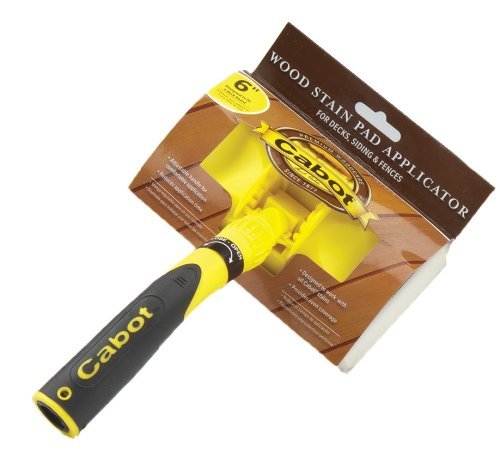
Behr’s technical data sheet recommends a pad applicator over large deck areas, and Cabot lists stain pads among its application methods. A 6-inch pad covers about one deck board at a time, which makes it easier to work end to end along a few boards and keep a wet edge, the way the makers tell you to avoid lap marks. This one is made for smooth surfaces such as deck boards and planed fence pickets.
🏆 The Bottom Line
Measure the deck floor section by section, add 5 sq ft per foot of baluster railing and about 7.5 sq ft per step on a 4-foot stair, then divide by your stain’s coverage for each coat and add 10%. For most semi-transparent stains on a weathered deck that works out to roughly one gallon per 200 sq ft for two coats. Check your label for the coat count, buy it all at once, and sand and clean the deck before you open the can.
❓ Frequently Asked Questions
How many gallons of stain do I need for a 12×12 deck?
How many square feet does 1 gallon of deck stain cover?
How much does 1 quart of stain cover?
How much will 5 gallons of stain cover on a fence?
How do you calculate how much stain you need for a fence?
Does a deck need two coats of stain?
How much does it cost to stain a 12×12 deck yourself?
Sources
Coverage, coats and container sizes are from the makers’ own documents, read in October 2026:
- Cabot, Australian Timber Oil #3400 product data sheet (revised 4/14/23) and Solid Color Acrylic Stain + Sealer #1800 product data sheet (revised 3/3/2023)
- Behr, Semi-Transparent Waterproofing Stain & Sealer No. 5077 technical data sheet (revised 2/2020) and Transparent Waterproofing Wood Finish No. 4500 technical data sheet
- Olympic, Maximum Semi-Transparent 79550 technical data (2/2016)
- Thompson’s WaterSeal, Semi-Transparent Wood Sealer product page
- Ready Seal, Stain technical data sheet
- Sherwin-Williams, SuperDeck Oil-Based Semi-Transparent product data sheet
- Prices: Wood Defender, DEFY, The Paint Store (Penofin) and The Paint Store (Sikkens), checked October 1, 2026
Railing, stair and fence allowances are my own estimates from standard lumber sizes, explained above. Planning a big deck or a tricky fence? Ask in the comments and I’ll help you check the numbers.

