
As an Amazon Associate I earn from qualifying purchases. All claims are strictly my personal opinion.

The best popcorn ceiling removal tool for an unpainted ceiling is a wide ceiling texture scraper on an extension pole, used after you soak the texture with a pump sprayer. A scraper that connects to a shop vacuum keeps most of the mess off the floor. Painted popcorn won’t soak up water, so it needs a drywall sander with dust extraction, or a skim coat over the top. Test for asbestos before you disturb any of it.
Below you’ll find every popcorn ceiling removal tool worth considering, from a 12″ Homax scraper to vacuum attachments and long-reach drywall sanders, plus how to tell whether your ceiling should be scraped or sanded, what to do about asbestos and lead, and how to finish the ceiling afterward. Product details come from the makers’ listings; the asbestos and lead guidance comes from the EPA.
⚡ Quick Answer
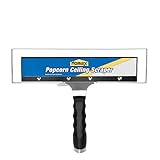
Best popcorn ceiling scraper: the Homax 6104 – a 12″ blade that threads onto an extension pole and holds a bag to catch the texture.
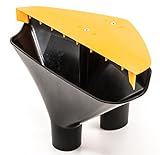
Least mess: the POP EEZE vacuum scraper, which connects to your shop vac hose.
Best popcorn ceiling sander (painted texture): the DEWALT DCE800B, or the VEVOR 850W on a budget.
Don’t forget: a pump sprayer for soaking the texture.
Popcorn Ceiling Removal Tools Compared
| Tool | Type | Painted popcorn? | Mess control | Best for |
|---|---|---|---|---|
| 12″ pole scraper | No | Bag attachment | Unpainted ceilings, whole rooms | |
| Vacuum scraper | No | Shop vac | Furnished rooms, less cleanup | |
| 1-gallon pump sprayer | – | Wetting cuts dust | Soaking texture before scraping | |
| Vacuum hand sander | Touch-ups | Wet/dry vac | Smoothing after scraping | |
| Cordless drywall sander | Yes | Dust extractor (AirLock) | Painted popcorn, finishing | |
| Corded drywall sander | Yes | Hose and bag | One-off jobs on a budget |


Before You Start: Test for Asbestos and Lead
Asbestos in Popcorn Ceilings
Popcorn (acoustic) texture is sprayed on, and older spray-on textures can contain asbestos. The EPA lists “textured paint and patching compounds used on walls and ceilings” among the places asbestos may be found in a home, and says exposure happens mainly when the material is disturbed: exactly what scraping and sanding do. The EPA banned spray-applied asbestos surfacing for fireproofing and insulation in 1973 and for other purposes in 1978, but those bans don’t give you a reliable cutoff for a particular house.
If you don’t know when the ceiling was textured, or it went up before the 1980s, have it sampled before you touch it. The EPA recommends that a trained and accredited asbestos professional take the sample, because sampling done badly can release fibers. If it contains asbestos, the EPA’s advice is to leave it undisturbed or hire a trained professional; its guidance for removal includes wetting the material with a fine mist, not breaking it into small pieces, and cleaning up with HEPA vacuums, never a regular vacuum.
Lead Paint on Painted Popcorn
If the texture has been painted, the paint matters too. In 1978 the federal government banned lead-based paint for use in homes, and the EPA warns that renovation in a pre-1978 home with lead paint can create dangerous lead dust. Sanding painted popcorn in an older house is exactly that kind of job, so have the paint tested first. The EPA recognizes specific lead test kits for use by trained professionals, and a lead-safe certified renovator can test it and do the work.
⚠️ Test First, Then Pick the Tool
None of the tools on this page makes asbestos or lead safe to remove yourself. A negative test is what makes a DIY popcorn ceiling removal a reasonable weekend project.
Scrape or Sand a Popcorn Ceiling?
Is the Ceiling Painted? The Water Test
Spray a small patch with water and wait a few minutes. If the texture darkens, softens and comes off easily with a putty knife, it’s unpainted, and scraping will work. If the water beads up or the texture stays hard, it has been painted, and water won’t get through the paint film. Both POP EEZE listings say outright that the tool is not recommended for painted popcorn ceilings.
Why Scraping Wins on Unpainted Texture
Wet popcorn texture is soft. A wide blade lifts it off in strips with far less dust than sanding, and the water keeps fibers and particles down. Scraping is also quicker: Homax says its 6104 can clear a 10′ x 10′ ceiling in 30 minutes or less. The trade-off is mess, since wet texture falls in clumps unless you catch it with a bag or a vacuum attachment.
When Sanding Makes Sense
Sanding is the answer for painted popcorn, for leftover bumps after scraping, and for smoothing the joint compound you apply afterward. A long-reach drywall sander connected to a dust extractor is the right machine; a palm sander on a ladder is slow, tiring and dusty. Expect sanding painted texture to take much longer than scraping unpainted texture.
How to Remove a Popcorn Ceiling Step by Step
Step 1: Empty and Seal the Room
Move the furniture out, turn off the power to ceiling fixtures and remove them, and cover the floor with plastic sheeting taped up the walls a few inches. Heavy 6-mil plastic sheeting holds up better underfoot than thin drop cloths. Seal HVAC registers and doorways.
Step 2: Gear Up
Wear eye protection and a respirator with P100 filters, such as the 3M 6391 half facepiece kit, plus gloves. Work from a stable ladder or scaffold, not a chair.
Step 3: Soak a Section
Fill a pump sprayer with plain water and mist a section of about 4′ x 4′. Don’t flood it; you want the texture soft, not the drywall paper underneath soaked. Let it sit a few minutes and test with the scraper.
Step 4: Scrape
Hold the scraper at a low angle and push it across the ceiling in long, steady strokes. If the texture fights you, mist again and wait. Keep the corners of the blade from digging into the drywall paper; a rounded or slightly dulled blade corner gouges less.
Step 5: Clean Up
Roll the plastic sheeting inward and bag the debris while it’s still damp. Wipe or vacuum the walls and floor with a HEPA-filtered vacuum rather than sweeping dry dust.
Step 6: Repair, Skim and Sand
Expect some gouges, exposed joints and loose paper. Seal torn paper with a primer, fill and skim with joint compound, then sand smooth. My guide to what grit to sand drywall covers the grit for each coat.
Step 7: Prime and Paint
Prime the whole ceiling once the compound is dry and sanded. Raking light from a work lamp held close to the ceiling shows any ridges before the paint goes on.
The Best Popcorn Ceiling Removal Tools
Homax 6104 Ceiling Texture Scraper

Best Popcorn Ceiling Scraper
The classic popcorn ceiling removal tool. Homax lists a 12″ blade, a threaded handle that takes a standard extension pole (sold separately) and an attachment for a plastic bag that catches texture as it falls. The head is shaped to avoid gouging the drywall, and Homax claims a 10′ x 10′ ceiling in 30 minutes or less. It’s simple, cheap and the right first tool for an unpainted ceiling.
- ✅ Wide blade covers a ceiling fast
- ✅ Bag attachment catches debris
- ✅ Budget price tier
- ❌ Pole and bag not included
- ❌ Doesn’t work on painted texture
Best For: Unpainted popcorn ceilings in empty rooms.
POP EEZE Popcorn Ceiling Scraper Vacuum Attachment

Best Popcorn Ceiling Removal Tool With Vacuum
A scraper and funnel that connect to your shop vacuum hose and a pole, so the texture goes into the vacuum instead of onto the floor. POP EEZE includes the funnel, three blades and instructions, and says it saves the constant bag changes of a scraper-and-bag setup. The maker is clear that it is not recommended for painted ceilings. The Popeeze PRO version swaps in a metal blade.
- ✅ Much less debris on the floor
- ✅ Uses the shop vac you already own
- ❌ Not for painted popcorn
- ❌ Wet texture is heavy on a small vacuum
Best For: Rooms you can’t fully empty, and anyone who hates cleanup.
Chapin 20004 1-Gallon Pump Sprayer

Best Sprayer for Soaking Popcorn Texture
Every scraping method starts with water, and a pump sprayer puts a fine, even mist on the ceiling without dripping all over you. Chapin’s SureSpray has a 1-gallon translucent tank with a funnel top, an adjustable cone nozzle for a stream or a broad spray, and a 34″ hose. Use it with plain water only, and keep it dedicated to indoor use.
- ✅ Even mist that soaks without flooding
- ✅ See-through tank
- ❌ You’ll pump often on a big ceiling
Best For: Wetting unpainted popcorn before you scrape.
Hyde 09165 Dust-Free Drywall Vacuum Hand Sander

Best Budget Popcorn Ceiling Sander
A manual sanding head that pulls dust through the screen into a wet/dry vacuum. Hyde includes a 6′ hose, a coupling adapter for 1-3/4″, 1-1/2″ and 2-1/2″ vacuum hoses and a reversible sanding screen, and its EasyClamp holds the screen for quick changes. It’s not fast enough to remove painted popcorn from a whole room, but it’s ideal for the bumps scraping leaves and for sanding the skim coat afterward.
- ✅ Captures dust at the head
- ✅ Fits most shop vac hoses
- ✅ Budget price tier
- ❌ Manual, so slow on painted texture
Best For: Cleanup sanding after scraping and smoothing joint compound.
DEWALT 20V MAX Cordless Drywall Sander (DCE800B)

Best Popcorn Ceiling Sander
For painted popcorn, a long-reach sander does the work. DEWALT lists a brushless motor, a telescoping shaft for reach, a variable-speed dial, a tool-free AirLock connection to DEWALT dust extractors and Wireless Tool Control, which switches a compatible extractor on and off with the sander. Without a cord trailing behind you, moving around a ceiling is easier. It’s sold as a bare tool, so budget for a 20V battery and charger if you don’t own them.
- ✅ Cordless with extractor integration
- ✅ Brushless motor
- ✅ Telescoping reach
- ❌ Tool only, battery extra
- ❌ Needs an extractor for dust-free work
Best For: Painted popcorn and finishing the ceiling afterward.
VEVOR 850W Electric Drywall Sander
Best Budget Electric Popcorn Ceiling Sander
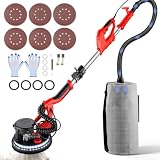
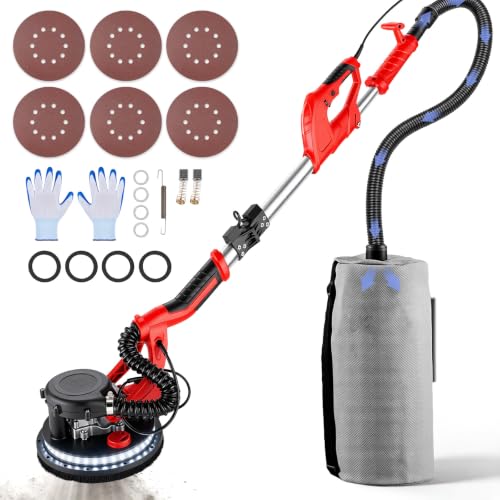
A corded long-reach sander for a one-off job. VEVOR lists an 850 W motor with 7 speeds from 800 to 1,750 RPM, 225 mm (8.86″) sanding discs, a handle that extends from 1.4 to 1.9 m and folds for storage, an LED strip around the head, and a dust hose with a collection bag. Spec sheets for budget sanders come from the seller rather than an independent test, but for one ceiling it costs far less than a premium sander. Connect the hose to a shop vac instead of the bag for better dust capture.
- ✅ Low price for a long-reach sander
- ✅ Extending, folding handle
- ❌ Heavy overhead for long sessions
- ❌ Bag alone won’t catch fine dust
Best For: A single painted ceiling on a tight budget.
If you’ll sand ceilings regularly, the Bosch GTR55-85 has a ceiling-suction mode that takes some of the tool’s weight off your arms. I compare it with the Festool PLANEX and others in my best drywall sanders guide.
Can You Sand a Popcorn Ceiling?
Yes, and for painted popcorn it’s usually the only way short of covering it. Three things decide how it goes.
What Kind of Sander
Use a long-reach drywall sander with a round, flexible head and a vacuum port. Its large disc rides over the bumps instead of digging into them, and the pole keeps you off the ladder for most of the ceiling. A random orbital or palm sander is fine for a small patch but miserable for a room.
What Grit
Start coarse on painted texture, around 60-80 grit, to break through the paint and knock the peaks down, then move to 120-150 to smooth. Once you’ve skimmed the ceiling with joint compound, finish-sand with the grits in my drywall grit guide. Painted texture clogs discs quickly, so have plenty on hand.
Dust
Sanding a ceiling puts dust right above your face. Run the sander through a dust extractor or a shop vac with a fine filter, wear a P100 respirator and eye protection, and seal the room. My guides to the best dust extractors and dustless sanders cover the options.
Smoothing a Popcorn Ceiling Without Removing It
If the texture is painted, tested positive for asbestos, or you simply don’t want the mess, you can cover it instead.
- Skim coat: knock the tallest peaks down with a scraper, prime, then apply thin coats of joint compound and sand between them. This hides the texture without removing it, but takes several coats.
- New drywall over the top: thin ceiling drywall screwed through the old ceiling into the joists. More work up front, very little dust.
- Ceiling planks or panels: a covering that leaves the original ceiling sealed in place.
If the texture contains asbestos, check the EPA’s guidance before you sand, scrape or screw into it, and use a trained professional where it calls for one.
🏆 The Verdict
Test for asbestos (and lead, if painted) first. For unpainted popcorn, soak it with a Chapin pump sprayer and scrape it with a Homax 6104, or use the POP EEZE on your shop vac to keep the mess off the floor. For painted popcorn, use a long-reach sander: the DEWALT DCE800B with an extractor, or the VEVOR 850W for a single job. Finish with a skim coat, a Hyde vacuum sander for touch-ups, primer and paint.
❓ Frequently Asked Questions
What is the best tool to remove popcorn ceilings?+
Is it better to sand or scrape a popcorn ceiling?+
Is there a vacuum that can remove popcorn ceilings?+
Can I remove the popcorn ceiling myself?+
What year did popcorn ceilings stop having asbestos?+
How do you smooth out a popcorn ceiling without removing it?+
Still deciding whether your ceiling is painted or which sander fits your room? Describe it in the comments and I’ll help you choose.

