


As an Amazon Associate I earn from qualifying purchases. All claims are strictly my personal opinion.
My top pick
Citristrip Paint & Varnish Stripping Gel
For furniture, doors and trim indoors: it clings to vertical surfaces and stays active for up to 24 hours.
Sanding is the fast way to take paint off flat boards. On carved chair backs, turned legs, raised-panel doors and veneer, it is the fastest way to ruin the piece. The best paint stripper for wood is a thick gel or paste that stays wet long enough to soften every layer at once, so you can lift the paint with a scraper instead of grinding through it. For most furniture and trim, that means a slow, low-odor gel such as Citristrip; for thick, multi-layer jobs, a professional water-based paste such as Smart Strip PRO.
Below are my picks, a comparison table, short reviews, the scrapers that make stripping twice as quick, and the two safety checks that matter more than which bottle you buy: lead paint and ventilation.
⚡ Quick Pick
For furniture, doors and trim indoors, get Citristrip Stripping Gel: it clings to vertical surfaces and stays active for up to 24 hours.
For many layers of old paint, go with Smart Strip PRO, which Dumond rates at up to 20 layers in one application.
Whatever you pick, pair it with a carbide scraper for flat work and a contour scraper for moldings.
Best Paint Strippers for Wood: Comparison
The table compares what each maker publishes: how many layers the product is meant to remove, how long it needs, and what it is free of. None of these contain methylene chloride, which the U.S. EPA banned from consumer paint removers in 2019.
| Product | ⭐ Citristrip Gel 🏆 EDITOR’S CHOICE |
Smart Strip PRO | Sunnyside Multi-Strip ADVANCED | Max Strip Gel | Smart ‘n Easy Gel |
|---|---|---|---|---|---|
| Image |  |
 |
 |
 |
 |
| Price | $ | $ | $ | $ | $ |
| Form | Gel | Paste, water-based | Thick liquid | Gel, water-based | Gel, water-based |
| Layers (maker’s figure) | Multiple layers | Up to 20 | Up to 15 | Usually one application | Multiple layers |
| Working time | Active up to 24 h | Up to 24 h | Starts in 30 min | 15-30 min minimum, under plastic | Apply, wait, remove |
| Methylene chloride | None | None | None | None | Not reported (no caustics) |
| NMP | Contains (Prop 65 warning) | None | None | None | Not reported |
| Clings to vertical surfaces | ✅ | ✅ | ✅ | ✅ | ✅ |
| Best For | Furniture and trim indoors | Many layers, big jobs | Quick jobs on a budget | Small rooms, low odor | First-time strippers |
| Availability | Shop Now | Shop Now | Shop Now | Shop Now | Shop Now |
⭐ Citristrip Gel
🏆 EDITOR’S CHOICE
- Price
- $
- Form
- Gel
- Layers (maker’s figure)
- Multiple layers
- Working time
- Active up to 24 h
- Methylene chloride
- None
- NMP
- Contains (Prop 65 warning)
- Clings to vertical surfaces
- ✅
- Best For
- Furniture and trim indoors
Smart Strip PRO
- Price
- $
- Form
- Paste, water-based
- Layers (maker’s figure)
- Up to 20
- Working time
- Up to 24 h
- Methylene chloride
- None
- NMP
- None
- Clings to vertical surfaces
- ✅
- Best For
- Many layers, big jobs
Sunnyside Multi-Strip ADVANCED
- Price
- $
- Form
- Thick liquid
- Layers (maker’s figure)
- Up to 15
- Working time
- Starts in 30 min
- Methylene chloride
- None
- NMP
- None
- Clings to vertical surfaces
- ✅
- Best For
- Quick jobs on a budget
Max Strip Gel
- Price
- $
- Form
- Gel, water-based
- Layers (maker’s figure)
- Usually one application
- Working time
- 15-30 min minimum, under plastic
- Methylene chloride
- None
- NMP
- None
- Clings to vertical surfaces
- ✅
- Best For
- Small rooms, low odor
Smart ‘n Easy Gel
- Price
- $
- Form
- Gel, water-based
- Layers (maker’s figure)
- Multiple layers
- Working time
- Apply, wait, remove
- Methylene chloride
- Not reported (no caustics)
- NMP
- Not reported
- Clings to vertical surfaces
- ✅
- Best For
- First-time strippers
⚡ Key Takeaways
- Modern strippers are slower than the old solvent formulas. Plan on minutes to hours of dwell time, and keep the coat wet: that is what makes them work.
- For furniture and trim, a gel that stays active for hours, such as Citristrip, removes several layers in one pass.
- For thick, old, multi-layer paint, a professional paste such as Smart Strip PRO is the stronger choice.
- If the paint might be from before 1978, test it for lead before you strip, sand or heat it.
- A good scraper matters as much as the stripper: carbide for flat panels, a contour scraper for moldings.
Before You Buy: Stripper, Sander or Heat Gun?
Paint comes off wood three ways, and each one suits a different piece.
- Chemical stripper: the right choice for detailed, carved or veneered furniture, spindles, moldings and anything where you want to keep the original wood surface. It is slow but gentle.
- Sanding: fastest on flat, solid wood such as tabletops, deck boards and doors laid flat. It removes a little wood with the paint, which is fine on solid stock and a problem on thin veneer. My guide to the best sanders for paint removal covers which sander to use.
- Heat: quick on thick exterior paint, but it is the method most likely to scorch wood or crack glass, and it is a poor choice on old paint that might contain lead.
Most refinishing jobs mix the first two: strip the bulk with a gel, then do a light sanding pass to clean up. If that is your plan, my guide on how to sand furniture to paint picks up where this page ends.
⚠️ Test for Lead First
According to the U.S. EPA, homes built before 1978 are more likely to have lead-based paint, and dust and chips from that paint are one of the most common sources of lead exposure at home. Renovation that disturbs old paint can create large amounts of lead dust. If the piece or the house is older than 1978, test before you strip, sand or heat anything. EPA recommends hiring a lead-safe certified contractor for this work; if you do it yourself, follow EPA’s lead-safe practices for do-it-yourselfers.
Best Paint Strippers for Wood: Reviews
Each pick below earns its place for a specific job. The numbers are the makers’ own, quoted from their product listings; where a maker doesn’t publish a figure, I say so rather than guess.
Citristrip Paint & Varnish Stripping Gel
Best Overall Paint Stripper for Wood Furniture
Citristrip is the stripper most people should start with, because its strength is patience. The gel stays wet and active for up to 24 hours, which lets it work down through several layers of paint or varnish in one application, and it clings to vertical surfaces, so it stays on a chair leg or a door frame instead of running onto the floor. It contains no methylene chloride, is non-caustic, and has a citrus smell rather than the solvent smell of older strippers.
One thing the marketing doesn’t lead with, and you should know: the listing carries a California Proposition 65 warning for N-Methyl-2-pyrrolidone (NMP), a solvent the state lists for reproductive harm. It is still a common choice for indoor furniture work, but treat it like any solvent product: gloves, eye protection, good ventilation, and keep it away from children. If you want a formula without NMP, the next three picks are free of it according to their makers.
- ✅ Stays active for up to 24 hours: strips several layers at once
- ✅ Gel clings to vertical and detailed surfaces
- ✅ No methylene chloride, non-caustic, mild citrus odor
- ✅ Easy to find replacement sizes (32 oz and 64 oz gel, paste, aerosol)
- ❌ Slow: expect to wait hours, not minutes, on thick paint
- ❌ Contains NMP (Prop 65 warning on the listing)
Best For: Dressers, chairs, doors and trim stripped indoors, where a thick, slow gel that stays put is worth more than speed.
Dumond Smart Strip PRO Paint Remover
Best for Many Layers of Old Paint
When a door or a mantel has been painted every decade for fifty years, you need a stripper built for thickness. Dumond rates Smart Strip PRO at up to 20 layers of oil, latex and acrylic paint, varnish and stain in one application. It is a water-based paste with no methylene chloride and no NMP, made in the USA, and it is sold as the professional version of Dumond’s DIY line.
Two details decide whether it suits your job. First, you leave it on for a long time: Dumond says to wait up to 24 hours before scraping. Second, Dumond says it works best on paints from after the 1980s; on older coatings, test a small area first, and test for lead before anything else. It also works on brick, stone, plaster and metal, which makes it a good buy if the house project doesn’t stop at wood.
- ✅ Maker-rated for up to 20 layers in one application
- ✅ Water-based, no methylene chloride, no NMP
- ✅ Works on wood, masonry, plaster and metal
- ❌ Long dwell time: plan the job over a day
- ❌ Dumond notes it works best on post-1980s coatings
Best For: Old doors, mantels, porch parts and trim with many layers of paint, where one long application beats three short ones.
Sunnyside Multi-Strip ADVANCED Paint & Varnish Remover
Best Value, Fastest Start
Sunnyside Multi-Strip ADVANCED is the pick when you want to see results the same afternoon. Sunnyside says it begins working in 30 minutes and can remove up to 15 layers of paint, varnish, stain, lacquer and urethane, and it is formulated with no methylene chloride or NMP.
You control strength with thickness: Sunnyside recommends a light coat for 1 to 4 layers and a heavier coat, plus a stripping tool, for more. It can go on with a brush, a medium-nap roller or a putty knife, it adheres to vertical surfaces, and it works on interior and exterior wood, plaster, masonry, metal and veneers. It is also the lowest-cost pick on this page.
- ✅ Starts working in about 30 minutes
- ✅ Up to 15 layers, including lacquer and urethane
- ✅ No methylene chloride or NMP
- ✅ Brush, roller or putty knife application
- ❌ Thinner than a gel, so heavy coats need care on vertical work
Best For: One-day projects such as a side table or a set of cabinet doors, where you want to start scraping within the hour.
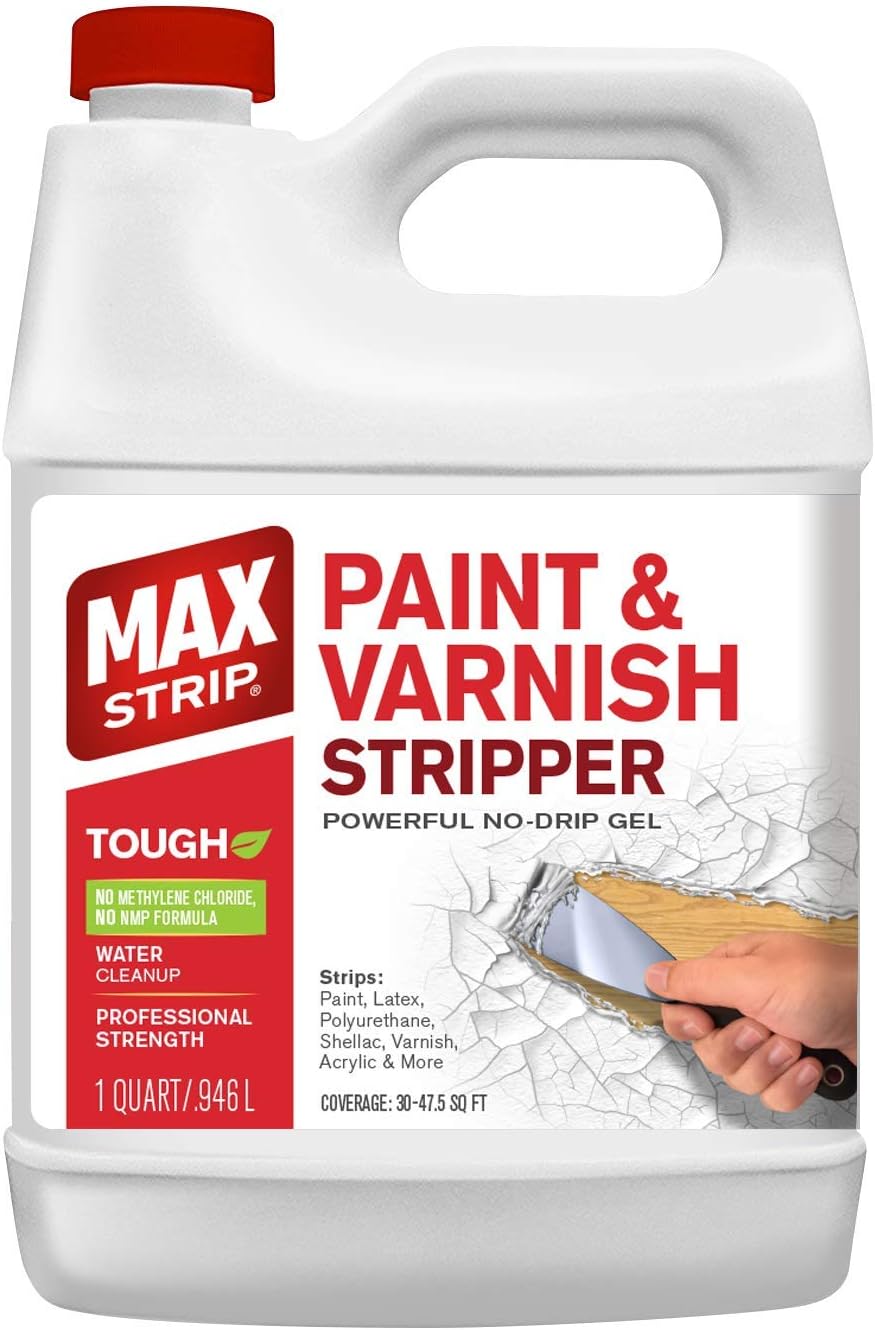
Max Strip Paint & Varnish Stripper Gel
Best Low-Odor Gel for Small Rooms
Max Strip is a water-based gel with no methylene chloride or NMP and, its maker says, no harsh fumes, which makes it the one I’d reach for in a small, closed room such as a bathroom vanity or a closet shelf. It lists acrylic, latex, polyurethane, shellac, varnish and oil-based coatings among what it removes, usually in a single application.
The listing is refreshingly clear about how it must be used. Shake it well, leave it at least 15 to 30 minutes under plastic film so it doesn’t dry, check every 15 minutes, scrape, then neutralize with water. Heavy coatings need longer or a second coat. It is also clear about what it won’t do: automotive paint, powder coat, appliance enamel and other factory-baked finishes are outside its range.
- ✅ No methylene chloride or NMP
- ✅ Low odor, suited to confined spaces
- ✅ Removes shellac and polyurethane as well as paint
- ❌ Must be covered with plastic and neutralized with water
- ❌ Not for factory-baked or automotive coatings
Best For: Stripping indoors in small spaces, and anyone sensitive to solvent smells who is happy to follow a strict routine.
Dumond Smart ‘n Easy Paint & Varnish Remover Gel
Easiest for First-Time Strippers
Smart ‘n Easy is Dumond’s do-it-yourself gel, and it is built around one idea: it won’t burn your skin if you touch it. It is water-based with no caustic chemicals, smells of citrus, and removes acrylic, latex, oil and water-based paints, varnishes and stains, typically in a single application according to Dumond.
Dumond lists furniture, cabinets, chair rails and crown molding among its uses, and asks you to test for compatibility on a small area before full removal, which is good practice with any stripper. If you are stripping your first piece and want the most forgiving product, this is it.
- ✅ Water-based, no caustic chemicals
- ✅ Forgiving for beginners, citrus odor
- ✅ Aimed squarely at furniture and cabinets
- ❌ Maker asks for a patch test first, so budget a little extra time
- ❌ Not rated for as many layers as Smart Strip PRO
Best For: A first stripping project, such as a painted nightstand or a kitchen chair, where safety and ease matter more than raw strength.
The Scrapers That Make Stripping Work
A stripper softens the paint; a scraper takes it off. The wrong scraper gouges the wood or leaves half the paint behind, so it is worth buying the right two.
Bahco 665 Carbide Scraper (Flat Work)
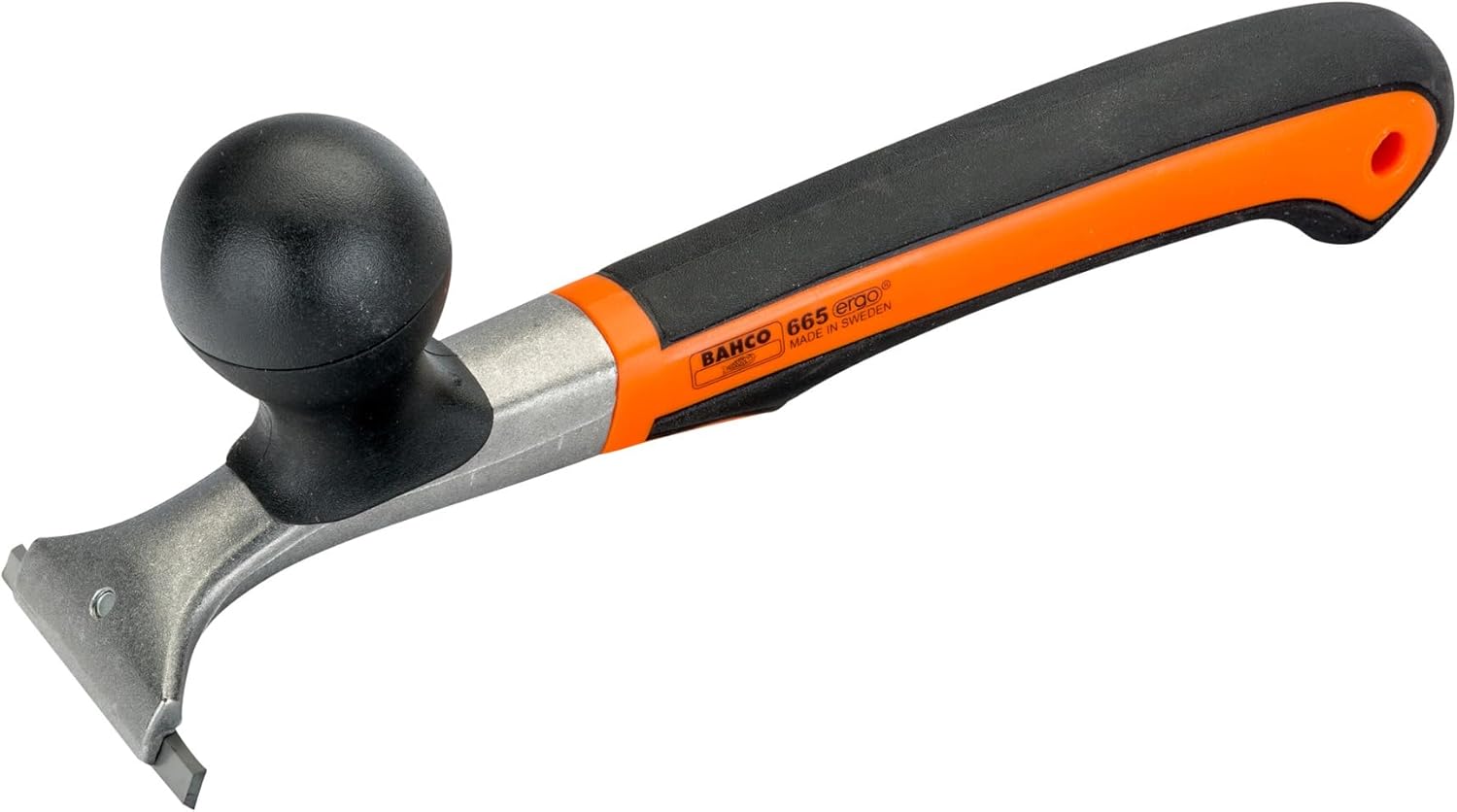
The Bahco 665 has a 2-1/2″ carbide blade and a long two-hand grip, so you pull with your body instead of your wrist. Bahco says the carbide edge stays sharp up to 50 times longer than steel, and replacement blades (442) are sold separately. Use it on flat doors, tabletops and panels, pulling with the grain.
ALLWAY CS6 Contour Scraper Set (Moldings and Spindles)

The ALLWAY CS6 comes with six stainless blades shaped for concave, convex and round profiles: narrow reveals, small and large coves, rods and door and window casings. A blade file stores in the handle. This is the tool that gets softened paint out of the flutes of a table leg or the bead of a baseboard, where a flat scraper can’t reach.
💡 Pro Tip
For carved detail that even a contour scraper can’t reach, follow the stripper with a stiff nylon brush or a wooden skewer, never a wire brush on softwood. For flat paint that won’t budge after stripping, a powered option such as the Wagner PaintEater, a 4-1/2″ spun-fiber disc at 2,600 RPM, removes the last flakes without the gouging risk of a coarse sanding disc.
How I Chose These Paint Strippers
I started from what people stripping wood actually ask about: furniture and trim indoors, thick old paint, and which products are safer to use. Then I kept only products that are sold on Amazon today, from established makers, with the formula and the directions published on the listing so I could compare them. The criteria, in order:
- Chemistry you can check: every pick is free of methylene chloride, and the table shows NMP where the maker discloses it.
- Coverage: the number of layers the maker rates the product for, and how it behaves on vertical surfaces.
- Working time: how long it stays active, because modern strippers depend on dwell time.
- Honest limits: products whose makers say what they don’t strip were preferred over ones that claim to do everything.
I don’t show star ratings or prices: prices change daily, so each pick carries a price tier and the Amazon button shows the live price.
How to Choose the Best Paint Stripper for Wood
Gel, Paste or Liquid
Gels cling to vertical surfaces and detailed work, which is why most furniture strippers are gels. Pastes go on thicker still and are built for many layers and long dwell times. Thinner liquids work fast on flat, horizontal pieces but run off anything vertical. For chairs, doors and trim, choose a gel or paste.
Dwell Time and Layers
The strippers you can buy today work more slowly than the solvent strippers of twenty years ago. That is not a defect: they need time to soften each layer. A product that stays active for hours can take several layers off in one pass; a faster one may need a second coat. Match the product to the layer count: a light coat of a fast stripper for one or two layers, a long-working gel or paste for many.
What the Label Leaves Out
Look for three things on the label: whether the product contains methylene chloride (it shouldn’t; see below), whether it contains NMP (some makers disclose it, some print a California Proposition 65 warning), and what surfaces or coatings the maker says it won’t remove. A stripper that is honest about its limits usually has clearer directions too.
ℹ️ Why the Old “15-Minute” Strippers Are Gone
The very fast consumer strippers of the past relied on methylene chloride. The U.S. EPA prohibited methylene chloride in consumer paint and coating removers in 2019, and its April 2024 rule under the Toxic Substances Control Act prohibits it for all consumer uses. If you find an old can in the garage, don’t use it indoors, and check your local rules for disposal.
Ventilation and Protection
Every stripper here says to work with ventilation and gloves. Add eye protection, and, because you will almost always sand after stripping, a respirator rated for what you are doing. My guide to the best respirator for woodworking explains which filter to use for sanding dust and which for finishes and solvents.
How to Use a Paint Stripper on Wood

Step 1: Test
Check for lead if the paint could be older than 1978. Then try the stripper on a hidden spot, such as the underside of a table apron, to see how long it takes and how the wood reacts.
Step 2: Apply a Thick Coat
Lay the stripper on thickly with an old natural-bristle brush, in one direction, without brushing it back and forth. A thin coat dries before it has done its work.
Step 3: Wait, and Keep It Wet
Follow the dwell time on the label. Covering the stripper with plastic film, as Max Strip requires, keeps any product from drying out on a warm day.
Step 4: Scrape and Clean Up
Scrape with the grain using the carbide scraper on flat areas and the contour scraper on profiles. Clean up with whatever the maker specifies: water for the water-based products, the maker’s recommended cleaner for the others. Let the wood dry fully before sanding; my guide on how to sand and refinish a table covers the finishing steps, and for moldings and corners see the best detail sanders. For the full method, chemical, heat and sanding side by side, read my guide on how to strip paint from wood.
🏆 The Verdict
For most furniture and trim, Citristrip Stripping Gel is the one to buy: it clings, it stays active for up to 24 hours and it takes several layers at once. For thick, many-layer paint, Smart Strip PRO is rated for up to 20 layers and contains neither methylene chloride nor NMP. If you want to start scraping the same afternoon, Sunnyside Multi-Strip ADVANCED begins working in about 30 minutes. Pair any of them with a Bahco 665 carbide scraper and an ALLWAY CS6 contour set.
❓ Frequently Asked Questions
What’s best for stripping paint from wood?+
Which is better, CitriStrip or Klean Strip?+
What works better than CitriStrip?+
How do you get dried paint off wood?+
Can I use paint stripper on kitchen cabinets?+
What is the strongest paint stripper you can buy?+
Conclusion
Stripping paint from wood is a waiting game. The strippers sold today are slower than the old solvent formulas, but a thick gel or paste that stays wet will take several layers off in one pass and leave the wood intact, which is exactly what a sander can’t do on carved and veneered pieces. Test for lead, pick the product that matches the number of layers, give it the time on the label, and scrape with the right tool.
If your piece is flat and solid, compare this with sanding in my guide to the best sanders for paint removal, and for refinishing furniture after stripping, see the best sanders for furniture refinishing. Questions about your project? Leave a comment below.
