
As an Amazon Associate I earn from qualifying purchases. All claims are strictly my personal opinion.
Best for most woodworkers
Compact, tool-triggered and Bluetooth-ready, with a 24.6 ft cord.
Festool’s dust extractors share the same 96″ water lift and HEPA filtration, so the choice between a CT 15, CT MIDI I, CT 26 and CT 36 comes down to tank size, weight and features, not suction. The CT 15 is the light cleaning specialist, the CT MIDI I is the compact one for sanding on the move, the CT 26 is the all-rounder for a shop, and the CT 36 is the same machine with a bigger tank. For most woodworkers who sand a lot, the CT MIDI I or the CT 26 is the right Festool dust extractor.
Below is a side-by-side table with Festool’s own figures, what actually changes between the models, the CT 15 vs CT 26, CT MIDI vs CT 26 and CT 26 vs CT 36 questions people ask most, whether a Festool vacuum is worth it against DEWALT and Bosch, and the five models worth buying. If you’re still choosing the sander, start with my guide to which Festool sander to buy, or the Festool vs Mirka comparison if you haven’t settled on a system.
⚡ Quick Picks
Best for most woodworkers: the Festool CT MIDI I HEPA – compact, tool-triggered and Bluetooth-ready, with a 24.6 ft cord.
Best for a workshop: the Festool CT 26 EI HEPA – 6.9 gallons, 138 CFM and big wheels with a brake.
Biggest tank: the Festool CT 36 EI HEPA, or the CT 36 EI AC with automatic filter cleaning for drywall and fine dust.
Lightest and lowest price tier: the Festool CT 15 HEPA, built for cleanup as much as tool extraction.
Festool Dust Extractor Comparison at a Glance
All figures come from the product pages on festoolusa.com. Every model in the table runs on 120V, draws 350 to 1,200 watts depending on the suction setting, and lists the same maximum vacuum.
| Spec | CT 15 | CT MIDI I | CT 26 EI | CT 36 EI | CT 36 EI AC |
|---|---|---|---|---|---|
| Max. airflow | 130 CFM | 130 CFM | 138 CFM | 138 CFM | 138 CFM |
| Max. vacuum | 96″ water lift | 96″ water lift | 96″ water lift | 96″ water lift | 96″ water lift |
| Container / filter bag | 3.96 gal / 3.3 gal | 4.0 gal / 3.3 gal | 6.9 gal / 6.3 gal | 9.5 gal / 9.0 gal | 9.5 gal / 9.0 gal |
| Weight | 23.1 lb | 25.3 lb | 30.6 lb | 31.8 lb | 33.5 lb |
| Size (L x W x H) | 18.5 x 12.6 x 17.1″ | 18.5 x 12.6 x 19.5″ | 25 x 14 x 22″ | 25 x 14.4 x 23.4″ | 25 x 14.4 x 23.4″ |
| Power cord | 16.4 ft | 24.6 ft | 25 ft | 25 ft | 25 ft |
| Bluetooth auto-start | Not listed | Yes | Yes | Yes | Yes |
| Filter cleaning | Main filter swaps from outside | Manual | Manual | Manual | AUTOCLEAN, set by app |
| Systainer T-LOC on top | Flat shelf instead | Yes | Yes | Yes | Yes |
| Price tier | $$ | $$$ | $$$ | $$$$ | $$$$ |
What Actually Changes Between Festool Dust Extractors
Read the table across and one thing stands out: suction barely changes. The CT 15 and CT MIDI I are rated at 130 CFM, the CT 26 and CT 36 at 138 CFM, and all five list 96 inches of water lift. You don’t move up the range for more pull at the sander. You move up for capacity, mobility and convenience.
Tank and Bag Size
This is the biggest difference. The two compact models hold about 4 gallons with a 3.3 gallon bag; the CT 26 holds 6.9 gallons and the CT 36 holds 9.5. Fine sanding dust packs into a bag slowly, but planer chips, track saw cuts and drywall compound fill a small bag quickly. If you sand cabinets for a full day, or run a track saw through sheet goods, the bigger tank means fewer stops to change bags.
Weight, Size and Wheels
The CT 15 weighs 23.1 lb and the CT MIDI I 25.3 lb, light enough to carry up stairs in one hand. The CT 26 and CT 36 add 5 to 10 lb and roughly 6 inches of length, and Festool fits them with large swivel wheels and a locking brake, because you roll them rather than carry them. A finish carpenter who works in clients’ homes will feel that difference on every job; a woodworker whose extractor lives next to the bench will not.
Auto-Start: Corded Outlet and Bluetooth
The feature that makes an extractor useful is that it switches on with the tool. The CT MIDI I, CT 26 and CT 36 have a built-in outlet that starts the extractor when you pull the trigger on a corded tool, and Bluetooth that starts it from a Festool cordless tool’s Bluetooth battery or an optional remote. Festool’s page for the new CT 15 doesn’t list Bluetooth; Festool positions it as “the specialist for cleaning work,” and its manual shows an outlet that starts it automatically with a corded tool, rated for tools up to 3.7 A. If you plan to run cordless Festool sanders, skip the CT 15.
Filter Cleaning
The standard CT MIDI I, CT 26 and CT 36 have manual filter cleaning: you trigger it to knock dust off the main filter when suction drops. The CT 36 EI AC adds Festool’s AUTOCLEAN, which cleans the main filter automatically at intervals of 15, 30, 60 or 120 seconds that you set in the Festool app. That matters most with drywall compound, plaster and paint, the fine dust that blinds a filter in minutes.
Cord, Storage and System Parts
The CT 15 has a 16.4 ft cord; the others 24.6 to 25 ft. The MIDI, CT 26 and CT 36 have T-LOC on top, so a Systainer of sanding discs or a pre-separator clips onto the extractor and travels with it. The same three keep the hose and cord on the machine with a built-in hose holder and cord wrap. Every model in the range has an antistatic hose and five suction levels, which you’ll use to stop a sander from sucking itself onto the work.
Festool CT 15 vs CT 26
These two are the most common comparison, and they’re built for different jobs. The CT 15 is the smallest, lightest Festool dust extractor in the range: 23.1 lb, about 4 gallons, a 16.4 ft cord, and cleaning nozzles stored onboard. The CT 26 is 7.5 lb heavier and much longer, but holds 6.9 gallons, adds Bluetooth, T-LOC and the 25 ft cord, and rolls on big wheels with a brake. Airflow is within 8 CFM.
- Choose the CT 15 if you mostly clean up after work, sand occasionally with corded tools, and carry the extractor between rooms or job sites.
- Choose the CT 26 if the extractor is part of your daily sanding or track saw work, you own Festool cordless tools, or you want fewer bag changes.
Festool CT MIDI vs CT 26
This is the real decision for most buyers. Both have the corded-tool outlet, Bluetooth, T-LOC, manual filter cleaning and a cord of about 25 ft. The CT MIDI I is 5.4 lb lighter and fits under a bench or in a car trunk. The CT 26 holds 6.9 gallons against 4.0 and adds 8 CFM. Sanding produces fine dust in small volumes, so a MIDI goes a long time between bags on sanding alone. If you also run a track saw, a router or a domino on the same extractor, the CT 26’s extra capacity starts to pay.
Festool CT 26 vs CT 36
Festool’s own specs make this one simple: same airflow, same vacuum, same filter area (979 square inches), same cord, same features. The CT 36 holds 9.5 gallons instead of 6.9, stands 1.4 inches taller and weighs 1.1 lb more. Buy the CT 36 if you empty the CT 26 too often, typically on drywall, demolition cleanup or long sheet-goods sessions. For a one-person woodworking shop, the CT 26 is enough, and it sits one price tier lower.
💡 Pro Tip: Match the Hose to the Job
A smaller hose suits a sander, and a larger one moves chips from a router or saw. Whichever extractor you choose, use the lowest suction setting that keeps the dust shroud clear: full power on a 5″ sander pulls the pad onto the wood and leaves swirls.
Is a Festool Dust Extractor Worth the Money?
It depends on what you’re comparing it with. Against a shop vac, yes, if you sand a lot: the tool-triggered start, HEPA filtration, antistatic hose and adjustable suction are what make an extractor something you actually connect every time. My dust extractor vs shop vac guide covers that difference in detail.
Against other extractors, the Festool case is the system and the warranty rather than raw numbers. Festool USA covers its power tools bought from authorized US dealers for 3 years, including wear and tear, and Hartville Hardware, the seller of these models on Amazon, is on Festool’s list of authorized online dealers. The T-LOC Systainer stacking, Bluetooth start from Festool batteries and hoses that click into Festool sanders are only worth paying for if you’re in, or moving into, the Festool system.
Festool vs DEWALT
DEWALT’s DWV010 lists 150 CFM against the CT 26’s 138, and it pulses its HEPA filter clean automatically every 30 seconds, a feature Festool only puts in its AC models. It also sits in a lower price tier. The Festool is more compact for its tank size, offers Bluetooth start and integrates with Systainers. If you don’t own Festool tools, the DEWALT is the value pick; it’s the overall winner in my best dust extractor roundup.
Festool vs Bosch
Bosch’s VAC090AH lists 150 CFM and 97 inches of water lift, with automatic filter cleaning every 15 seconds. It’s aimed at drywall, concrete and fine dust, where that frequent filter cleaning matters. The Festool CT 36 EI AC answers it with AUTOCLEAN; the standard Festool models don’t. For woodworking only, either brand works, and the Festool is the lighter machine to move around.
What About the CT SYS and Cordless Models?
Festool also makes the CT SYS, a dust extractor in a Systainer case: 15.2 lb, 1.2 gallon container, 106 CFM, 80 inches of water lift and a stated 67 dB(A), for dry dust only. It’s built for remodelers and painters who carry it on a shoulder strap. Its smaller container and lower airflow make it a second extractor for occupied homes, not the main one for a woodshop. Festool also sells cordless CTC models, but for sanding at a bench a corded extractor with an outlet is simpler.
Which Festool Dust Extractor Should You Buy?
- Hobby woodworker sanding at one bench: CT MIDI I, or the CT 26 if you also run a track saw or router on it.
- Finish carpenter or remodeler working in homes: CT MIDI I for mobility, with a CT SYS as a second unit if you work in occupied spaces.
- Cabinet shop or long sanding sessions: CT 26, or CT 36 if you empty the CT 26 more than once a day.
- Drywall, plaster and paint sanding: CT 36 EI AC. Pair it with a drywall sander from my drywall sander guide.
- Cleanup first, occasional sanding with corded tools: CT 15.
The Festool Dust Extractors Worth Buying
All five Festool models below are sold on Amazon by Hartville Hardware, which Festool lists as an authorized online dealer. The DEWALT at the end is the alternative if you don’t need the Festool system.
Festool CT MIDI I HEPA Dust Extractor (578512)

Best Festool Dust Extractor for Most Woodworkers
Festool calls the CT MIDI I a rethink of the old MIDI rather than an update, and the spec sheet shows why it suits sanding. It’s rated at 130 CFM and 96″ of water lift, holds 4.0 gallons with a 3.3 gallon bag, and weighs 25.3 lb. A built-in outlet starts it with any corded tool, and Bluetooth starts it from a Festool cordless tool’s battery or an optional remote. The 24.6 ft cord is long for a compact unit, T-LOC lets a Systainer ride on top, and the main filter can be swapped from outside. Festool also lists a LevelStop system that shuts the motor off when it’s picking up water.
- ✅ Corded outlet and Bluetooth auto-start
- ✅ Light enough to carry
- ✅ 24.6 ft cord and T-LOC Systainer dock
- ❌ 4 gallon tank fills fast with chips
- ❌ Manual filter cleaning
Best For: Sanding at the bench or on site with Festool sanders, corded or cordless.
Festool CT 26 EI HEPA Dust Extractor (577871)

Best Festool Dust Extractor for a Workshop
Festool calls the CT 26 EI “the all-rounder for workshops and job sites.” It holds 6.9 gallons with a 6.3 gallon bag, moves 138 CFM with 96″ of water lift, and has 979 square inches of filter area. Touch controls, five suction levels, the corded-tool outlet and Bluetooth auto-start are standard, and the Festool app can show warnings on your phone. It weighs 30.6 lb and rolls on large swivel wheels with a locking brake. The 25 ft cord, hose holder and T-LOC make it the hub for Systainers, a pre-separator or Festool’s Workcenter.
- ✅ 6.9 gallons, fewer bag changes
- ✅ Same features as the CT 36 in a shorter body
- ✅ Big wheels with a brake
- ❌ Too long to carry comfortably
- ❌ Manual filter cleaning
Best For: A one-person shop running sanders, a track saw and a router from one extractor.
Festool CT 36 EI HEPA Dust Extractor (577872)

Biggest Tank
The CT 36 EI is the CT 26 with a taller container. Festool lists the same 138 CFM, 96″ of water lift, 979 square inch filter, 25 ft cord, Bluetooth, corded-tool outlet and five suction levels, but the container grows to 9.5 gallons with a 9 gallon bag. It stands 23.4″ tall and weighs 31.8 lb, only about a pound more than the CT 26. Festool describes it as the all-rounder for professionals in workshops and on job sites.
- ✅ 9.5 gallon container
- ✅ Only about 1 lb heavier than the CT 26
- ✅ Same Bluetooth and outlet features
- ❌ No more suction than the CT 26
- ❌ Manual filter cleaning on this version
Best For: Long sanding sessions, sheet goods and job-site cleanup where bag changes slow you down.
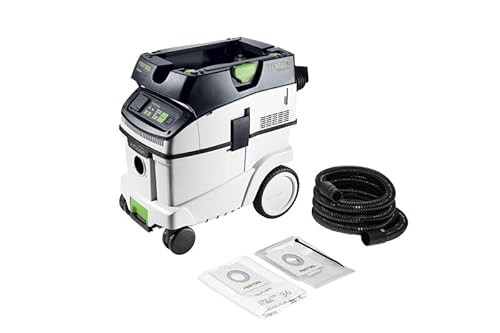
Festool CT 36 EI AC HEPA Dust Extractor with AUTOCLEAN (577874)
Best for Drywall and Fine Dust
This is the CT 36 with Festool’s AUTOCLEAN: the main filter is cleaned automatically, and in the Festool app you can set the interval to 15, 30, 60 or 120 seconds. Festool says the result is consistently high suction, longer working intervals and longer filter life. Everything else matches the CT 36 EI: 138 CFM, 96″ water lift, 9.5 gallons, 25 ft cord, Bluetooth and the corded-tool outlet. It weighs 33.5 lb.
- ✅ Automatic main filter cleaning
- ✅ Adjustable cleaning interval in the app
- ✅ 9.5 gallon container
- ❌ Top price tier of the range
- ❌ Heaviest model here
Best For: Drywall sanding, plaster, paint and anyone tired of tapping a clogged filter.
Festool CT 15 HEPA Dust Extractor (578441)

Lightest and Lowest Price Tier
Festool calls the CT 15 “the specialist for cleaning work,” and the design follows that brief. It weighs 23.1 lb, holds 3.96 gallons with a 3.3 gallon bag, and still lists 130 CFM and 96″ of water lift. The crevice and upholstery nozzles store inside the machine, the flat top works as a shelf, and the main filter changes from outside. The chassis has steel axles, and the cord is 16.4 ft. Festool’s page doesn’t list Bluetooth, so it won’t start from a Festool cordless tool; Festool’s manual shows a tool-start outlet for corded tools up to 3.7 A.
- ✅ Lightest Festool extractor here
- ✅ Cleaning nozzles stored onboard
- ✅ Same 96″ water lift as the big models
- ❌ No Bluetooth listed by Festool
- ❌ Shortest cord, no T-LOC
Best For: Cleanup in homes and workshops, plus occasional sanding with corded tools.
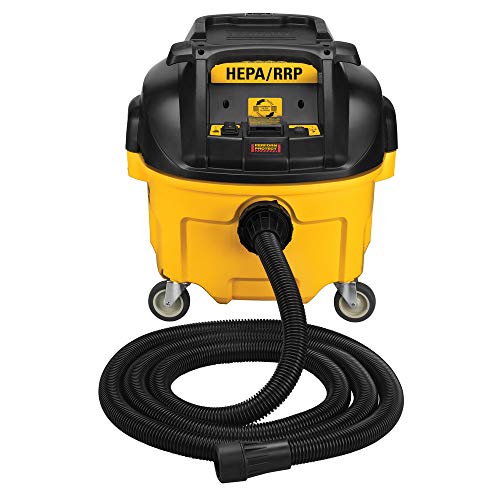
DEWALT DWV010 8-Gallon HEPA Dust Extractor (Non-Festool Alternative)
Best Alternative If You Don’t Own Festool Tools
If you don’t need the Festool system, the DEWALT DWV010 is the extractor to compare. It lists 150 CFM from a 15 A motor, pulses its HEPA filter clean automatically every 30 seconds, and has a tool-activated outlet. The 15 ft anti-static hose is 1-1/4″, a good size for sander ports, with a swiveling universal connector at the tool end. It sits a full price tier below the Festool CT 26.
- ✅ More airflow than any Festool here
- ✅ Automatic filter cleaning as standard
- ✅ Lower price tier
- ❌ No Bluetooth or Systainer docking
- ❌ Bulkier than a CT MIDI for its tank size
Best For: Woodworkers with DEWALT, Bosch or Makita sanders who want automatic filter cleaning.
🏆 The Verdict
Every Festool dust extractor pulls about the same, so buy for size and features. The CT MIDI I is the best Festool dust extractor for most woodworkers: light, tool-triggered, Bluetooth-ready and long-corded. Step up to the CT 26 for a busy shop or a track saw, the CT 36 EI AC for drywall and fine dust, and pick the CT 15 only if cleanup comes first. If you don’t own Festool tools, the DEWALT DWV010 gives more airflow for less.
❓ Frequently Asked Questions
Which Festool dust extractor is best for everyday use?+
What are the key differences between the Festool CT 26 and CT 36?+
How much does the Festool CT 26 weigh?+
Is the Festool dust extractor worth the money?+
Which dust extractor is better, Festool or DEWALT?+
How many CFM does a Festool dust extractor have?+
Not sure which size fits your shop? Tell me in the comments what tools you’ll connect and how you work, and I’ll help you pick the right Festool extractor.

