As an Amazon Associate I earn from qualifying purchases. All claims are strictly my personal opinion.
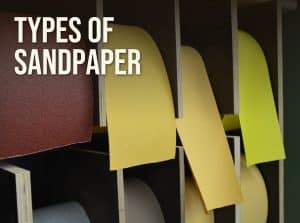
The types of sandpaper differ in four ways: the abrasive mineral (aluminum oxide, silicon carbide, zirconia alumina, ceramic, or natural garnet and emery), the backing (paper, cloth, film, mesh or fiber), how densely the grains are spread (open or closed coat), and coatings such as stearate. Grit is a fifth choice, but it’s the same scale on every type. In short: aluminum oxide for most wood and metal sanding, silicon carbide for finishes and wet sanding, zirconia and ceramic for heavy removal with a machine, and garnet for hand-sanding bare wood.
Below is what each abrasive mineral is, how they compare, what the backing and coating letters on a sheet mean, and which type to buy for wood, finishes, metal and floors, with one example of each. The facts come from the abrasive makers: Klingspor, Mirka and 3M.
⚡ Quick Answer
Bare wood, paint, steel: aluminum oxide, open coat on resinous softwood.
Between coats, plastics, wet sanding: silicon carbide on waterproof paper.
Heavy removal with a belt or disc sander: zirconia or ceramic in the coarse grits.
Types of Sandpaper by Abrasive Mineral
The mineral is the part that cuts, so it decides what the paper is good at. Klingspor splits them into natural grains (flint, garnet and emery), which it says are barely used any more in abrasive production, and synthetic grains (aluminum oxide, zirconia alumina, silicon carbide and ceramic aluminum oxide), which offer more hardness, toughness and consistency.
| Mineral | Hardness / toughness | How it wears | Use it for |
|---|---|---|---|
| Aluminum oxide | Hard / tough | Even wear, cuts finer as it dulls | Bare wood, paint, most metals: the all-rounder |
| Silicon carbide | Very hard / less tough | Sharp, friable, keeps a sharp edge | Finishes, sealers, plastic, glass, wet sanding |
| Zirconia alumina | Hard / very tough | Self-sharpening under machine pressure | Coarse belts and flap discs, 24 to 60 grit |
| Ceramic aluminum oxide | Hard / very tough | Micro-wear, self-sharpening | Fast removal on hardwood, floors and metal |
| Garnet (natural) | Softer, wears fast | Dulls quickly | Hand-sanding bare wood |
| Emery (natural) | Moderate | Slow, polishing cut | Cleaning and polishing metal by hand |
The first four rows follow Klingspor’s own grain table (bond and toughness, structure, wear). Garnet and emery are natural minerals Klingspor no longer makes abrasives with, so their rows summarize how 3M and abrasive sellers describe them.
Aluminum Oxide Sandpaper
Aluminum oxide is the default. Klingspor says it’s made by firing bauxite and other materials in an electric furnace, then crushing the mass into naturally pyramid-shaped grains that are very durable. It calls it a “tremendous general-purpose grain” for bare wood, most metals (especially steel) and leather, and probably the most common grain in use. Mirka agrees: aluminium oxide grains are sharp and tough enough for most applications.
One useful detail from Klingspor: aluminum oxide wears down rather than shattering, so it sands finer as it’s used. A sheet that starts at 80 grit ends up cutting more like 100 or 120. That’s why a worn disc still polishes but no longer removes much.
Silicon Carbide Sandpaper
Silicon carbide is the black paper on most wet/dry sheets. Klingspor explains that it’s made from silica sand and coke melted in an electric furnace, that its grains are icicle-shaped with very sharp points, and that it’s second only to diamond in hardness but very brittle. It fractures under light pressure, which keeps a fresh sharp edge on the work and gives a consistent finish, but it wears out sooner. Klingspor lists glass, plastic, rubber, paint, varnish, lacquer and sealers as typical materials.
Mirka describes the grain differently, saying silicon carbide is more regular in shape and not as brittle as aluminum oxide, and that it gives a better surface finish, which suits intermediate sanding. The makers disagree on the physics but land on the same job: silicon carbide is for finishing, not for heavy removal.
Aluminum Oxide vs Silicon Carbide
Use aluminum oxide when you’re removing material from wood or steel with real pressure: it’s tougher and lasts longer. Use silicon carbide for light, fine work: sanding between coats of finish, wet sanding paint and plastics, and glass or stone. On soft, resinous wood like pine, Klingspor says it occasionally sees silicon carbide used but recommends open-coat aluminum oxide instead for better life. On metal, my guide to the best sandpaper for metal covers the split for steel, aluminum and brass.
Zirconia Alumina Sandpaper
Zirconia alumina is usually blue. Klingspor says it combines the toughness of aluminum oxide with the friability of silicon carbide, but with a catch: it needs machine pressure to fracture and stay sharp. Without enough pressure the grain glazes and its life drops. That’s why you find it on belts, flap discs and planing or dimensioning machines, not on hand sheets. Klingspor adds that the grain costs 15 to 40% more to produce, so it’s best value in the removal grits, 24 to 60.
Ceramic Sandpaper
Ceramic aluminum oxide is the most aggressive common grain. Klingspor says it’s made from bauxite with other materials in a chemical bonding process that gives a porous, coral-like grain, and that it was developed for rough grinding on metal before spreading to other sanding. Mirka says special ceramic grains form new edges as they wear, so they keep cutting longer, and that they’re designed for hard materials and coatings such as hardwood and solid surface. Both makers point the same way: use ceramic for the coarse, removal grits, then switch to regular aluminum oxide or silicon carbide for the finer steps.
Ceramic vs Zirconia vs Aluminum Oxide
For a belt sander on a rough board or a floor sander on an old finish, ceramic and zirconia outlast aluminum oxide in coarse grits, as long as the machine applies steady pressure. For hand sanding, light pressure and finer grits, plain aluminum oxide does the same job for less, because neither premium grain gets the pressure it needs to self-sharpen.
Garnet Sandpaper
Garnet is a natural mineral and the traditional woodworker’s paper, usually orange-red. 3M sells it for bare and unfinished wood, describing sharp, clean cutting power designed for quality smooth finishes. It wears faster than the synthetics and dulls almost at once on metal. Some finishers still like it for the last hand-sanding step before stain, but there’s no maker data to say it produces a better finish than fine aluminum oxide.
Emery and Flint
Emery is a natural, dark grain usually sold on cloth for metal: cleaning copper pipe before soldering, polishing rods and bolts. Flint is the third natural grain. Klingspor groups both with garnet as natural grains that are barely used in modern abrasives.
💡 Pro Tip
Don’t buy by color. Klingspor lists the natural colors (aluminum oxide brown, pink or white; silicon carbide black; zirconia blue or blue-gray; ceramic white), but says manufacturers can dye the coating any color, and stearate hides it too. Read the mineral on the back of the sheet or in the listing.
Types of Sandpaper by Backing
Paper (Weights A to F)
Klingspor’s backing guide grades paper by weight from A (lightest) to F (heaviest). A to C are the flexible papers used for hand sanding and for power sanding with sheets or discs; D to F are stiffer, and only E and F are heavy enough for belts. The letter is often printed next to the grit, as in “80D” or “100C”.
Cloth (J, X, Y)
Cloth backings are tougher and last longer on belts. Klingspor names three weights: J (light, flexible cotton), X (heavier, general-purpose cotton, the usual portable-belt backing) and Y (polyester, for heavy-duty and wet work). Cotton isn’t waterproof unless treated and marked W/D or WP; polyester is waterproof by nature.
Film, Mesh, Foam and Fiber
- Film: a plastic backing that stays flat and doesn’t tear on edges, common on premium sander discs for paint and metal.
- Mesh: an open net, such as Mirka Abranet, that lets a vacuum pull dust through the whole disc.
- Foam: sanding sponges and soft pads that follow curves; see the best sanding blocks and sponges.
- Fiber: vulcanized layers of heavy paper, used for grinder discs.
Open Coat vs Closed Coat Sandpaper
The coat is how densely the grains cover the backing. Klingspor distinguishes closed, semi-open and open coating. Open coat leaves space between grains so dust clears and the paper doesn’t clog on long-chipping materials such as wood; closed coat, with more grains, gives good stock removal and a smooth finish, Mirka says, but loads up faster. Choose open coat for softwood, paint and finishes, and closed coat for hardwood and metal.
Stearate (Anti-Clog) Coatings
Mirka explains that some abrasives get a zinc or calcium stearate layer, small flakes on top of the grains that wear off during use and stop the paper clogging. Stearate slightly reduces the initial cut, which makes the finish more consistent over the life of the sheet. Mirka says stearated products work best on paint, lacquer and similar surfaces, and give no advantage in coarse sanding with high pressure, where the coating wears off at once.
Glue or Resin Bond
Every sheet has two adhesive layers: a maker coat that holds the grain and a size coat over it. Klingspor says most abrasives today are resin bonded, which protects the grain from heat and extends life; glue bonds soften when hot, giving a softer scratch but less cut, and are now mostly on finishing papers.
Which Type of Sandpaper for Which Job
| Job | Mineral | Backing / coat | More detail |
|---|---|---|---|
| Bare hardwood | Aluminum oxide | Paper or film disc, closed or semi-open | Best sandpaper for wood |
| Pine and resinous softwood | Aluminum oxide | Open coat, stearated | Grit for wood |
| Between coats of finish | Silicon carbide | Waterproof paper or mesh, 320+ | Sanding between coats |
| Old paint and varnish | Aluminum oxide or ceramic | Stearated, open coat | Strip paint from wood |
| Steel and rust | Aluminum oxide, zirconia, ceramic | Cloth, film or flap disc | Sandpaper for metal |
| Car paint, plastic, glass | Silicon carbide | Waterproof, used wet | Grit for car paint |
| Floors and belt sanding | Zirconia or ceramic (coarse) | Cloth belt or heavy paper | Refinish hardwood floors |
Grit works the same way across every mineral: the sandpaper grit chart converts CAMI, P-grade and micron numbers and gives the grit for each job.
Sandpaper Formats: Sheets, Discs, Belts and Rolls
The same minerals come in many shapes. 9 x 11 in sheets are cut for hand blocks and 1/4-sheet sanders. Hook-and-loop discs fit random orbital sanders, and their holes must line up with the pad unless you use mesh. Belts are sized by the sander (3 x 21 in is the common portable size). PSA discs and rolls stick on with adhesive. Match the format to the tool first, then pick the mineral; my guide to types of sanders shows which tool takes which.
One Example of Each Type
These are examples of each mineral from brands that publish what’s in the box. Specs come from the makers or, where I say so, the Amazon listing. I don’t show customer ratings or prices.
3M Aluminum Oxide Sandpaper, 100-150-220 Assortment

Aluminum Oxide: the All-Rounder
A simple way to try the standard mineral: aluminum oxide sheets in 100, 150 and 220 grit, full 9 x 11 in, the three grits most wood and paint projects go through. Cut them in quarters for a block or a 1/4-sheet sander. For premium aluminum oxide sheets and discs, see the best sandpaper for wood.
- ✅ The general-purpose mineral
- ✅ Three useful grits in one pack
- ❌ Only five sheets
Best For: Hand sanding wood and scuffing paint.
3M Wetordry Sandpaper, 320 Grit

Silicon Carbide: for Finishes and Wet Sanding
The classic black wet/dry sheet. It’s silicon carbide on waterproof paper, used dry or with water to stop clogging, and the listing sells it for final and between-coats sanding. The pack has 25 sheets of 9 x 11 in at 320 grit. For the fine automotive range, 3M sells the same Wetordry line up to 2500.
- ✅ Wet or dry
- ✅ Fine, even scratch on finishes
- ❌ Wears quickly under heavy pressure
Best For: Between coats of finish, sealer, plastic and paint.
Mercer Garnet Paper Sheets, 80D

Garnet: Traditional Paper for Bare Wood
If you want to try garnet, this is a bulk pack: 50 sheets, 9 x 11 in, 80 grit, on a D-weight, latex-backed paper, which is the letter system described above. The listing calls it garnet grain for general-purpose sanding on wood, cut to fit a block or a sander, and says the same sheets come in 36 to 240 grit.
- ✅ Classic wood-only abrasive
- ✅ Heavy D-weight paper
- ❌ Wears faster than aluminum oxide
Best For: Hand sanding bare wood.
ABRTEN 3 x 21 Zirconia Sanding Belts, 10-Pack

Zirconia: for a Belt Sander
Zirconia belongs on a machine, and the 3 x 21 in belt sander is the one most people own. These are zirconia alumina belts in 40, 60, 80 and 120 grit, ten in the pack, sold for hardwood leveling and metal work. That’s the 24 to 60 removal range where Klingspor says zirconia pays off, plus 80 and 120 to clean up. My best belt sander guide covers the machines.
- ✅ Coarse grits for fast removal
- ✅ Fits standard 3 x 21 belt sanders
- ❌ Needs machine pressure; not for light work
Best For: Leveling boards and glue-ups with a belt sander.
Dura-Gold 5″ Ceramic Film Discs, 50-Disc Variety Pack

Ceramic: for a Random Orbital Sander
A ceramic disc in every grit from coarse to fine: five discs each of 60, 80, 120, 180, 220, 320, 400, 600, 800 and 1000 grit, with ceramic grain fused with zirconia alumina on a film backing, 5″ with an 8-hole hook-and-loop back. Dura-Gold says they resist clogging and run cooler. Use the coarse ones where ceramic shines and the fine ones to finish.
- ✅ Ceramic and zirconia on tear-resistant film
- ✅ Ten grits in one box
- ❌ Only five discs per grit
Best For: Hardwood, paint and metal on a 5″ random orbital sander.
Mirka Abranet 5″ Mesh Disc Assortment

Mesh: the Dust-Free Backing
Abranet shows what a backing can change. The abrasive sits on an open mesh, so a vacuum pulls dust through the whole disc and it fits any 5″ hook-and-loop pad, whatever the hole pattern. The box has 35 discs in 80, 120, 180, 240, 320, 400 and 600 grit, and Mirka lists it for wood, putty, paint, plastic and metal. Without a vacuum, most of the benefit is gone.
- ✅ Dust extraction through the whole disc
- ✅ Clogs far less on paint and filler
- ❌ Needs a vacuum or dust extractor
Best For: Random orbital sanding with a shop vac or extractor attached.
Bates Emery Cloth Rolls, 1″ x 20 ft, 6 Grits

Emery: for Pipe and Small Metal Parts
Emery on a cloth backing is the abrasive you wrap around a pipe and pull back and forth. This set has six 1″ x 20 ft rolls in 80, 150, 240, 320, 400 and 600 grit in a dispenser box. It cuts slowly, so it’s for cleaning and finishing copper, rods and bolts, not for heavy rust.
- ✅ Cloth wraps round stock
- ✅ Six grits, tear to length
- ❌ Slow on heavy rust
Best For: Copper pipe, rods, bolts and small parts.
How I Put This Guide Together
The descriptions of each mineral, backing and bond come from Klingspor’s coated abrasives basics and its grain-type reference, Mirka’s guide to how abrasives are made, and 3M’s product page for its garnet sheets. Where the makers disagree, as on how brittle silicon carbide is, I’ve said so. Norton’s abrasive guides could not be loaded for this article, so I haven’t quoted them. Product specs come from the makers or the Amazon listing, and I don’t show customer ratings or prices. More on how I choose the products I recommend.
🏆 The Verdict
Most of the time you need two types of sandpaper: aluminum oxide for wood, paint and steel, and silicon carbide for finishes and wet sanding. Add zirconia or ceramic only for coarse grits on a belt, disc or floor sander, where machine pressure keeps them sharp. Choose open coat and stearate when the paper clogs, and match the format to your sander before anything else.
❓ Frequently Asked Questions
Is aluminum oxide better than silicon carbide?+
Is aluminium oxide sandpaper any good?+
What is garnet sandpaper used for?+
What is the most aggressive sandpaper?+
What type of sandpaper is best for metal?+
What’s the difference between open coat and closed coat sandpaper?+
Conclusion
The types of sandpaper come down to the mineral, the backing, the coat and the coating, and once you know what each one is for, the shelf gets simple. Aluminum oxide and silicon carbide cover most work; zirconia and ceramic earn their price on machines in coarse grits; garnet and emery are specialist papers. Pick the grit next with the sandpaper grit chart, and if you’re sanding wood, my guide to what grit sandpaper for wood gives the full sequence.

