
As an Amazon Associate I earn from qualifying purchases. All claims are strictly my personal opinion.
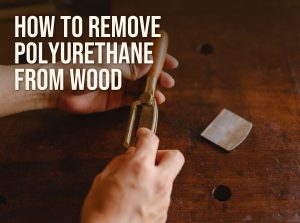
To remove polyurethane from wood, soften it with a paint and varnish stripper, scrape it off with the grain, clean off the residue, then sand the bare wood from 120 to 180 or 220. On flat, solid wood you can skip the chemicals and sand it off from 80 grit, and on a floor sanding is the normal route. Cured polyurethane doesn’t dissolve in mineral spirits, vinegar or water, so household tricks won’t shift it.
This guide covers how to confirm the finish really is polyurethane, the stripper method step by step, how to sand poly off without clogging a pack of discs, what to do on veneer, carvings and floors, whether you can keep the stain underneath, and the strippers, scrapers and sanders that make it faster.
⚡ Quick Answer
Furniture, carvings, veneer: brush on a thick coat of Citristrip gel, wait from 30 minutes up to 24 hours, then lift it with a plastic or contour scraper.
Flat solid wood: sand it off with a random orbital sander, 80 then 120 then 180, on fresh discs.
Floors: a floor sander, starting at 36 or 40 grit. See my guide on refinishing hardwood floors.
How to Remove Polyurethane from Wood: Pick the Method
| Method | Best for | Avoid on | Main drawback |
|---|---|---|---|
| Chemical stripper | Furniture, carvings, chairs, veneer | Plastic, fiberglass, vinyl | Messy, slow on thick poly |
| Sanding | Flat solid-wood tops, doors, floors | Veneer, carvings, lead paint | Clogs discs; removes some wood |
| Scraping | Softened finish, thin coats on flat wood | Soft woods with a heavy hand | Can gouge; slow on hard poly |
| Heat gun | Thick finish on trim and doors | Veneer, near glass, lead paint | Scorch marks; fire risk |
Most real projects mix them: stripper on the legs and carvings, a scraper to lift the softened finish, and a sander to clean up the flat top. The same choices apply to paint, which my guide on how to strip paint from wood compares in more detail.
Step 1: Make Sure It’s Polyurethane
Old furniture is just as likely to wear shellac or lacquer, which come off far more easily. Fine Woodworking describes a simple solvent test. Clean a hidden spot with mineral spirits to remove wax, then put a drop of denatured alcohol on it, wait a few minutes and rub: if finish comes off, it’s shellac. If not, try lacquer thinner: if the surface turns sticky, it’s lacquer or a water-based finish. If neither affects it, you have a reactive finish such as varnish or oil-based polyurethane, and that’s the one that needs a stripper or sandpaper.
Oil-Based vs Water-Based Polyurethane
Oil-based poly ambers with age and passes both solvent tests untouched. Water-based poly stays clear and, by the same test, softens under lacquer thinner. Both come off with a paint and varnish stripper; lacquer thinner on a rag can help clean up a water-based coat on a small piece.
⚠️ Important
If there’s paint under the clear coat, or the piece was painted at some point, and the home was built before 1978, test for lead before you sand or use heat. Use a stripper and wet scraping instead of dry sanding, and keep children and pets away from the work.
Step 2: Strip Polyurethane with a Chemical Stripper
This is the method for anything that isn’t a flat slab of solid wood. Since November 2019, the EPA has banned the sale of methylene chloride paint removers to consumers, after deaths linked to its fumes, so the strippers sold today work more slowly. Plan on a longer wait, not a weaker result.
How to Use a Stripper on Polyurethane
These steps follow the Citristrip Paint & Varnish Stripping Gel label, which lists polyurethane among the finishes it removes:
- Protect yourself and the room. Chemical-resistant gloves, splash goggles, cross-ventilation and a heavy plastic drop cloth. The label gives 65 to 85°F as the best range, away from strong breeze and hot sun.
- Apply a heavy coat, about 1/16 in thick, with a paint brush. Don’t brush back and forth: lay it on and leave it.
- Wait. After 30 minutes, scrape a small test area. If the finish isn’t ready, wait longer: the gel stays active up to 24 hours as long as it stays wet. For overnight stripping, cover it with plastic.
- Scrape with the grain using a plastic stripping tool. For stubborn spots, use an abrasive stripping pad dipped in the stripper; for carvings and grooves, a toothbrush, toothpick or stripping brush.
- Clean off the residue with a clean abrasive pad dipped in After Wash or odorless mineral spirits. The wood must be clean and dry before you refinish.
- Repeat on any areas where finish remains. Several coats of poly may need a second round.
How Long Does It Take?
That depends on how many coats are on the piece and how old they are. One thin coat can lift at the 30-minute check; a table with four or five coats of oil-based poly is often an overnight job under plastic. Trust the test scrape, not the clock, and keep the stripper wet: once it dries, it stops working.
Scraping Without Gouging
Use plastic on soft woods and veneer, a contour scraper on moldings, and a carbide scraper only on hard, solid wood with light pressure. Always pull with the grain. Scraper marks and gouges show up again as dark lines when you re-stain.
Step 3: Sand Polyurethane Off
On a flat tabletop or door of solid wood, sanding alone is often faster than stripping, and on a floor it’s the standard method. Polyurethane is hard and turns gummy under heat, so the technique matters.
What Grit to Sand Polyurethane Off
- 80 grit to break through the finish on furniture and doors.
- 120 grit to remove the 80-grit scratches and the last of the finish.
- 180 grit to finish before stain, or 220 before a clear coat.
- Floors: 36 or 40 to start, then 60 and 80 or 100.
The wood grit guide explains why you shouldn’t skip more than one grit, and the sandpaper grit chart has every step.
Stop the Discs from Clogging
Finish loads up sandpaper fast. Mirka says stearate coatings give the best results when sanding paint, lacquer and similar surfaces, and that open-coat abrasives, with fewer grains, resist clogging. Use stearated or open-coat discs, keep the sander moving, connect a vacuum, and change discs as soon as they stop cutting: a loaded disc just heats the finish and smears it. Mesh discs are another answer, because the dust goes through the whole disc.
Which Sander to Use
A 5″ or 6″ random orbital sander does tops, doors and panels. A sander with an aggressive mode, like the Bosch GET65-5N in its turbo setting, removes finish noticeably faster. A detail sander reaches inside corners. For floors, see my guide on how to refinish hardwood floors.
Careful on Veneer
Many tabletops and cabinet doors are veneer: a layer of wood that can be thinner than a sheet of card. Check the edges and the underside for a different grain or a line of plywood. On veneer, use a stripper, skip 80 grit, and finish with 150 to 180 by hand or with very light pressure.
Other Ways to Remove Polyurethane
Heat Gun
Heat softens a thick film finish so a scraper can lift it. Keep the gun moving, hold the scraper right behind it, and stop before the wood darkens. It’s best on trim and doors with thick coats; skip it on veneer, near glass and on anything that may contain lead paint. My best heat gun for paint removal guide has the details.
Acetone, Lacquer Thinner and Mineral Spirits
Solvents behave differently on different finishes, which is the whole point of the solvent test above. Mineral spirits removes wax and cleans up stripper residue, but it doesn’t dissolve cured polyurethane. Lacquer thinner can soften lacquer and water-based finishes. Acetone, a strong and fast-evaporating solvent, may soften some water-based coatings but evaporates too fast to strip a thick oil-based film. For cured oil-based poly, a stripper is the reliable chemical route.
Vinegar, Baking Soda and Other Household Tricks
Household vinegar is a dilute acid sold as a cleaner. I haven’t found any finish maker that recommends it, or any household product, for removing cured polyurethane, so I wouldn’t spend an afternoon on it.
Can You Remove Polyurethane Without Removing the Stain?
Rarely, completely. Stain sits in the top fibers of the wood, right under the finish. A stripper lifts the poly and usually some of the color with it, and sanding that’s deep enough to remove the poly cuts into the stained layer. If the color is what you like, the realistic plan is to remove the topcoat as gently as possible (stripper and plastic scraper, no coarse grits), then touch up or re-stain the lighter areas before the new topcoat. If you want to remove the stain too, my guide on how to remove stain from wood covers sanding it out and bleaching.
Removing Polyurethane by Project
Table or Dresser
Strip the legs, aprons and carved parts; sand the top if it’s solid wood, strip it if it’s veneer. Clean all residue, then sand 120 to 180 before stain. My guide on refinishing wood furniture walks through the rest.
Cabinets
Take the doors off and work flat. Many cabinet doors are veneer over plywood or MDF, so use a stripper and gentle sanding. If you’re painting instead of re-staining, you don’t need the poly off at all: clean, scuff or degloss, and prime. My guide to liquid sandpaper explains that route.
Wood Floors
Floors are sanded, not stripped: there’s too much area for a gel. A drum or orbital floor sander starts at 36 or 40 to cut through the finish. See how to refinish hardwood floors, or, if the finish is only worn and not damaged, refinishing without sanding may be enough.
After the Polyurethane Is Off
Let the wood dry fully after any stripper or water. Sand the whole surface to one even grit so stain takes evenly, remove every bit of dust and check under a low light for leftover finish: it shows as shiny patches that won’t take stain. Then follow how to stain wood and seal it again.
Tools That Make Removing Polyurethane Easier
The specs below are from the makers’ labels and pages, or the Amazon listing where I say so. I don’t show customer ratings or prices.
Citristrip Paint & Varnish Stripping Gel

Best Stripper for Polyurethane on Furniture
Citristrip’s label lists polyurethane, varnish, lacquer, shellac and paint among what it removes from wood, metal and masonry. It’s a gel that stays wet and active for up to 24 hours, so it can lift several coats in one go, and the label says it’s suitable for indoor use with cross-ventilation. It contains benzyl alcohol; wear gloves and goggles. Not for fiberglass, plastic or vinyl.
- ✅ Rated for polyurethane on the label
- ✅ Up to 24 hours of working time
- ✅ Gel clings to legs and carvings
- ❌ Slow: plan on a long wait for thick poly
Best For: Chairs, tables, dressers and anything with carvings.
Dumond Smart Strip PRO

Best for Many Layers at Once
When there’s paint and varnish on top of each other, Smart Strip PRO is the heavier option. The listing says it removes up to 20 layers of oil, latex and acrylic paints, varnishes and stains in one application, with a wait of up to 24 hours, and that the water-based formula contains no methylene chloride or NMP. It also says it works best on coatings from after the 1980s.
- ✅ Many layers in one application
- ✅ Water-based, no methylene chloride or NMP
- ✅ Works on wood, metal and masonry
- ❌ Long dwell time
Best For: Painted and varnished trim, doors and older furniture.
ALLWAY CS6 Contour Scraper Set

Best for Moldings, Spindles and Grooves
Softened poly in a cove or bead won’t come out with a flat blade. This set has a soft-grip handle with six interchangeable blade shapes, curved and pointed, plus a blade file to keep them sharp. Use it on the profiles and finish with a toothbrush and a pad, as the Citristrip label suggests.
- ✅ Six profiles for curves and grooves
- ✅ File included to resharpen
- ✅ Light, controllable
- ❌ Too small for flat tops
Best For: Chair spindles, moldings and carved details.
Bosch GET65-5N Dual-Mode Random Orbit Sander

Best Sander for Removing Finish
A regular palm sander will get poly off a tabletop, slowly. The GET65-5N is built for removal: it’s a dual-mode sander with a Turbo mode for aggressive stock removal and a random orbit mode for finishing, on a 5″ hook-and-loop pad. Use turbo with 80 grit to cut through the finish, then switch modes for 120 and 180. More options are in my best random orbital sanders.
- ✅ Turbo mode for fast finish removal
- ✅ Random orbit mode for the final grits
- ✅ Standard 5″ discs
- ❌ Heavier than a palm sander
Best For: Sanding poly off solid-wood tables, doors and benches.
POWERTEC 5″ Sanding Disc Assortment, 80 to 220 Grit

Best Discs for the Grit Steps
Removing poly eats discs, so buy a bulk assortment. This pack has 10 discs each of 80, 100, 120, 150 and 220 grit, aluminum oxide with a stearate anti-clog coating, in the 5″ 8-hole hook-and-loop pattern that fits the Bosch and most other random orbital sanders. Add a box of 180 if you’ll stain. For premium options, see the best sanding discs for random orbital sanders.
- ✅ 50 discs across five grits
- ✅ Anti-clog coating
- ✅ Standard 8-hole pattern
- ❌ No 180 in the pack
Best For: Working through 80, 120 and 220 on a refinishing project.
How I Put This Guide Together
The stripping steps come from the Citristrip Paint & Varnish Stripping Gel label (W.M. Barr), the solvent test from Fine Woodworking‘s guide to identifying finishes, the methylene chloride rule from the EPA’s 2019 announcement, and the anti-clog advice from Mirka’s guide to abrasives. The grit sequence matches my wood grit guide. Product specs come from the makers or, where I say so, the Amazon listing. More on how I choose the products I recommend.
🏆 The Verdict
Confirm it’s polyurethane with the solvent test, then match the method to the piece. Stripper and a plastic or contour scraper for furniture, carvings and veneer; 80, 120 and 180 grit on a random orbital sander for flat solid wood; a floor sander for floors. Citristrip handles most furniture if you give it time, and a Bosch GET65-5N with plenty of fresh discs does the flat work fastest.
❓ Frequently Asked Questions
What is the best polyurethane remover?+
Does vinegar remove polyurethane from wood?+
Will mineral spirits remove polyurethane?+
How can I remove polyurethane from wood without sanding it?+
What will dissolve polyurethane?+
How do you remove polyurethane from wood with heat?+
Conclusion
Knowing how to remove polyurethane from wood is mostly knowing which piece you’re looking at. Strip anything with curves, carvings or veneer, sand flat solid wood, and treat floors as a floor-sanding job. Give the stripper time, change discs often, and finish at the grit your new stain or topcoat needs. If you’re comparing removers, my best paint stripper for wood roundup compares five strippers and what their labels promise.

