
As an Amazon Associate I earn from qualifying purchases. All claims are strictly my personal opinion.
Editor’s Choice
Short on time? Of all the how to strip paint from wood without damaging it I tested, this is the one I'd buy.

A gel that clings to vertical surfaces and, according to the maker, stays active for up to 24 hours; finish with a light sand.
- Also recommended Wagner HT1000

The best way to strip paint from wood depends on the piece: a gel chemical stripper for furniture, carvings and anything with detail, a heat gun and scraper for thick layers on doors and trim, and a sander only for flat surfaces with a few thin coats. Whatever the method, if the paint could be from before 1978, test it for lead first.
Stripping paint is slow, messy work, and the method you choose decides whether you end up with clean wood ready for stain or with gouges, scorch marks and paint still stuck in every corner. Below: how the four methods compare, step-by-step instructions for each, how to sand paint off wood when sanding is the right call, what to do for furniture, doors and cabinets, and the tools that make it easier.
The 4 Ways to Strip Paint from Wood, Compared
| Method | Best for | Speed | Dust | Watch out for |
|---|---|---|---|---|
| Chemical stripper (gel) | Furniture, carvings, spindles, many layers | Slow to act, little effort | None | Fumes, skin contact, residue cleanup |
| Heat gun + scraper | Thick paint on doors, trim, flat panels | Fast | None | Scorching, fire, cracking nearby glass |
| Scraping only | Loose, flaking paint | Medium | Chips | Gouges from a tilted blade |
| Sanding | Flat surfaces, thin coats, final cleanup | Fast on flat wood | A lot | Clogged paper, lead dust, rounded details |
⚡ Quick Pick by Project
Painted chair, dresser or anything carved: a gel stripper such as Citristrip – a gel that clings to vertical surfaces and, according to the maker, stays active for up to 24 hours; finish with a light sand.
Door, trim or baseboard with many coats: a heat gun like the Wagner HT1000 and a carbide scraper.
Flat tabletop or deck boards with one or two coats: a sander, starting at 60 or 80 grit. See how to sand paint off wood below.
Step 1: Test for Lead Before You Start

This comes before any method. The EPA’s guidance for do-it-yourselfers says: “If your home was built before 1978, it may have lead-based paint; the older your home, the more likely it has lead-based paint.” The same applies to old furniture, doors and trim that came from an older house. Sanding, scraping and burning lead paint all release lead into dust or fumes.
- Test it. The EPA recognizes two test kits for wood, LeadCheck and D-Lead, when they are used by a Certified Renovator. For the most reliable answer, the EPA points to a certified lead inspector or risk assessor.
- If it is lead, or you can’t rule it out: the EPA’s DIY guidance recommends methods that keep dust down, including wet sanding with wet-dry sandpaper or a sanding sponge, a low-temperature heat gun under 1,100°F, and a chemical stripper, with the area sealed off and cleaned with a HEPA vacuum. Many people hire a lead-safe certified contractor at this point.
- If it is not lead: still wear a respirator and eye protection. Old paint dust, stripper fumes and heat-gun fumes are all worth avoiding.
Step 2: Prepare the Piece and the Space
- Remove hardware, hinges and knobs. Take doors off their hinges and lay them flat if you can; strippers and scrapers work far better on a horizontal surface.
- Work outdoors or in a well-ventilated room, with plastic sheeting under the piece to catch paint and sludge.
- Wear chemical-resistant gloves, eye protection and a respirator suited to what you are using.
- Clean off grease and dirt with a mild detergent and let the surface dry.
Method 1: Chemical Paint Stripper
A chemical stripper softens the paint so it can be scraped or wiped off, and it is the only method that reaches into carvings, turnings and molding profiles without damaging them. Gel and paste strippers are easier than liquids because they cling to vertical surfaces and stay wet longer. I compare the gels, pastes and liquids worth buying in my guide to the best paint stripper for wood.
How to Strip Paint from Wood With a Chemical Stripper
- Test a small area to see how long the stripper needs on your paint.
- Brush on a thick coat with an old natural-bristle brush, in one direction. Don’t brush it back and forth; a thick, undisturbed layer works better.
- Keep it wet. Covering the stripper with plastic wrap slows evaporation, which matters on multiple layers.
- Wait for the time on the label, until the paint wrinkles and bubbles.
- Scrape with a plastic scraper on flat areas, following the grain, and use a stiff brush, a dental pick or a wooden skewer in details.
- Repeat on areas where paint remains.
- Clean the residue with the solvent the label specifies, then let the wood dry completely before sanding.
What Is the Most Effective Paint Remover for Wood?
For most DIY furniture work, a gel stripper that stays active for hours is the most effective, because it can soften many layers in one application. Citristrip, for example, says its gel stays wet and active for up to 24 hours. Faster, harsher strippers exist, but they give you less working time and are harder to use safely indoors. “Safer” labels don’t mean harmless: Citristrip contains no methylene chloride, yet its listing still carries a California warning for N-Methyl-2-pyrrolidone, so gloves and ventilation still apply.
Method 2: Heat Gun and Scraper
A heat gun softens paint in seconds so it lifts off in ribbons. On a door or a long run of trim with many coats, it is the fastest method there is, and it makes no dust. I compare models in my guide to the best heat gun for paint removal. For the full technique, step by step, see my guide on how to remove paint with a heat gun.
How to Strip Paint With a Heat Gun
- Start on the lower setting and hold the nozzle a couple of inches from the surface.
- Move it slowly over a small area until the paint blisters and bubbles. Don’t stop in one spot.
- Scrape the softened paint right away, with the grain, keeping the scraper at a low angle, while you heat the next section.
- Drop hot paint scrapings into a metal container, not onto plastic sheeting or the floor.
Safety: keep the heat away from window glass, which can crack, and from gaps in walls, where dust and old paper can smolder unseen. Keep a fire extinguisher nearby and check the area again after you finish. For old paint, stay under the EPA’s 1,100°F guideline. Check your heat gun’s maximum: some variable models go well past it, while the Wagner HT1000 below tops out at 1,000°F.
Method 3: Scraping
If the paint is already failing, like the flaking boards in the photo above, a sharp scraper removes most of it with no heat or chemicals. A carbide scraper stays sharp far longer than a steel one. Pull it toward you with the blade almost flat and let the edge do the work; digging in at a steep angle leaves gouges you then have to sand out.
Method 4: How to Sand Paint Off Wood
Sanding is the quickest method on flat surfaces with a few thin coats, and it is always the last step after stripping or heat, to clean off what is left and prepare the wood for finish. It is also the method that makes the most dust, so it is the one to avoid entirely on paint that might contain lead.
Can You Sand Paint Off Wood?
Yes, on the right piece. Sanding works best on flat, solid wood with one or two coats: a tabletop, a shelf, a door laid flat, deck boards, siding. It works badly on carvings, turned legs and moldings, where the paper rounds over the crisp edges before the paint in the hollows is gone, and on veneer, which a coarse disc can cut through in seconds. On thick, layered paint, soften the bulk with a heat gun or a gel stripper first and sand only what is left. And if the paint could predate 1978, test it before you sand at all (Step 1 above).
Which Sander to Use
- Belt sander: the fastest on large flat stock, and the easiest to gouge with. Keep it moving with the grain, use a low speed so the paint doesn’t melt onto the belt, and follow it with an orbital sander to erase the straight scratches. More models in my belt sander reviews.
- Random orbital sander: the safest single tool for furniture, doors and anything curved. Bosch rates the Turbo mode of its GET65-5N at three times the stock removal of its normal random-orbit mode, so one tool strips and finishes.
- Detail or mouse sander: for corners and the inside edges of frames that a round pad can’t reach. Slow on paint, so scrape first.
- Sanding block or sponge by hand: for profiles and moldings, after a stripper has done the heavy work.
I compare specific models for this job, including belt sanders, the Bosch and a belt file for narrow edges, in my guide to the best sanders for removing paint.
What Grit Sandpaper to Remove Paint from Wood
Start at 60 or 80 grit for one or two coats of paint. For thick, layered paint, drop to 40 grit, but only on solid wood and only for the first pass. Once the paint is gone, step up through 120 and finish at 150 to 180 before new paint or stain, or 220 before a clear finish. Don’t skip from 60 straight to 180: the finer paper takes far longer to erase deep scratches than the in-between grits would. My guide to what grit sandpaper to use on wood has the full sequence for every job, and the sandpaper grit chart converts between grit standards. Once the paint is off, sanding the bare wood is covered step by step in how to sand wood.
Step by Step: Sanding Paint Off a Flat Surface
- Test for lead, remove the hardware and set up outdoors or in a ventilated room. Wear a respirator and eye protection.
- Scrape off anything loose or flaking first. Sanding loose paint only clogs the paper.
- Connect the sander to a shop vac and set a medium speed, so the paint doesn’t heat up and smear.
- Sand with the coarse grit in overlapping passes with the grain, letting the weight of the tool do the work. Don’t stop in one spot.
- Change the disc or belt as soon as it glazes over with paint. A loaded abrasive only rubs and heats the surface.
- When the paint is gone, step through the finer grits over the whole surface, then hand-sand the edges and corners.
- Vacuum and wipe off the dust before primer, stain or finish.
If you haven’t used one before, read how to use an orbital sander first. For the corners a round pad can’t reach, a detail sander finishes the job.
How to Sand Paint Off Wood Furniture
On a dresser or table, sand the flat parts (top, sides, drawer fronts) with a random orbital sander, and treat the legs, spindles and carvings with a gel stripper and a brush instead. Watch the edges of tops and drawer fronts: many pieces are veneered, and the veneer can be thinner than a sheet of paper. If you see a different grain or a line of glue at the edge, stop sanding there and strip it chemically. More on the whole job in stripping paint from furniture below.
How to Sand Paint Off a Wood Door
Take the door off its hinges and lay it flat across sawhorses. A flat slab door can be sanded all over, starting with a belt sander or a random orbital at 60 or 80 grit. On a paneled door, sand the flat rails and stiles, and strip the panel profiles and moldings with heat or a stripper, because sanding them flattens the profile. Old doors are the most likely place to find lead paint, so test first. The door section below covers the rest.
What Is the Quickest Way to Strip Paint?
On a flat door or trim with many coats, a heat gun and a sharp scraper is the quickest. On a flat surface with only one or two thin coats, a belt sander or a random orbital sander at 60 grit is quicker still. On anything with carvings, turnings or molded details, a gel chemical stripper is slower to act but quicker overall, because you are not fighting the shape. For most projects the fastest route is a combination: stripper or heat for the bulk, then a quick sand for the rest.
How to Strip Paint from Wood Without Sanding
Use a chemical stripper or a heat gun to remove the paint, then clean up with the stripper’s recommended solvent and fine steel wool or a stiff brush. On carved or delicate pieces, this is often the better route anyway, because sanding rounds over crisp details. You will probably still want a very light hand-sanding with 180 or 220 grit before finishing, to smooth grain the stripper has raised.
How to Remove Paint Without Damaging the Wood
- Use a plastic scraper on softened paint, and keep metal scrapers at a low angle.
- Scrape and sand with the grain.
- With a heat gun, keep moving and stop as soon as the paint bubbles. Scorch marks go deep.
- Let the stripper do the work: another coat and more waiting is better than scraping hard.
- Avoid coarse grits and belt sanders on veneer, which can be thinner than a sheet of paper.
Stripping Paint by Project
How to Strip Paint from Wood Furniture
Chemical stripper is the default for furniture: it gets into joints, turnings and carvings without rounding them. Work one surface at a time, laid horizontal if possible. Then sand lightly and prepare for your new finish; my guide to sanding furniture to paint covers the next steps if you are repainting.
How to Strip Paint from a Wood Table
Strip the legs and apron with chemical stripper, and the top with stripper or, if it is solid wood with only a coat or two, with a random orbital sander. Check whether the top is veneer before sanding: look at the edge and end grain. Then follow my guide on how to sand and refinish a table.
How to Strip Paint from a Wood Door
Take the door off its hinges and lay it on sawhorses. A heat gun and scraper removes thick paint from the flat panels and stiles fastest; use stripper in the molded profiles around the panels. Finish with a sander on the flats; I recommend specific models in my best sanders for doors guide.
How to Strip Paint from Wood Cabinets
Remove the doors and drawer fronts and strip them flat on a bench. Use chemical stripper on raised-panel profiles, and protect the countertop and floor if you strip the cabinet boxes in place. Many cabinets are veneered plywood, so go gently with any sander. See my picks for the best sanders for cabinets.
Household Items for Stripping Paint: What Works and What Doesn’t
Home remedies get a lot of attention, but on painted wood their use is narrow:
- Vinegar: hot white vinegar can soften small areas of water-based paint, for example on a small wooden item, left on for a while and then scraped. It does little to oil-based paint and is not practical for a whole door or dresser.
- Baking soda and boiling water: a classic for stripping paint off metal hinges and knobs you have removed. Don’t boil wood.
- Dish soap: good for cleaning the surface before and after stripping, not for removing dried paint.
For anything larger than a small item, a commercial gel stripper or a heat gun will save you hours.
Tools That Make Stripping Paint Easier
Citristrip Paint & Varnish Stripping Gel
Best for Furniture and Detail
A gel that clings to vertical surfaces and, according to the maker, stays wet and active for up to 24 hours, long enough to soften several layers in one go. It contains no methylene chloride or NMP and is non-caustic; still use gloves and good ventilation.
Wagner HT1000 Dual-Temperature Heat Gun
Best Heat Gun for Doors and Trim
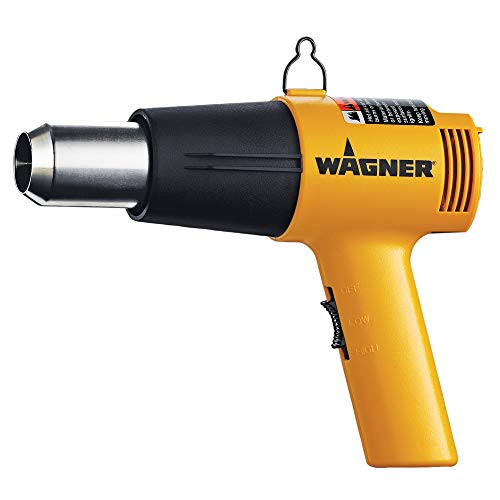
Two settings, 750°F and 1,000°F, both under the EPA’s 1,100°F guideline, with two fan speeds. The integrated stand lets you set it down hot without the nozzle touching the bench, and Wagner gives it a 2-year home-use warranty.
Bahco 665 Carbide Scraper

Best Scraper
A 2-1/2″ carbide blade on a long two-handed grip, for scraping after the heat gun or on flaking paint. Bahco says the carbide edge stays sharp up to 50 times longer than steel, and the blades are interchangeable. Limited lifetime warranty.
Wagner PaintEater Palm-Grip Disc Sander

Best for Siding and Rough Exterior Wood
A 3.2 A rotary tool with a 4-1/2″ open-web 3M disc at 2,600 RPM, made for paint rather than wood: the open disc resists clogging, and the flexible disc follows uneven boards. Use it on edge for stubborn chips and flat to feather the edges before repainting. I also cover it in my disc sander reviews.
For Sanding: Bosch GET65-5N
For the sanding step, my first pick is the Bosch GET65-5N, a dual-mode random orbit sander whose Turbo mode strips aggressively and whose random-orbit mode finishes the surface. The full comparison, including belt sanders, is in my guide to the best sanders to remove paint.
🏆 The Bottom Line
Test for lead first if the paint could predate 1978. Then match the method to the piece: gel stripper for furniture and detail, a heat gun and carbide scraper for thick paint on doors and trim, a scraper for paint that is already flaking, and a sander for flat surfaces and the final cleanup. Most projects use two of them. Work with the grain, keep the heat moving, and let the stripper do the work instead of your scraper.
❓ Frequently Asked Questions
Will Dawn dish soap remove paint?+
What is the most effective paint remover for wood?+
What is the fastest way to remove paint from wood?+
What household items can I use to strip paint?+
How do you strip paint from wood without sanding?+
Does WD-40 remove dried paint?+
Will 70% isopropyl alcohol remove paint?+
Can you remove paint from wood with vinegar?+
Stuck on a stubborn piece? Tell me what it is, what the paint looks like and what you have tried in the comments, and I’ll suggest the next step.

