
As an Amazon Associate I earn from qualifying purchases. All claims are strictly my personal opinion.
To sand metal, degrease it, take off rust and loose paint at 80 to 120 grit, smooth the scratches at 150 to 220, and stop at 220 to 320 if you are painting or keep going wet from 400 up to 2000 if you want a polished finish. Use aluminum oxide, zirconia or ceramic abrasives for the coarse work, silicon carbide wet/dry paper for the fine work, and keep the tool moving so the metal never gets too hot to touch.

That is the whole method in two sentences. In this guide, I’ll cover the detail that decides whether it works on your piece: which grit for steel, aluminum, stainless or rusty iron, which tool for which job (random orbital sander, angle grinder with a flap disc, belt sander, file, wire wheel or plain sandpaper on a block), how to sand metal for painting so the paint actually sticks, and how to stay safe with metal dust and sparks. If your project is a car panel, my guide to the right grit for car paint goes deeper on body filler, primer and clear coat.
⚡ Key Takeaways
- Yes, you can sand metal with ordinary sandpaper, but metal-rated abrasives (aluminum oxide, zirconia, ceramic, silicon carbide, emery cloth) cut faster and last longer.
- Grit by stage: 40 to 80 for heavy rust and welds, 80 to 120 for paint and light rust, 150 to 220 to smooth, 220 to 320 before primer, 400 to 2000 wet for polishing.
- Tool by job: angle grinder with a flap disc for heavy removal, random orbital sander for flat panels and paint prep, belt sander or file for edges and flat bar, sandpaper on a block for small parts and detail.
- Prime bare steel the same day. Freshly sanded steel and iron start to flash rust quickly, especially in a damp shop.
- Metal dust and sparks need their own precautions: respirator, eye protection, no sawdust near the sparks, and never aluminum and steel dust in the same collector.
Can You Sand Metal?
Yes. Sanding metal is how body shops, fabricators and restorers remove rust, strip paint, blend welds and prepare surfaces for primer. The only difference from wood is that metal is harder and conducts heat, so the abrasive has to be tougher and the technique has to keep the surface cool.
Can You Sand Metal With Normal Sandpaper?
You can, and for a quick scuff before painting a railing or a mailbox, the aluminum oxide paper in most garages will do the job. Where ordinary paper struggles is heavy work. The cheapest sheets often use garnet or a soft backing; garnet dulls quickly on steel and paper backing tears on sharp edges. For anything more than a light scuff, buy paper or discs marked for metal: aluminum oxide or zirconia for removal, silicon carbide wet/dry for finishing, emery cloth for hand work around curves.
Is There a Difference Between Wood and Metal Sandpaper?
The grit numbers are the same, but the mineral and the backing usually differ. Wood paper is often garnet or open-coat aluminum oxide on paper, designed to shed sawdust. Metal abrasives use harder minerals (zirconia, ceramic, silicon carbide), closed coat for a denser cut, and cloth, film or heavy paper backings that survive sharp edges and water. Many “wood and metal” packs are aluminum oxide, which genuinely works on both; garnet is the one to keep off steel.
What Grit Sandpaper for Metal?
Pick the grit by the job, not by the metal. Start with the finest grit that still removes the worst defect in a minute or two, then go up one step at a time, never skipping more than one grit. Each grit only has to remove the scratches of the one before it. My sandpaper grit chart converts between CAMI and P grades if your paper uses the P scale.
| Stage | Grit | What it does | Best abrasive |
|---|---|---|---|
| Heavy removal | 40 to 60 | Weld beads, mill scale, deep pitting, shaping | Zirconia or ceramic flap disc |
| Rust and paint removal | 80 to 120 | Surface rust, old paint, getting back to bare metal | Ceramic or aluminum oxide disc |
| Smoothing | 150 to 220 | Removes coarse scratches, feathers paint edges | Aluminum oxide |
| Prep for primer and paint | 220 to 320 | Even scratch pattern primer can grip | Aluminum oxide or silicon carbide |
| Sanding primer, satin finish | 400 to 800 | Smooths primer before top coat; brushed look on bare metal | Silicon carbide, wet |
| Pre-polish | 1000 to 2000+ | Scratches fine enough for compound to remove | Silicon carbide, wet |
What Grit Sandpaper for Metal Before Paint?
Finish bare metal at 220 to 320 before primer. Coarser than 180 and the scratches can show through thin paint; finer than 400 on bare steel and the surface is so smooth that primer has less to grip. If you are scuffing existing paint that is still sound, 220 to 320 is enough to dull the gloss everywhere. After the primer dries, sand it at 400 (dry) or 600 (wet) before the top coat.
What Grit to Remove Rust From Metal?
Surface rust comes off at 80 to 120. Flaking or pitted rust needs 40 to 60, usually on a flap disc or wire wheel, before you go back to 80 and 120. Once the metal is bright, step up to 180 and 220 so the deep scratches from the coarse grit don’t telegraph through the paint.
Grit by Type of Metal
The stages above stay the same, but each metal changes the starting point and the abrasive:
| Metal | Typical start | Before paint | Watch out for |
|---|---|---|---|
| Mild steel and iron | 80 (40 for welds and scale) | 220 | Flash rust within hours of sanding |
| Sheet metal and car panels | 80 to 120 | 180 to 320 | Heat warps thin panels |
| Aluminum | 120 to 180 | 320 | Soft, clogs discs; combustible dust |
| Stainless steel | 80 to 120 | Usually left bare: 320 to 400 for a brushed finish | Work-hardens when hot; use clean abrasives only |
| Cast iron | 60 to 80 | 180 to 220 | Brittle edges chip; black graphite dust |
| Galvanized steel | Scuff only: 180 to 220 | 220 | Sanding through the zinc removes the rust protection |
| Brass and copper | 220 to 320 | Usually polished, not painted | Soft: coarse grits leave deep scratches |
What Kind of Sandpaper Is Used on Metal?
Five abrasives do almost all metal sanding. They differ in how hard the grain is, whether it fractures to stay sharp, and whether it tolerates water. For specific products, discs, sheets and flap discs, see my picks for the best sandpaper for metal.
Aluminum Oxide
The general-purpose choice, and what most “metal and wood” sheets and discs are made of. It is tough enough for steel, cheap, and available in every format from sheets to belts. It dulls faster than zirconia or ceramic under heavy pressure, so it suits paint removal, smoothing and prep more than weld grinding.
Zirconia Alumina
The standard grain on flap discs and coarse belts. The grains fracture under pressure and expose fresh cutting edges, so a zirconia disc keeps cutting on steel long after an aluminum oxide disc has glazed over. Use it at 40 to 120 with a grinder or belt sander, where you can lean on it.
Ceramic
The fastest and longest-lasting grain, usually purple or red on discs and belts. Ceramic runs cooler because it cuts instead of rubbing, which matters on stainless and thin panels. It needs moderate to firm pressure to fracture properly, so it shines on grinders, belt sanders and random orbital sanders doing heavy paint and rust removal. It costs more per disc, but fewer discs get through the job.
Silicon Carbide
Sharper than aluminum oxide but more brittle, and the grain on almost all black wet/dry paper. It is the finishing abrasive: wet sanding primer and clear coat, taking bare metal from 400 to 2000 and beyond before polish, and working on non-ferrous metals like aluminum and brass. It wears too quickly for heavy removal on steel.
Emery Cloth
Natural emery grain on a flexible cloth backing, sold in rolls and sheets. It is the classic hand abrasive for metalwork: wrap it around a pipe, pull it “shoeshine” style around a rod or tube, or fold it into a tight corner. Plumbers use it to clean copper before soldering. It cuts more slowly than modern synthetic grains, so keep it for detail and polishing work.
Nonwoven Strip Discs and Pads
Strip discs (often called “clean and strip” discs) are open nylon webs loaded with abrasive. On an angle grinder they remove paint, rust and powder coat without cutting into the metal underneath, which makes them the safer option on thin panels. Hand pads in the same material (the green and maroon scuff pads) are useful for scuffing paint before recoating.
What Type of Sander Is Best for Metal?
For most people the answer is a random orbital sander for flat surfaces and paint prep, plus an angle grinder with a flap disc for anything heavy. The table below covers the rest.
| Tool | Best for | Not for |
|---|---|---|
| Random orbital sander | Flat panels, doors, cabinets, paint prep, feathering, sanding primer | Welds, heavy scale, tight curves |
| Angle grinder + flap disc | Welds, heavy rust, mill scale, bevels, shaping | Thin sheet metal, fine finishing |
| Angle grinder + wire wheel or strip disc | Rust and paint on irregular shapes, railings, chassis | Smoothing: it cleans, it doesn’t level |
| Belt sander (handheld or bench) | Straight edges, flat bar, squaring ends, removing burrs | Large thin panels (gouges and heat) |
| Files | Edges, burrs, cut ends, fitting parts | Large surfaces |
| Sandpaper on a block, emery cloth | Small parts, detail, final passes, tubing | Heavy rust over large areas |
| Detail sander or rotary tool | Corners, grilles, ornamental ironwork | Anything flat and large |
Sanding Metal With an Orbital Sander
Yes, you can use an orbital sander on metal, and a random orbital sander is the best power sander for flat metal. I’ve tested many sanders for metal work, and this class of tool performs best across the widest range of applications. Its pad spins and oscillates at once, so it leaves no straight-line scratches and won’t dig in the way a belt can. Fit it with ceramic or aluminum oxide discs at 80 for paint and rust, then 120, 180 and 220 before primer. When using an orbital sander on metal, I use consistent, overlapping passes and keep the sander moving at all times. Run it at medium to high speed, let its weight do most of the work, and never park it: parking it in one place heats thin metal fast. A square-pad sheet sander also works, but it removes material more slowly. My guide on how to use an orbital sander covers disc fitting, speed and pressure in detail.
Angle Grinder With a Flap Disc
When the job is heavy (a weld bead, thick scale on a trailer frame, deep rust on a gate), a 4-1/2″ angle grinder with a zirconia or ceramic flap disc removes in minutes what a sander would take an hour to do. Hold it at a shallow angle, around 5 to 15 degrees for a Type 27 (flat) disc and a little steeper for a Type 29 (conical) one, and sweep it across the work rather than holding it still. A 40 grit disc levels, 80 blends, and 120 leaves a surface an orbital sander can finish. Grinding and sanding are different jobs: grind to remove material, then sand to refine the surface.
Can I Use a Belt Sander to Smooth Metal Surfaces?
Yes, with zirconia or ceramic belts made for metal. A handheld belt sander is good at flattening a narrow surface, cleaning up flat bar and taking a weld down on flat plate, and a benchtop belt sander is the easiest way to square the end of a bar, deburr cut stock or put an edge on a tool. On wide thin sheet it is too aggressive: it builds heat in one band and can gouge. Empty the dust bag first, because sparks and sawdust are a fire risk (see the safety section). For machines, see my belt sander reviews and the best benchtop belt sanders.
Files
A file is the oldest metal sanding tool and still the most accurate for edges. A mill bastard file takes burrs off cut ends and flattens edges; a smooth-cut file refines them; a half-round file handles inside curves. Push the file across the work (files cut on the push stroke), lift it on the return, and tap the teeth clean with a file card when they clog. Draw filing, holding the file crosswise and pulling it along the edge, leaves a very flat, smooth surface ready for emery cloth.
Wire Wheels and Cup Brushes
A knotted wire cup brush on a grinder strips rust and loose paint from irregular shapes faster than anything else. It cleans but does not level: pitting stays pitting. Follow it with 80 to 120 grit on smooth areas. Wire breaks off at speed, so a face shield and long sleeves are essential, not optional.
How to Sand Metal, Step by Step
The sequence matters: each step builds on the previous one. Here’s the workflow I follow on every metal project, whether it is a rusty steel gate, a tool chest, a patio chair or a car panel going back to paint.
Step 1: Clean and Degrease
Wash off dirt with soap and water, then wipe the surface with a degreaser, wax and grease remover or isopropyl alcohol. Oil and wax clog sandpaper instantly and, worse, get pushed into the scratches where they stop primer from sticking.
Step 2: Remove Loose Rust and Flaking Paint
Knock off anything loose with a wire brush, a cup brush on a grinder or a strip disc. There is no point clogging good sandpaper on scale that a brush removes in seconds.
Step 3: Sand at the Starting Grit
I choose my starting grit based on what condition the metal is in and how much material needs to come off, using the table above: usually 80 for rust and paint, 40 to 60 for welds, 120 for a surface that is just dull. Sand until the whole area shows the same scratch pattern and no dark rust remains in the low spots. On pitted steel you may need to treat what is left at the bottom of the pits with a rust converter rather than sanding the metal thin.
Step 4: Step Up Through the Grits
Go to the next grit (80, 120, 180, 220) and sand only until the previous scratches are gone. A pencil or marker guide coat helps: scribble on the surface, sand until it disappears, and you know you have covered every spot.
Step 5: Feather the Edges
Where bare metal meets sound paint, sand the paint edge into a gentle slope at 180 to 220 so you can’t feel a ridge with your fingertips. A hard edge shows through new paint as a visible outline.
Step 6: Control the Heat
If the metal is too hot to keep your hand on, stop. Heat warps thin panels, glazes discs, discolors stainless and can make paint gummy. Move constantly, use lighter pressure, and let large panels cool between passes.
Step 7: Clean Off the Dust
Blow off or vacuum the dust, then wipe down again with wax and grease remover or alcohol and a lint-free cloth. Finish with a tack cloth just before primer.
Step 8: Prime Immediately
Bare steel starts to flash rust quickly, sometimes within hours in humid air. Prime the same day with a rust-inhibiting or etching primer, or a self-etching primer on aluminum and galvanized steel.
How to Sand Metal for Painting
Sanding metal before painting has one goal: a clean, dull, evenly scratched surface the primer can grip. Shine means no tooth; leftover rust means the paint will bubble.
Do You Have to Sand Metal Before Painting?
If the old finish is sound, you only need to scuff it, not strip it. Wash, degrease, then sand every glossy area at 220 to 320 (or rub it with a gray scuff pad) until it is uniformly dull. If the paint is flaking, chalky or rusted underneath, sand those areas back to bare metal and feather the edges. New bare steel with mill scale needs the scale removed or it will eventually flake off and take the paint with it.
Sanding Painted Metal
Paint loads sandpaper fast, especially soft or old latex. Use open-coat or ceramic discs, slow the sander down if the paint starts to melt, and change discs as soon as they stop cutting. Test old paint for lead before you sand it: the EPA says homes built before 1978 are more likely to have lead-based paint, and that applies to railings, radiators and metal doors too. If you would rather strip than sand, my roundup of the best sanders to remove paint compares the options.
Sanding Between Coats of Paint on Metal
Lightly sand primer at 400 dry or 600 wet before the top coat, and only sand between top coats to remove dust nibs or runs, at 600 to 800 wet. Let each coat cure per the label before sanding, or the paper will gum up.
How to Remove Rust by Sanding
Light, even surface rust (an orange film on tools, outdoor furniture or a truck bed) sands off with 80 to 120 grit on an orbital sander or by hand. Heavier rust follows a three-tool sequence: a cup brush or strip disc to take off the scale, a 60 or 80 grit flap disc to get down to bright metal, then 120 and 180 to smooth. Stop removing metal once the surface is bright, and treat any black specks left in deep pits with a rust converter before priming. On car panels, rust that has eaten through needs cutting out and patching, not sanding.
Sanding Metal by Hand
Hand sanding is slower but gives the most control on small parts, edges, tubes and anything that has to stay flat. Three rules make it work:
- Use a block on flat surfaces. Paper held in your fingers follows the dips and rounds over edges. A rubber block or a flat piece of wood keeps the surface straight.
- Sand in straight strokes. On metal with a visible grain (brushed stainless, extruded aluminum), follow the grain. For your final grit, make all strokes parallel so the scratch pattern looks uniform.
- Use emery cloth or cloth-backed rolls on round stock. Wrap it around the rod or tube and pull it back and forth like a shoeshine cloth.
To smooth sharp metal edges at home, a mill file at a 45 degree angle takes off the burr, then 120 and 220 grit paper wrapped around a block rounds it slightly so it won’t cut hands.
Wet or Dry: Using Wet and Dry Sandpaper on Metal
Sand dry at 40 to 320, where you are removing material and need to see what you are doing. Switch to wet sanding from about 400 up, especially for primer, clear coat and bare metal you plan to polish. Water flushes away the metal particles that would otherwise clog the paper and scratch the surface, and keeps it cool.
- Soak silicon carbide wet/dry paper in water with a drop of dish soap for 10 to 15 minutes.
- Wrap it around a block, keep the surface wet with a spray bottle and sand in straight, light strokes.
- Wipe the slurry off often to check progress, and rinse the paper when it loads.
- Dry bare steel immediately and completely, then prime or oil it. On cast iron and bare steel that will sit for a while, use a light oil or a water-displacing spray as the lubricant instead of water.
Never wet sand with a corded electric sander. Wet sanding by machine needs an air (pneumatic) sander or a tool made for it.
Tips for Specific Metals
Sanding Sheet Metal
Thin sheet is the easiest metal to ruin. Heat from a grinder or a stationary sander stretches it and leaves a permanent warp or “oil can” bulge. Use an orbital sander or a strip disc instead of a grinding disc, keep moving, and work in short sessions so the panel stays cool to the touch. Start no coarser than 80.
Sanding Aluminum
Aluminum is soft and gummy, so it clogs aluminum oxide paper quickly. Silicon carbide paper, a stearate-coated “no-fill” disc, or a little WD-40 as a lubricant keep the paper cutting. Start at 120 to 180, since coarser grits gouge it. Aluminum begins to oxidize again quickly, so use a self-etching primer within an hour or two of sanding for paint. To polish aluminum, wet sand through 400, 800, 1200 and 2000, then use a metal polish.
Sanding Stainless Steel
Use abrasives that have never touched carbon steel. Steel particles embedded in stainless rust and leave orange stains that look like the stainless itself is rusting. Ceramic and zirconia flap discs cut stainless best because they cut cool; heat discolors it with blue and straw tints. For a brushed finish, finish with straight strokes at 320 to 400 in the direction of the existing grain.
Sanding Galvanized Steel
The zinc layer is the rust protection, so don’t sand through it unless you have to. Clean it, then scuff it lightly at 180 to 220 or with a scuff pad, and use a primer rated for galvanized metal. Do not grind or heat galvanized steel without a respirator rated for metal fumes.
Sanding Cast Iron
Cast iron sands easily but its edges chip if you hit them with a coarse belt. Start at 60 to 80 on rust, finish at 180 to 220, and oil or prime it straight away: bare cast iron can show flash rust within hours in a humid shop.
How to Polish Metal With Sandpaper
A mirror finish is simply the grit progression carried to its end. Wet sand with silicon carbide paper at 400, 600, 800, 1000, 1500 and 2000, changing the direction of your strokes 90 degrees at each grit so you can see when the previous scratches are gone. Then use a metal polishing compound by hand or with a buffing wheel, followed by a finer polish and a wax or sealant. For a satin or brushed look instead, stop at 320 to 400 and make the final strokes in one direction, or rub with 0000 steel wool on steel (never on stainless or aluminum, where steel wool leaves particles that rust).
How to Sand Metal Without Sandpaper
Files, wire brushes and wire wheels, strip discs, nonwoven scuff pads, steel wool, and abrasive blasting all remove material or clean metal without sandpaper. For rust on small parts, a soak in a commercial rust remover or white vinegar loosens it so a brush can finish the job. For paint, a chemical stripper or a heat gun avoids sanding dust entirely.
Safety When Sanding Metal
- Breathing: metal and old paint dust are fine enough to reach the lungs. Wear a P100 respirator for grinding and sanding paint, and a respirator rated for metal fumes for galvanized steel. My guide to the best respirators for sanding covers fit and filters.
- Eyes and face: safety glasses for sanding; a full face shield over glasses for grinders, flap discs and wire wheels.
- Sparks and fire: grinder sparks travel several feet. Clear sawdust, rags and solvents away from the work area, never point sparks at a dust bag or shop vac full of wood dust, and keep an extinguisher nearby.
- Aluminum and steel dust together: fine aluminum dust is combustible, and mixed with iron oxide it is the main ingredient of thermite. Collect aluminum and steel dust separately and never in a collector that has sparks going into it.
- Hands and ears: gloves for handling sharp, hot metal (but never loose gloves near a wire wheel or bench belt, which can grab them), and hearing protection for grinders.
- Lead paint: test before sanding old painted metal, and use wet methods and HEPA cleanup if it is positive.
Tools and Abrasives I’d Start With
These cover every stage above, from heavy rust to pre-paint prep, and each one is picked for a specific step in this guide. More abrasive options are compared in my sandpaper for metal reviews. If you’re looking for more in-depth product recommendations, I’ve also compiled reviews of the best random orbital sanders across different budgets and use cases, and the best sanders for auto body work.
DEWALT DWE6423K 5″ Random Orbital Sander

For Flat Panels and Paint Prep
A 3 A motor with variable speed from 8,000 to 12,000 OPM, which lets you slow down on painted metal before the paint melts onto the disc. The low body keeps your hand close to the work so the pad stays flat, a separate counterweight cuts vibration, and the switch is dust-sealed, which matters with fine metal dust.
DEWALT DWE402W 4-1/2″ Angle Grinder

For Welds, Scale and Heavy Rust
An 11 A, 11,000 RPM grinder that takes standard 4-1/2″ flap discs, cup brushes and strip discs. The one-touch guard rotates 360 degrees without tools, so you can reposition it for each angle, the paddle switch has a safety lock-off, and a dust ejection system blows grit back out of the motor vents.
SHALL Zirconia Flap Discs, 24-Pack
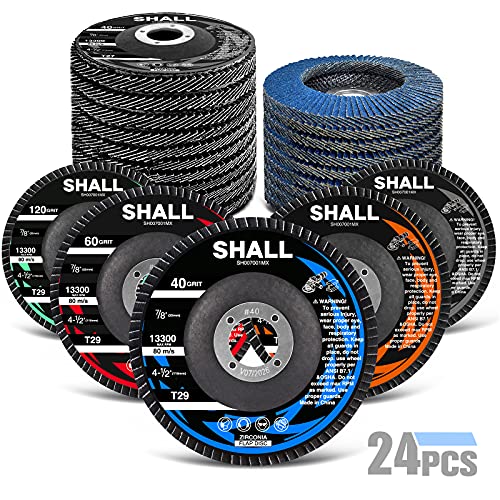
The Grinder Grit Sequence in One Box
Twenty Type 29 discs in 40, 60, 80 and 120 grit plus four flat Type 27 discs in 40, all zirconia on fiberglass backing plates. The grit number is etched on the metal ring as well as printed on the label, so you can still tell them apart once the label has worn off. Rated for grinders up to 13,300 RPM.
Dura-Gold 5″ Ceramic Sanding Discs, 80 Grit

Orbital Sander Discs for Paint and Rust
A box of 50 film-backed ceramic discs with a hook-and-loop back and the 8-hole pattern most 5″ random orbital sanders use. Ceramic grain fused with zirconia cuts paint and rust without clogging as quickly as standard paper, and the film backing doesn’t tear on edges. The same discs come in 120, 180, 220 and 320 for the following grits.
3M Wetordry Sandpaper, Assorted Grits
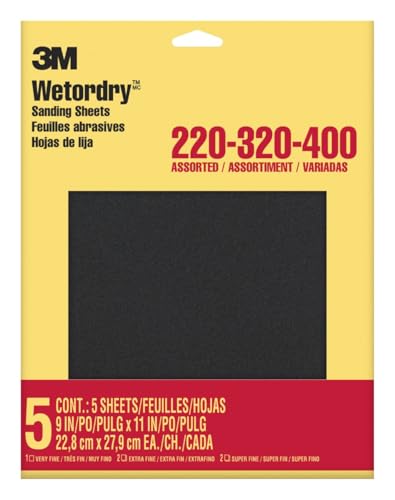
For Wet Sanding and Polishing
Five 9″ x 11″ sheets of silicon carbide on waterproof paper in assorted grits. This is the paper for wet sanding primer before the top coat and for taking bare metal toward a polish. Cut each sheet into quarters and wrap them around a block.
DEWALT DW4910 Knotted Wire Cup Brush

For Rust and Scale on Awkward Shapes
A 3″ knotted carbon steel cup brush with a 5/8″-11 thread, so it screws straight onto the spindle of most 4-1/2″ grinders, including the one above. Knotted wire is the aggressive type, made for heavy rust, scale and old paint.
Nicholson 5-Piece General Purpose File Set

For Edges and Burrs
A 10″ half-round bastard, 8″ mill bastard, 8″ mill smooth, 10″ mill bastard and a 6″ slim taper file in a storage pouch. That covers deburring cut ends, flattening edges, draw filing and inside curves.
Bates Emery Cloth Rolls, 6 Grits

For Hand Sanding Tubes, Rods and Detail
Six 1″ x 20 ft rolls in 80, 150, 240, 320, 400 and 600 grit in a dispenser box. It is the easiest way to hand sand round stock, pipe and small parts through a full grit sequence.
🏆 The Bottom Line
Clean first, knock off the loose stuff, start at the grit that removes the worst defect, and step up one grit at a time: 80, 120, 180, 220 for paint, wet from 400 for polish. Match the tool to the job (grinder and flap disc for heavy work, random orbital sander for flat surfaces, files and emery cloth for edges and detail), keep the metal cool, and prime bare steel the same day. The techniques I’ve outlined here work consistently whether you’re prepping a car panel, refinishing garden tools, or polishing a steel component to a mirror shine. For sanding a whole car, see my guide on how to sand a car.
