


As an Amazon Associate I earn from qualifying purchases. All claims are strictly my personal opinion.
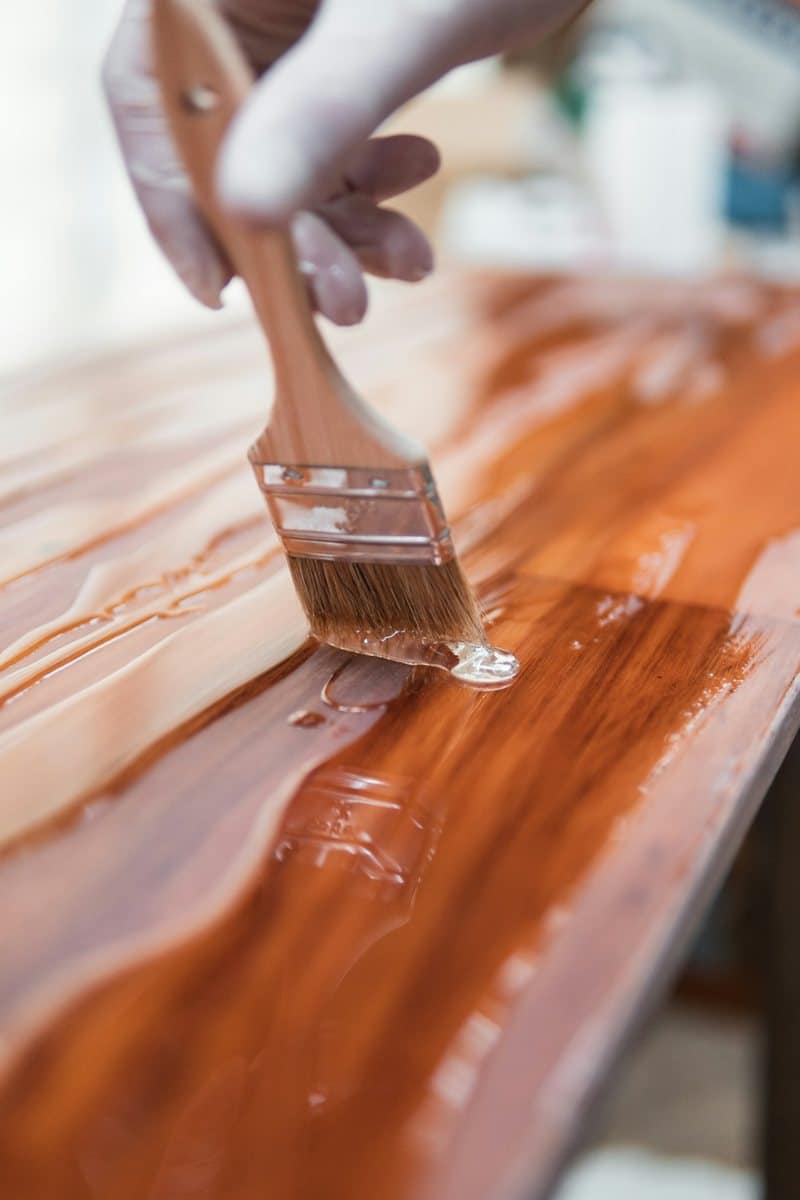
Yes, sand between coats of polyurethane: a light scuff with 320-grit sandpaper once each coat is dry knocks off dust nibs and raised grain and gives the next coat a surface to grip. After the first coat, when the grain stands up most, 220 grit is fine. You’re not trying to remove the finish, just to dull the shine evenly, then wipe off every bit of dust before the next coat.
This guide covers when it’s really necessary and when you can skip it, the grit for each coat, sandpaper vs steel wool, by hand or with a sander, and what goes wrong when you don’t sand.
⚡ Quick Answer
After coat 1: 220 to 320 grit, to flatten raised grain.
Between later coats: 320 grit, light pressure, just until the surface looks evenly dull.
Before the final coat (optional): 400 grit for the smoothest base.
Then: vacuum, wipe with a tack cloth, and recoat within the time on your can.
What You’ll Use
Consumables are cheap, and the right ones make the difference between a smooth finish and scratches under the next coat.
| Product | Use it for | Price | Buy |
|---|---|---|---|
| ⭐ 3M Wetordry 320, 25 sheets | Hand-sanding between coats on a block | $ | Shop Now at Amazon |
| 3M Fine Sanding Sponge | Edges, legs, spindles and profiles | $ | Shop Now at Amazon |
| Mirka Abranet 320, 5″ mesh discs | Large flat surfaces with a random orbital sander | $ | Shop Now at Amazon |
| S&F STEAD & FAST Tack Cloth | Lifting the last dust before you recoat | $ | Shop Now at Amazon |
| DEWALT DWE6411K Sheet Sander | Flat panels and tabletops with ordinary 320 paper | $$ | Shop Now at Amazon |
Use it for
- ⭐ 3M Wetordry 320, 25 sheets
- Hand-sanding between coats on a block
- 3M Fine Sanding Sponge
- Edges, legs, spindles and profiles
- Mirka Abranet 320, 5″ mesh discs
- Large flat surfaces with a random orbital sander
- S&F STEAD & FAST Tack Cloth
- Lifting the last dust before you recoat
- DEWALT DWE6411K Sheet Sander
- Flat panels and tabletops with ordinary 320 paper
Price
- ⭐ 3M Wetordry 320, 25 sheets
- $
- 3M Fine Sanding Sponge
- $
- Mirka Abranet 320, 5″ mesh discs
- $
- S&F STEAD & FAST Tack Cloth
- $
- DEWALT DWE6411K Sheet Sander
- $$
Buy
- 3M Fine Sanding Sponge
- Shop Now at Amazon
- Mirka Abranet 320, 5″ mesh discs
- Shop Now at Amazon
- S&F STEAD & FAST Tack Cloth
- Shop Now at Amazon
- DEWALT DWE6411K Sheet Sander
- Shop Now at Amazon
Is It Absolutely Necessary to Sand Between Coats of Polyurethane?
Not always, but usually worth it. Sanding between coats does two jobs:
- Smoothness. Every coat catches dust, the odd bug and raised wood fibers. If you don’t knock them off, the next coat builds on top of them and they’re there for good.
- Adhesion. Once a coat has cured past the maker’s recoat window, the next coat bonds best to a surface that has been scuffed. Within the window, many polyurethanes bond chemically to the coat below, and the label will tell you whether sanding is then optional.
So the honest answer: read your can. If you recoat inside the window it gives, you can skip sanding for adhesion, and just remove any nibs. If you’ve missed the window, or you want a glass-smooth result, sand every coat but the last.
What Grit to Sand Polyurethane Between Coats
| When | Grit | Why |
|---|---|---|
| After the first coat | 220-320 | The first coat raises the grain most, especially water-based poly. A slightly coarser grit levels it faster. |
| Between later coats ⭐ | 320 | Removes nibs and dulls the surface without cutting through. |
| Before the final coat | 320-400 | A finer scratch for the smoothest last coat. |
| After the final coat | Don’t | Leave it. Rubbing out a fully cured finish to a set sheen is a separate job. |
Grit
- After the first coat
- 220-320
- Between later coats ⭐
- 320
- Before the final coat
- 320-400
- After the final coat
- Don’t
Why
- After the first coat
- The first coat raises the grain most, especially water-based poly. A slightly coarser grit levels it faster.
- Between later coats ⭐
- Removes nibs and dulls the surface without cutting through.
- Before the final coat
- A finer scratch for the smoothest last coat.
- After the final coat
- Leave it. Rubbing out a fully cured finish to a set sheen is a separate job.
Going coarser than 220 between coats leaves scratches the next coat won’t hide. Going much finer than 400 barely scuffs the surface, which defeats the purpose. The full grit chart for bare wood is in my what grit sandpaper for wood guide, and my picks for the rest of the sequence are in the best sandpaper for wood.
💡 Grit Scales
US sandpaper uses the CAMI scale; European brands like Mirka use FEPA “P” grades. Above about 220 they drift apart, and a P-grade is finer than the same CAMI number: a CAMI 320 is roughly a P400. Both of the 320s below are fine for between coats.
How to Sand Between Coats of Polyurethane
- Let the coat dry fully. Use the time on your can. If the sandpaper gums up and the dust clumps instead of turning to fine white powder, it isn’t ready.
- Sand lightly, with the grain. By hand, wrap the paper around a flat block or use a sponge. Barely any pressure: the weight of your hand is enough.
- Stop when it looks evenly dull. You’re aiming for a uniform haze. A few small shiny spots are low areas: leave them rather than sanding through the edges to reach them.
- Go easy on edges and corners. The finish is thinnest there and cuts through first. One pass is enough.
- Remove every bit of dust. Vacuum with a brush attachment, then wipe with a lightly unfolded tack cloth, no pressure.
- Recoat within the window on the can.

The Abrasives I’d Use
3M Wetordry Sandpaper, 320 Grit

Best Sandpaper Between Coats
3M sells this pack for exactly this job: its listing calls it sandpaper “for final or between coats sanding”. It’s silicon carbide, a sharp mineral that cuts cleanly at fine grits, on waterproof paper you can use dry or with water to reduce clogging. 25 full 9 x 11 in sheets cut into quarters for a block or a 1/4-sheet sander, which is enough for a lot of coats.
- ✅ Made for between-coats sanding
- ✅ Wet or dry
- ✅ 25 sheets, cut to any size
- ❌ Needs a block for flat results
3M Sanding Sponge Block, Fine

Best for Edges and Curved Parts
Paper on a hard block digs into edges and can’t follow a turned leg. A fine sanding sponge flexes, spreads the pressure, and is much less likely to cut through the finish on an edge. This 3M block is extra large, 2-7/8 x 8 in, works wet or dry, and rinses clean to reuse.
- ✅ Gentle on edges and profiles
- ✅ Wet or dry, reusable
- ❌ 3M gives “fine”, not a grit number
Mirka Abranet 5″ Mesh Discs, 320

Best for Big Flat Surfaces With a Sander
On a large tabletop or a set of cabinet doors, a random orbital sander with a mesh disc scuffs evenly and fast. Abranet’s open mesh lets a vacuum pull the dust through the whole disc, and Mirka says it resists clogging, which is the usual problem with fine paper on finish. The 50 discs are P320 (FEPA) and fit any 5″ hook-and-loop sander regardless of hole pattern. Run the sander at a low speed setting and keep it flat.
- ✅ Dust extraction through the whole disc
- ✅ Resists clogging on finish
- ✅ Fits any 5″ hook-and-loop pad
- ❌ Only for flat surfaces
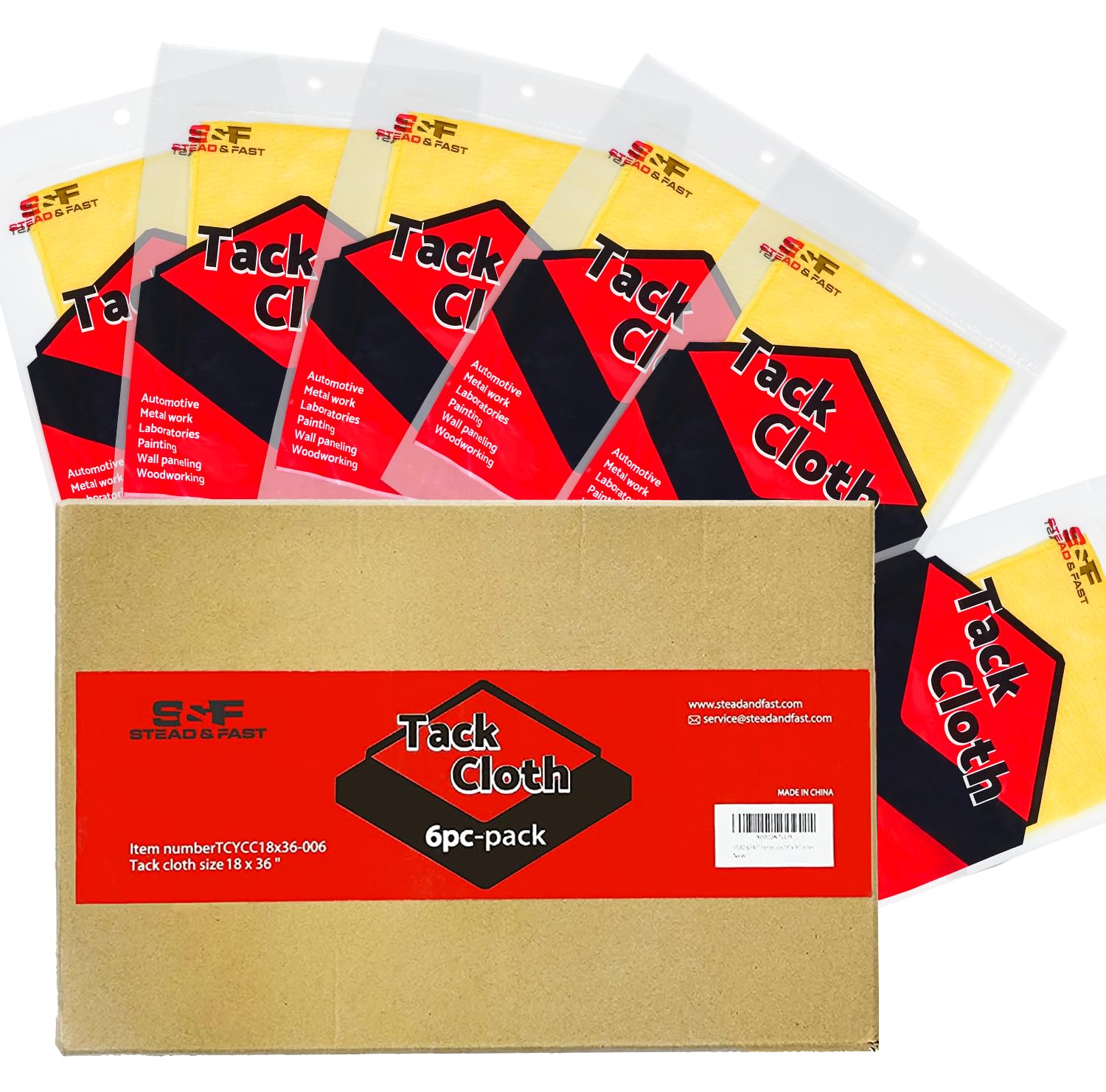
S&F STEAD & FAST Tack Cloth
Best for the Last of the Dust
A vacuum gets most of the dust; a tack cloth gets the rest. These are 18 x 36 in cotton cheesecloth, individually wrapped, and wax and silicone free, which matters because wax or silicone left on the surface can cause the next coat to fisheye. Unfold one loosely and drag it over the surface with no pressure. With water-based poly, some finishers prefer a cloth barely dampened with water instead: check what your finish’s maker recommends.
By Hand or With a Sander?
By hand is safest and all you need for furniture, doors and small projects: paper on a block for flat parts, a sponge for edges and curves. A sander saves time on big flat surfaces, as long as you use a fine grit, a low speed and no pressure.
Sheet Sander: DEWALT DWE6411K

A 1/4-sheet sander is the classic tool for sanding between coats: its small fixed orbit scuffs evenly without cutting in, and it clamps ordinary sandpaper, so a quarter of a 3M 320 sheet fits straight on. The DEWALT DWE6411K (2.3 A, 14,000 OPM) has a paper clamp that holds the sheet tight and a punch for dust holes. For why a square pad suits this job, see sheet sander vs random orbital sander; for a random orbital with a low speed setting, see my best random orbital sanders.
Sandpaper or Steel Wool Between Coats?
Sandpaper, in most cases. Paper on a block cuts flat and levels nibs; steel wool follows the surface, so it dulls the shine but doesn’t flatten much. Steel wool also sheds tiny fibers. Under oil-based poly that’s a nuisance; under water-based poly, any fiber left behind can rust and leave dark specks in the finish. If you like the feel of wool on curved parts, use a synthetic abrasive pad instead: it does the same job without metal fibers.
Oil-Based vs Water-Based Polyurethane
- Water-based dries fast and raises the grain noticeably on the first coat, so the first sanding matters most. Avoid steel wool.
- Oil-based dries slowly and needs longer before it sands to a powder rather than gumming. Give it the full time on the can, more in cool or humid weather.
Floors
On a floor, the same idea applies at a different scale: a light “screening” between coats with a floor buffer and a fine screen or pad, then a thorough vacuum and tack. A handheld sander is too slow for a whole room. My guides on sanding wood floors yourself and the best sanders for floors cover the equipment.
Common Mistakes
- Sanding too soon. Gummy paper and dust balls mean the coat isn’t dry.
- Sanding through on edges. One light pass on edges, never more.
- Chasing shiny spots. Low spots stay shiny. Leave them; the next coat fills them.
- Leaving dust. Every speck you miss is sealed in the next coat.
- Using a coarse grit. Scratches from 150 or 180 show through clear finish.
🏆 The Short Version
Let each coat dry, scuff it with 320 grit (220 to 320 after the first coat) on a block or a fine sponge for edges, stop when it’s evenly dull, remove the dust with a vacuum and a tack cloth, and recoat within the time on your can. Use a sheet sander or mesh discs on big flat surfaces. Skip steel wool under water-based poly. Starting from an old finish? See how to remove stain from wood and how to sand and refinish a table.
❓ Frequently Asked Questions
Is it absolutely necessary to sand between coats of polyurethane?+
What grit do I use to sand between coats of polyurethane?+
Is it better to use sandpaper or steel wool between coats of polyurethane?+
Can I apply a second coat of polyurethane without sanding?+
What happens if you don’t sand between coats of polyurethane?+
Can you wet sand between coats of polyurethane?+
Have a finish that isn’t coming out smooth? Tell me what you’re using in the comments and I’ll help you track down the problem.

