
As an Amazon Associate I earn from qualifying purchases. All claims are strictly my personal opinion.
Best for sanding
A HEPA dust extractor with a tool outlet and automatic filter cleaning.
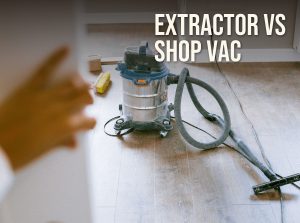
A dust extractor and a shop vac work the same way, with high suction through a small hose, but an extractor adds what sanding needs: a fine filter (usually HEPA), automatic filter cleaning on many models, an anti-static hose and an outlet that switches it on with your tool. A dust collector is a different machine: it moves four to eight times more air through a 4″ hose at much lower suction, which suits the chips from a table saw, planer or jointer, not a sander. Most shops end up with an extractor or a shop vac for hand tools and a collector for stationary machines.
Below is the dust extractor vs shop vac vs dust collector comparison with the makers’ own numbers, why suction and airflow pull in opposite directions, which tool needs which machine, when a shop vac with a cyclone separator is enough, and the machines I’d look at in each category. If you already know what you need, jump to my best dust extractor, best shop vac for dust collection or best dust collector pages.
⚡ Quick Answer
Sanders, routers, track saws: the DEWALT DWV010 – a HEPA dust extractor with a tool outlet and automatic filter cleaning.
Cleanup and light tool use on a budget: a shop vac like the RIDGID RT1200 with a Dust Deputy cyclone in front.
Table saw, planer, jointer: a dust collector with a 4″ hose, from the WEN DC3401 to the JET DC-1100VX-CK.
Dust Extractor vs Shop Vac vs Dust Collector at a Glance
| Feature | Dust Extractor | Shop Vac | Dust Collector |
|---|---|---|---|
| Built for | Fine dust at handheld tools | Cleanup, wet and dry debris | Chips from stationary machines |
| Airflow (maker examples) | 130 to 150 CFM | Often not published (Vacmaster VBV1210: 106 CFM) | 560 to 1,100 CFM |
| Suction (maker examples) | 92″ to 97″ water lift | High, rarely published | 3.25″ to 10.1″ static pressure |
| Hose size | About 1″ to 1-1/2″ | 1-7/8″ or 2-1/2″ | 4″ (or larger) |
| Filtration | HEPA on most models | Standard cartridge; fine-dust or HEPA filter optional | Bag or canister, 1 to 30 micron |
| Starts with the tool | Yes, built-in outlet | Rarely; add a plug-in auto switch | No; switch or remote |
| Filter cleaning | Automatic on many models | By hand | Paddles or shaking the bag |
| Noise and size | Compact, quieter models exist | Loud, compact | Large; wall, cart or floor unit |
| Typical price tier | $$$ to $$$$ | $ to $$ | $$ to $$$$ |
Examples in the table come from makers’ specs: DEWALT DWV010 (150 CFM), Bosch VAC090AH (150 CFM, 97″ water lift), Festool CT 26 (138 CFM, 96″), Makita VC4210L (148 CFM, 92″); POWERTEC DC5371 (560 CFM), JET DC-1100VX-CK (1,100 CFM rated), RIKON 60-100 (3.25″ static pressure) and Laguna C|Flux:1 (10.1″).
Suction vs Airflow: Why the Three Machines Exist
Every dust machine trades suction for airflow. Suction, measured as water lift or static pressure, is the force that pulls air through resistance: a long, narrow hose and a sander’s tiny dust holes. Airflow, measured in CFM, is the volume of air moved, which carries chips away from a big cutter. You can’t have both from one small motor.
High Suction, Low Airflow: Extractors and Shop Vacs
Extractors and shop vacs use a fast, small motor that builds very high suction. Bosch and Festool list 96 to 97 inches of water lift. That pull is what gets dust through a 1-1/4″ hose and the holes in a sanding pad. But the volume is small, around 130 to 150 CFM, so a shop vac on a table saw or planer chokes on chips. DeWalt’s own DW735 planer manual says it’s not recommended to connect a shop vac, because most can’t handle the volume of chips and the hose may clog.
High Airflow, Low Suction: Dust Collectors
A dust collector uses a large impeller to move 560 to 1,100 CFM through a 4″ hose, but at low pressure: RIKON lists 3.25 inches of static pressure for its 60-100 and Laguna 10.1 inches for the C|Flux:1. That volume grabs chips from a planer’s chute or a table saw’s cabinet, but the low pressure can’t pull air through a sander’s small port and hose. Connect a sander to a collector and you’ll collect almost nothing.
Is an Extractor Just a Vacuum?
Mechanically, close to it. What makes an extractor worth more is the set of features built around sanding:
- Tool-triggered outlet. Plug the sander into the extractor and it starts and stops with the trigger, often with a few seconds of run-on to clear the hose. Without it, most people stop connecting the hose.
- Fine filtration. Most extractors carry a HEPA filter rated to capture 99.97% of particles at 0.3 micron, the standard Bosch quotes for its VAC090AH. A standard shop vac cartridge isn’t built for sanding dust.
- Automatic filter cleaning. DEWALT pulses the DWV010’s filter every 30 seconds and Bosch every 15, so suction doesn’t fade halfway through a tabletop.
- Anti-static hose and adjustable suction. No shocks from dry dust, and you can turn suction down so a sander doesn’t clamp itself to the work.
Can I Use a Shop Vac as a Dust Extractor?
Yes, with three upgrades, and it’s the right first step for a lot of hobby shops:
- A fine-dust or HEPA filter (or a filter bag) in place of the stock cartridge.
- A cyclone separator such as the Oneida Dust Deputy between the tool and the vac. Oneida says it catches 99% of dust and debris before the filter, so the filter clogs far less often. My best dust separator guide compares the options.
- A plug-in auto switch so the vac follows your sander, and a small tool hose with an adapter for the sander’s port.
Even upgraded, a shop vac is usually louder and has no automatic filter cleaning. If you sand for hours each week, the extractor is the better tool. If you sand now and then, the upgraded shop vac is enough.
Which Machine for Which Tool
| Tool | Best match | Why |
|---|---|---|
| Random orbital, sheet, detail sanders | Extractor | Small ports need high suction; fine dust needs HEPA |
| Drywall sanders | Extractor with automatic filter cleaning | Joint compound blinds filters quickly |
| Track saw, handheld router, domino | Extractor | Tool-sized hoses and auto-start |
| Miter saw | Extractor or shop vac at the port, plus a hood | See my miter saw dust collection guide |
| Router table | Shop vac at the fence, collector below | Two pickup points, two kinds of waste |
| Table saw, bandsaw | Dust collector, 4″ port | High chip volume from the cabinet |
| Planer, jointer, drum sander | Dust collector | Chip volume clogs vacuum hoses |
For hoods, guards and fittings tool by tool, see my guide to dust collection for woodworking tools.
Is a Dust Collector More Powerful Than a Shop Vac?
It moves far more air, but it doesn’t pull as hard. A 1 HP collector like the POWERTEC DC5371 is rated at 560 CFM, nearly four times what a 150 CFM extractor moves, while its static pressure is a small fraction of a vacuum’s water lift. So “more powerful” depends on the job: at a planer chute the collector wins easily; at a sander’s port the vacuum wins. That’s also why a dust collector makes a poor floor vacuum: on a long, narrow cleaning hose its suction collapses. Sweep chips toward a floor sweep or the 4″ hose, and use a shop vac for corners and benches.
What Size Shop Vac Do You Need for Dust Collection?
For tool dust, tank size matters less than the hose and filter. A 12 to 16 gallon vac with a 2-1/2″ hose suits chip-heavy tools like a miter saw or router table; for a sander, a 1-1/4″ or 1-1/2″ tool hose with an adapter works far better than a 2-1/2″ floor hose. Put a cyclone separator in front and the vac’s tank size stops mattering much, because the bucket catches most of the debris.
Is a Dust Extractor Worth It?
If you sand more than a few hours a month, yes. The tool-triggered start means you actually use extraction every time, the HEPA filter catches the fine dust that hangs in the air, and automatic filter cleaning keeps suction up through a whole job. Sanding also goes faster with a clean pad, because the abrasive cuts wood instead of riding on its own dust. If you sand occasionally, a shop vac with a HEPA filter, a Dust Deputy and an auto switch gets you most of the way for less. If you own Festool sanders, my Festool dust extractor comparison covers which CT model fits.
💡 Pro Tip: You Probably Need Two Machines
A shop with a table saw or planer and a random orbital sander is serving two kinds of waste. Don’t try to make one machine do both: pair a collector for the stationary tools with an extractor or upgraded shop vac for handheld tools. If space is tight, my dust collector for a small shop picks run on a standard 115V outlet.
The Machines to Look At in Each Category
DEWALT DWV010 8-Gallon HEPA Dust Extractor
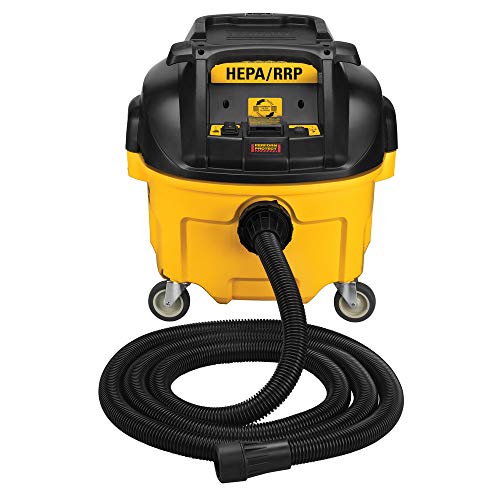
Dust Extractor: Best for Most Sanding
The DWV010 is what an extractor adds over a shop vac, in one machine. Its 15 A motor moves 150 CFM, the HEPA filter is pulsed clean automatically every 30 seconds, and the tool-activated outlet starts and stops it with your sander or saw. The 15 ft anti-static hose is 1-1/4″, the right size for sander ports, with a swiveling universal connector. DEWALT notes it meets the EPA Lead Renovation, Repair and Painting rule for HEPA vacuums only when fitted with its DWV9330 filters.
- ✅ Automatic filter cleaning every 30 seconds
- ✅ Tool-activated outlet
- ✅ Hose sized for sanders
- ❌ Water lift not published
- ❌ Not for planer or table saw chips
Best For: Anyone who sands, routes or track-saws every week.
Bosch VAC090AH 9-Gallon Dust Extractor

Dust Extractor: Best for Drywall and Fine Dust
Bosch publishes both numbers that matter for the suction argument above: 150 CFM and 97 inches of water lift. Automatic filter cleaning fires every 15 seconds, twice as often as the DEWALT, which counts with drywall compound and plaster. The HEPA filter is rated at 99.97% at 0.3 micron behind a fleece bag, the Power Broker dial turns suction down for sanders, and power tool activation is built in.
- ✅ Filter cleaned every 15 seconds
- ✅ Airflow and water lift both published
- ✅ Adjustable suction
- ❌ Higher price tier than the DEWALT
- ❌ Heavier to carry
Best For: Drywall, plaster, paint and concrete dust.
RIDGID RT1200 NXT 12-Gallon Wet/Dry Shop Vac
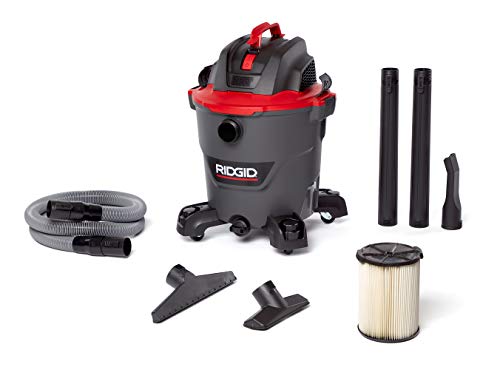
Shop Vac: Best Budget Base for Tool Dust
The RT1200 is a solid shop vac to upgrade into a part-time extractor. It has a 12-gallon tank, a 5.0 peak HP motor and RIDGID’s scroll noise reduction design. The 1-7/8″ x 8 ft locking hose won’t pull loose, and filters change tool-free with the Qwik Lock system, so swapping in a fine-dust or HEPA-rated filter is easy. There’s no automatic filter cleaning and no tool outlet: add a cyclone separator and a plug-in auto switch.
- ✅ Low price tier
- ✅ Locking hose
- ✅ Tool-free filter changes
- ❌ Stock filter isn’t for sanding dust
- ❌ No tool outlet or auto filter cleaning
Best For: Cleanup plus occasional sanding, with a Dust Deputy in front.
Oneida Dust Deputy Deluxe 5-Gallon Cyclone Kit

Shop Vac Upgrade: Cyclone Separator
A cyclone between the tool and the vac is the single biggest upgrade for a shop vac. Oneida says the Dust Deputy captures 99% of dust and debris before it reaches the vac’s filter. The Deluxe kit includes the anti-static cyclone, a clear 5-gallon bucket so you see when to empty it, a quick-release lid, four casters, a 3 ft hose and adapters. Its 2″ tapered ports accept standard 1.5″ to 2.5″ vacuum hose fittings.
- ✅ Keeps the vac filter from clogging
- ✅ Clear bucket shows the fill level
- ✅ Fits most shop vac hoses
- ❌ Tall setup
- ❌ Costs more than the cyclone alone
Best For: Turning a shop vac into a usable dust system for sanders and routers.
WEN DC3401 Rolling Dust Collector
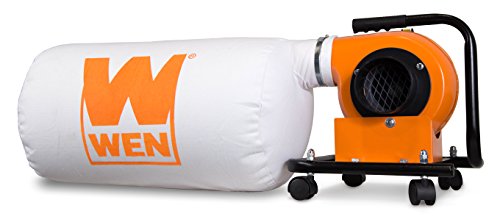
Dust Collector: Budget Entry
The WEN DC3401 is the smallest step from a shop vac to a real collector. A 5.7 A motor and 6″ impeller move up to 660 CFM through a 4″ port into a 12-gallon, 5-micron zippered bag. It weighs 17 lb, rolls on four locking casters and has a built-in wall mount, and WEN covers it for 2 years. It’s enough for a benchtop planer or a miter saw hood, one machine at a time.
- ✅ Light enough to hang on the wall
- ✅ 4″ port for planers and hoods
- ✅ Lowest price tier among collectors
- ❌ 5-micron bag, not for fine dust
- ❌ Brushed motor
Best For: A first collector for a benchtop planer or miter saw.
JET DC-1100VX-CK Vortex Cone Dust Collector

Dust Collector: Best for a Home Shop
The JET DC-1100VX-CK is a 1.5 HP single-stage collector that runs on 115V or 230V, so it plugs into a standard outlet. JET rates it at 1,100 CFM, and the Vortex Cone inside separates chips from fine dust so they drop into the bag instead of packing the 2-micron canister filter. The motor is totally enclosed and fan-cooled for continuous duty, it rolls on four casters, and JET’s warranty is 5 years.
- ✅ Runs on 115V, rewires to 230V
- ✅ 2-micron canister with Vortex Cone
- ✅ 5-year warranty
- ❌ 1,100 CFM is a maximum rating
- ❌ Single-stage, takes floor space
Best For: Shops with a table saw, jointer and planer used one at a time.
🏆 The Verdict
In the dust extractor vs shop vac question, the extractor wins for sanding thanks to its tool outlet, HEPA filter and automatic filter cleaning; the DEWALT DWV010 is the one to start with. A shop vac with a Dust Deputy and a fine filter is the budget route. A dust collector is a separate machine for separate tools: buy one, like the JET DC-1100VX-CK, when a table saw, planer or jointer joins the shop.
❓ Frequently Asked Questions
Can I use a shop vac as a dust extractor?+
Is an extractor just a vacuum?+
Is a dust extractor worth it?+
Is a dust collector more powerful than a shop vac?+
Can you use a dust collector as a vacuum?+
What size shop vac do I need for dust collection?+
Still not sure which one your shop needs? List your tools in the comments and I’ll suggest the setup I’d use.

