
As an Amazon Associate I earn from qualifying purchases. All claims are strictly my personal opinion.
Top pick for stripping paint
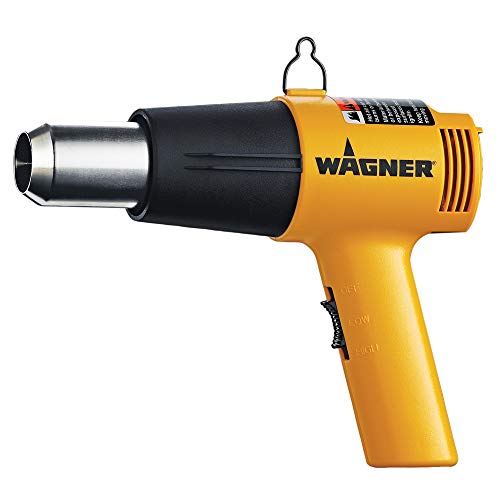
Wagner Spraytech HT1000 Heat Gun
Two settings, 750 and 1,000 degrees F, both under the EPA limit for old paint, plus a stand for hands-free rests.

To remove paint with a heat gun, set it to its lower setting, hold the nozzle 2 to 3 inches from the surface and keep it moving over a patch about the size of your hand until the paint wrinkles and lifts, then push a sharp scraper under it right away, with the grain, while you heat the next patch. On paint that could be older than 1978, test for lead first and keep the gun below 1,100°F.
Heat gun paint removal is the fastest way to take thick, many-layered paint off doors, trim, window casings and siding, and it makes almost no dust while the paint is still soft. It is also the method most likely to scorch the wood, crack a window or start a fire inside a wall if you rush it. Below: when a heat gun is the right tool, what temperature to use, the step-by-step method, how to handle windows, furniture, metal and plaster, and the short kit that makes it work.
⚡ Quick Answer
Heat: low setting first, nozzle 2 to 3 inches away and always moving; turn it up only if the paint won’t soften in several seconds. Stay below 1,100°F on old paint.
Scrape: as soon as the paint bubbles, with a carbide scraper on flat boards and a contour scraper on moldings.
Kit: a dual-temperature gun like the Wagner HT1000, a metal bucket for scrapings, a fire extinguisher, gloves and eye protection.
Is a Heat Gun a Good Way to Remove Paint?
Yes, on the right surface. A heat gun is a hair-dryer-shaped tool that blows air hot enough to soften paint so it lets go of the wood. Unlike a chemical stripper, there’s no waiting for a gel to work and nothing to neutralize afterwards; unlike a sander, it doesn’t clog paper or throw paint dust into the air while you work.
Where a Heat Gun Works Best
- Thick, layered paint on doors, baseboards, casings and window sashes, where many coats come off together in one pass.
- Exterior clapboards and trim with failing oil-based paint, as long as you keep the heat out of gaps and seams.
- Solid wood furniture with flat panels and simple profiles.
- Varnish and old finishes that soften with heat, as well as paint.
Where to Use Something Else
- Thin paint on flat surfaces. One or two coats on a tabletop or shelf come off faster with a sander.
- Carvings, spindles and turned legs. A gel stripper reaches into the detail without scorching the high points.
- Veneer. Heat can soften the glue under thin veneer and lift it along with the paint.
- Anything near hidden cavities, such as the inside of a wall or a window weight pocket, where dust and old debris can smolder unseen.
My step-by-step for the other methods, and how to choose between them, is in how to strip paint from wood.
What You Need to Strip Paint With a Heat Gun
The list is short: a heat gun with temperature control, the right scraper for the surface, a metal can for hot scrapings, and protection. The scraper matters as much as the gun, because heat only softens the paint; the blade is what removes it. These three are the tools I’d buy for the job. The specs come from each maker’s product page and Amazon listing.
Wagner Spraytech HT1000 Dual-Temperature Heat Gun
The Heat Gun for This Job
For a first paint-stripping job, the HT1000 is the gun I’d point you to. It has two settings, 750°F and 1,000°F, so it can’t go past the EPA’s 1,100°F limit for painted surfaces, and Wagner builds in a stand so you can set it down with the hot nozzle up and away from the bench. The basic version comes with no nozzles; Wagner also sells it as a kit with an edge protector, a flare nozzle and a concentrator. If you’d rather have a digital gun with 12 settings, or a cordless one, my full comparison is the best heat gun for paint removal.
- ✅ Both settings under 1,100°F
- ✅ Integrated stand for hands-free rests
- ✅ Lowest price tier of the guns I recommend
- ❌ Only two heat settings
- ❌ No nozzles in the basic version
Best For: anyone stripping paint for the first time, and older homes where staying under 1,100°F matters.
Hyde Contour Paint Removal Scraper for Heat Gun Use

For Moldings, Trim and Profiles
A flat scraper can’t follow a molding. Hyde’s contour scraper is made for working alongside a heat gun: a 10-inch metal shaft keeps your hand farther from the hot air, and six blade profiles match coves, beads, corners and casings. A quick-release lever swaps blades without tools, so you can change shape as the profile changes.
- ✅ Six profiles for trim and moldings
- ✅ Long shaft keeps your hand away from the heat
- ✅ Tool-free blade changes
- ❌ Slower than a wide blade on flat boards
Best For: window casings, baseboards, door trim and any profiled woodwork.
Bahco 665 Carbide Scraper

For Flat Boards, Doors and Siding
On flat work, a sharp, wide blade is what makes heat stripping fast. The Bahco 665 has a 2-1/2″ carbide blade and a two-hand grip, so you can pull with steady pressure right behind the heat. Bahco says the carbide edge stays sharp up to 50 times longer than steel, and the head takes four blade shapes.
- ✅ Wide carbide blade for flat surfaces
- ✅ Two-hand grip for steady pressure
- ✅ Four interchangeable blade shapes
- ❌ Too wide for tight profiles
- ❌ Carbide edge can gouge if you dig in
Best For: doors, flat panels, clapboards and tabletops.
Also have ready: a metal bucket or old paint can for hot scrapings, a fire extinguisher, heat-resistant gloves and eye protection, a drop cloth that isn’t plastic under the work area, and a fine sanding sponge for cleanup. If you’re sanding the residue, a respirator rated for the dust is worth having too: see my best respirator for woodworking.
Before You Start: Test Old Paint for Lead
Paint containing lead was banned for homes in the US in 1978, but houses built before then often still have it in the lower layers, even under modern paint. Heating that paint is the risk: lead paint gives off fumes at high temperature, and the scrapings and dust that follow are hazardous.
Why 1,100°F Is the Line
The EPA’s lead-safe work practices for renovators (40 CFR 745.85) allow a heat gun on painted surfaces only below 1,100°F, and they ban open-flame burning or torching of painted surfaces outright. That’s why I recommend guns that either can’t pass that number, like the Wagner HT1000 (top setting 1,000°F), or that let you set the temperature precisely and stay under it.
How to Check
Test the paint before you heat it, down to the bare wood, since the newest coat tells you nothing about the ones underneath. Home test kits give a quick answer; a certified lab or a certified risk assessor gives a definitive one. If the paint does contain lead, work below 1,100°F, contain the area with sheeting, keep children and anyone pregnant away, clean up with a HEPA vacuum and wet wiping, and consider hiring an EPA-certified renovator for anything larger than a door or a window.
⚠️ Fire Risk
Most heat gun fires start out of sight: the hot air goes through a gap in siding, a window frame or a wall, and the dust, paper or insulation inside smolders for an hour before anyone notices. Never point the nozzle into cracks or cavities, keep a fire extinguisher within reach, and check the area again an hour after you stop.
What Temperature to Set a Heat Gun to Remove Paint
Lower than most people expect. Paint softens well below the maximum of any gun made for home use, and the hotter you go, the faster you burn the paint instead of lifting it.
Start at the Low Setting
Master Appliance, which makes heat guns, advises using the lower setting on a dual-temperature gun for paint removal. On the Wagner HT1000 that’s 750°F. Wagner’s own furniture-stripping project sets its FURNO 700 to 1,000°F, held a few inches from the paint. A good rule: start low, and turn up only if the paint doesn’t wrinkle within several seconds.
Signs You’re Too Hot
- The paint smokes, blackens or catches instead of bubbling.
- The wood underneath darkens or chars: that’s scorching, and it has to be sanded out.
- Softened paint turns stringy and gummy and smears instead of lifting in sheets.
- You smell burning rather than warm paint.
Distance and Movement
Distance is your second temperature control. Two to three inches is a good starting point. Closer concentrates the heat; farther spreads it. Keep the gun moving in small circles or side to side: parked in one spot for even a few seconds, any gun will scorch the wood.
How to Remove Paint With a Heat Gun, Step by Step
Step 1: Set Up the Space
Take down curtains and move anything flammable away from the work. Lay a canvas or paper drop cloth, not plastic sheeting, which melts under hot scrapings. Open windows or work outdoors, and put the metal can and the fire extinguisher where you can reach them without moving.
Step 2: Heat a Small Section
Work on an area about the size of your hand. Hold the nozzle at the distance above and move it slowly back and forth. Within a few seconds the paint should wrinkle, bubble or turn glossy. Some paints bubble and some just go soft, so if nothing visible happens after several seconds, try the scraper anyway.
Step 3: Scrape Right Behind the Heat
As soon as the paint softens, push or pull the scraper under it with the grain, the blade held at a low angle. Soft paint should come away in strips. Keep the heat moving onto the next patch as you scrape the last one, so you work in a steady rhythm. If the paint has cooled and stiffened, reheat it rather than forcing the blade.
Step 4: Work the Profiles
On moldings and casings, heat a shorter length and use a contour blade that matches the shape. Go easy on sharp edges and the high points of a profile: they heat up first and scorch first.
Step 5: Collect the Scrapings
Hot paint can stay hot enough to scorch a floor. Drop the scrapings into the metal can as you go. On old paint, treat them as lead waste and keep them contained.
Step 6: Check for Smoldering
When you finish, switch the gun to cool-down mode if it has one, or stand it on its stand to cool. Then look and feel along joints, gaps and the back of anything you heated. Check again later.
Step 7: Clean Up the Residue
Heat rarely leaves bare wood. Thin paint in the grain and the hollows comes off with a fine sanding sponge, a little mineral spirits on a pad, or a sander on flat parts. Start at 80 to 100 grit on residue and move to 120 and 150. On paint that could contain lead, don’t dry-sand: use a stripper or wet methods for the last of it. For flat panels, my picks are in best sanders for paint removal.
Step 8: Prepare for the New Finish
Fill any gouges and scorch marks you’ve sanded out, sand the whole piece to an even grit, remove the dust, and then paint, stain or clear-coat. If you’re keeping the wood visible, my guide to the best wood finish for furniture covers which clear finish to use.
💡 Pro Tip
Keep the scraper sharp. A carbide edge stays sharp far longer than steel, but once it starts to skate over soft paint instead of biting under it, turn or replace the blade. A dull blade makes you add heat, and more heat is how wood gets scorched.
Heat Gun Paint Removal by Surface
Wood Doors and Trim
The ideal heat gun job. Take doors off their hinges and lay them flat, remove the hardware, and strip one panel at a time, working the flat field with a wide scraper and the panel moldings with a contour blade.
Windows
Glass cracks when one part heats faster than the rest. Use a glass-protector nozzle, which directs the air away from the pane, or shield the glass with a strip of metal flashing, and keep the gun moving along the muntins. The old putty around the glass also softens with heat, so plan to reglaze.
Furniture
A heat gun suits solid wood dressers, chests and tables with flat surfaces. Test an inconspicuous spot first to see how the finish reacts, and switch to a stripper on veneer and carved detail. Once the paint is off, my guide on how to refinish wood furniture takes you through sanding and finishing.
Metal
A heat gun will soften paint on metal too, but metal spreads the heat away from the spot you’re aiming at, so it takes longer, and the part stays hot well after you stop. Wear gloves and give it time to cool before handling.
Walls and Plaster
Possible, but rarely worth it. Plaster holds heat and can crack, and the paper face of drywall scorches before the paint lets go. For walls, a scraper on loose paint and a sanding pass on the edges is usually enough.
Exterior Siding
Work on a calm day, never into the joints between boards, and never toward the eaves, vents or a soffit where birds’ nests and debris collect. Check the wall again later in the day.
Heat Gun, Chemical Stripper or Sander?
Most stripping jobs use two of the three. A heat gun is fastest on thick paint over flat and gently shaped wood. A chemical stripper is better on carvings, spindles and near glass, and it makes no heat at all: my picks are in best paint stripper for wood. A sander finishes the job on flat surfaces and is the fastest choice when there are only one or two thin coats.
Common Mistakes
- Too much heat. Turning the gun all the way up scorches wood and burns paint into a gummy smear.
- Holding still. A parked nozzle chars wood in seconds.
- Waiting too long to scrape. Paint re-hardens as it cools.
- Digging in with the blade. A steep angle leaves gouges you then have to fill and sand.
- Setting the gun down on its side. The nozzle stays hot for minutes after you switch off.
- Skipping the lead test on paint from before 1978.
How I Put This Guide Together
The 1,100°F limit and the ban on open flames come from the EPA’s lead-safe work practice rule for renovators (40 CFR 745.85). The temperature advice comes from heat gun makers: Master Appliance’s guidance to use the lower setting, and Wagner’s furniture-stripping project. Product specs come from Wagner, Hyde and Bahco. I don’t show prices or star ratings; the Amazon buttons show the live price.
🏆 The Verdict
Removing paint with a heat gun comes down to three habits: low heat, a moving nozzle, and a sharp scraper right behind it. Test old paint for lead and stay below 1,100°F, keep the heat out of gaps, and finish with a light sanding. For most people a dual-temperature gun like the Wagner HT1000 plus a carbide scraper and a contour scraper is the whole kit.
❓ Frequently Asked Questions
Is it safe to use a heat gun to remove paint?+
Can I use a heat gun to remove old paint?+
What is the quickest way to remove old paint?+
What temperature should I set a heat gun to for removing paint?+
Will a heat gun remove paint from metal?+
Can you use a heat gun to remove paint from walls or plaster?+
Stripping something awkward, like a window sash or a staircase? Tell me in the comments what you’re working on and I’ll suggest the approach.

