
As an Amazon Associate I earn from qualifying purchases. All claims are strictly my personal opinion.
My top pick

WEN DW5084 2-in-1 Drywall Sander
The same corded machine a rental counter hands you, with a 15-foot dust hose and two sanding heads.

Drywall sander rental typically runs about 60 dollars a day at the independent rental shops that publish their rates, and Home Depot, Lowe’s and Sunbelt set theirs store by store. The three shops I could read in November 2026 listed a drywall sander at $58 to $60 a day, with weekly rates of $210 to $231 where a weekly rate was shown. The sander is the cheap part of the bill. Sanding screens, a vacuum with a hose, a dust mask and your own time are what turn a one-day rental into a two-day one.
Below: what the published rates look like, which machines the rental pages actually list, the costs that aren’t on the tag, how to decide whether renting is worth it, and when buying your own sander pays off. If you do decide to buy, there’s a short list at the end.
⚡ Quick Answer
Published rates (read November 2026): $58 to $60 a day for a drywall sander, $210 to $231 a week where a weekly rate is shown. Home Depot, Lowe’s and Sunbelt show their price after you pick a store.
What you get: a pole-style drywall sander, sometimes bundled with a HEPA vacuum. Sandpaper and the vacuum hose are the extras to check.
Rent or buy: rent for one room or one weekend. Buy if you’ll sand more than a couple of jobs, like the WEN DW5084, the same corded machine one of the shops below rents out, with its own dust hose.
How Much Does It Cost to Rent a Drywall Sander?
These are the rates three independent rental shops print on their own sites, read in November 2026. Prices are local and change without notice, so use them as a guide to the range rather than a quote for your nearest counter.
| Machine | Rental shop | 4 hours | Day | Week |
|---|---|---|---|---|
| Wen DW5084 drywall sander | Aspen Rent All, Basalt, CO | not listed | $58 | $231 |
| Drywall sander with vacuum | 360 Rents | $40 | $60 | $210 |
| DeWalt DWE7800 sander with DWV010 HEPA extractor | Sully’s Rental, Akron, OH | not listed | $60 | not listed |
Three things stand out. First, the day rate barely moves between a plain sander and a sander bundled with a vacuum. Second, weekly rates are about the price of four days: Aspen’s week is $231 against $58 a day, and 360 Rents’ week is $210 against $60 a day. If a job might run past a weekend, ask for the weekly price first. Third, Aspen also lists a 4-week rate of $693, which is three times its weekly price, and that is the figure to ask about for a whole-house job.
Home Depot, Lowe’s and Sunbelt Rentals
The big chains are where most people look first. I couldn’t read a rental price for a drywall sander on Home Depot’s rental pages in November 2026, because the page didn’t open for me, so I’m not quoting a number for it. The same goes for Lowe’s and Sunbelt Rentals: rates are tied to a store or a branch, so the figure you see depends on the location you pick. The price is not stated nationally. To compare, choose your store on each site (or call), then ask for the 4-hour, daily and weekly price of the sander, plus whether the vacuum is included and what a sheet of sandpaper costs. Compare the total, not the headline rate.
Can You Just Walk Into Home Depot and Rent One?
Yes, Home Depot runs tool rental counters at many stores, and Lowe’s and Sunbelt do the same, but stock is local. Call ahead for a weekend, confirm the machine is on the shelf and ask what ID and payment card the counter needs.
Which Machine Do You Get?
Rental counters rarely stock the premium models. What the shops above list is more modest, and the machine on the tag is not always the one that comes out of the back room, so ask what you’ll be handed.
A Corded Pole Sander With Its Own Dust Hose
Aspen Rent All lists the Wen DW5084. Aspen’s page describes a 2-in-1 unit with triangular and circular hook-and-loop heads, a variable-speed motor from 600 to 1,500 RPM, a 5-amp head-mounted motor and a collapsible body for transport. It comes with a 15-foot dust hose, 9-inch discs in assorted grits and six 11-1/4 inch triangular sandpapers. One catch from the same page: the round head only takes DW series replacement sandpaper, such as DW120SP, so you can’t swap in just any 9-inch disc.
A Sander and a HEPA Extractor as a Pair
Sully’s Rental lists a pairing of the DeWalt DWE7800 electric drywall sander and the DeWalt DWV010 8-gallon wet/dry HEPA extractor, billed as one rental. DeWalt describes the DWV010 as an 8-gallon HEPA dust extractor with automatic filter cleaning, a 15-foot anti-static hose and a power tool actuation setting that turns the extractor on and off from a connected tool. For drywall dust, which is fine enough to coat a whole house, the extractor does as much of the work as the sander does. Which sanders it plugs into is something to ask the counter.
A Sander Sold With a Vacuum
360 Rents lists a “Drywall Sander w/ Vacuum” and notes its sandpapers are custom papers designed specifically for that unit. The page doesn’t name the make or model, so ask for it when you book, and ask whether the papers are sold at the counter, because a custom paper means you can’t pick up substitutes at a hardware store.
Long-Reach Models You May Be Offered
Long-reach electric drywall sanders are the same family as the owner models at the end of this page. On the rental pages I read, I found no Festool or Bosch drywall sander listed, so if a counter says it has a Festool Planex or similar, confirm the model name and the vacuum it needs before you drive over. A corded sander with no vacuum connection is a dust problem, not a bargain.
The Costs That Aren’t on the Rental Tag
- Sandpaper. Shops usually sell the matching discs or screens by the piece. Sanding drywall joint compound goes through paper faster than it looks, and a custom paper, like the one 360 Rents describes, can’t be bought anywhere else. Ask whether unopened pieces can be returned.
- The vacuum and hose. Some rentals bundle a vacuum. If yours doesn’t, you need one with a hose that fits the sander, and a HEPA-rated extractor is the better choice for fine drywall dust. Check the hose diameter against the sander before you leave.
- A card hold and damage. Expect a deposit or hold, and expect to pay if the sander comes back with a torn cord or a cracked head.
- Minimum rental period. 360 Rents lists a 4-hour minimum rental length. A 4-hour rate suits a single small room, but a full day rate is easier to live with if you’re also taping and priming.
- Transport. A collapsible sander fits in a car, a vacuum and a pole may not. Delivery, where a shop offers it, is extra.
- Safety gear and cleanup. Dust masks, goggles, plastic sheeting and tape for doorways are bought, not rented.
- A second day. Joint compound that isn’t dry enough to sand clogs the paper and you end up holding the rental over. Price the weekly rate before you need it.
Is Renting a Drywall Sander Worth It?
For a single room or a patch-and-repaint weekend, yes. You skip buying a tool you may use once, and the published day rate is a small share of what drywall finishing costs overall. Renting makes sense when:
- You have one or two rooms of skim-coated or taped walls to sand and no plans for more.
- You already own a good shop vacuum or extractor and only need the sander.
- You want to try a pole sander before committing to a model.
It stops making sense when the sanding stretches over several weekends, when you’d keep the machine past the weekly rate, or when you’d rather keep it on hand for repairs. And if you only have a small patch, a vacuum hand sander does the job without any rental clock. The step-by-step method is in my guide on how to sand drywall, and the grit guide for drywall tells you which papers to ask the counter for.
When Buying Pays Off
The sum is simple: divide the price of the sander you’d buy by the day rate, and that is the number of rental days where buying breaks even. Look up current prices on Amazon and the rate at your local counter, then ask honestly how many days you’ll rent over the next few years. Buying tends to win when:
- You have a whole house of walls and ceilings. A multi-room job can run past a weekly rate, and an extra week doesn’t buy you anything you keep.
- You do repairs and remodels regularly. A sander on the shelf means you can sand a patch without a trip to the counter.
- You already own the extractor. If the vacuum is covered, a corded sander kit is the only new purchase.
- You’re a landlord or flipper. Repeated turnovers add up in rental days quickly.
My roundup of the best sanders for walls and drywall compares the owner models in more detail. For the vacuum side, see the best vacuum for drywall dust.
Tips for Rental Day
- Reserve ahead for a weekend, and ask the counter to hold the right sandpaper too.
- Prep the room the day before: cover floors, seal doorways with plastic and tape, and turn off the HVAC so dust doesn’t travel through the ducts.
- Check the machine at the counter: run it, look at the cord and the head, and make sure the dust hose seals to the vacuum.
- Ask how the paper attaches and have the counter show you how to change it.
- Let the compound dry fully before you sand. Damp compound clogs the paper.
- Keep the sander moving in light overlapping passes with a light touch, and check your work with a work light held at a low angle.
- Empty or clean the extractor before you return it. A full tank cuts suction and dust escapes.
What to Buy If You’d Rather Own One
These are machines you can buy today. Specs come from the makers’ own pages and the rental listings above; I don’t show prices or ratings, which change daily.
WEN DW5084 2-in-1 Drywall Sander
Best Value: the Machine the Rental Counter Hands You
This is the model Aspen Rent All rents out, so buying one means owning what you would otherwise pay for by the day. As that listing describes it, it has triangular and round hook-and-loop heads, a 5-amp head-mounted motor with variable speed from 600 to 1,500 RPM, a 15-foot dust hose and a collapsible body. The catch is the same as at the counter: the round head takes WEN’s DW series paper, such as DW120SP, so plan to buy paper from WEN rather than any 9-inch disc. You still need a vacuum on the end of the hose.
- ✅ Same machine as a common rental
- ✅ Two heads, one for corners
- ✅ Dust hose included
- ❌ Round head needs WEN DW series paper
Best For: Homeowners who would rent more than a few days and want a corded sander that is already familiar from the rental counter.
Bosch GTR55-85 9″ Drywall Sander Kit
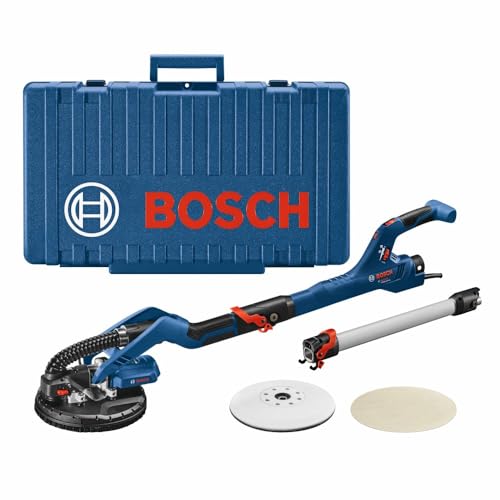
Best Corded Kit With Ceiling Suction
A corded sander rated at 4.5 amps that runs at variable speed and has two suction modes: wall sanding, and ceiling suction that Bosch says helps reduce the weight of the tool while you work overhead. Bosch lists it at about 66.93 inches long and 9.04 lb. The kit includes the sander, a sanding sheet, a soft backing pad, an extension pole, a VAC024 vacuum hose adapter, hose clips and a carrying case. It works with 22 mm and 35 mm vacuum hoses, using adapters where needed, so you still need a vacuum of your own.
- ✅ Corded, so no battery to buy
- ✅ Ceiling-suction mode for overhead work
- ✅ Kit with pole, adapter and case
- ❌ Needs your own vacuum
Best For: Anyone who already owns a shop vacuum and wants one corded sander for repeated drywall jobs.
DeWalt DCE800B 20V MAX Cordless Drywall Sander

Best Cordless Option for DeWalt Battery Owners
A tool-only cordless sander, so the battery and charger are sold separately. DeWalt’s page lists a tool-free AIRLOCK connection to DeWalt dust extractors, wireless on/off control with a compatible extractor, a telescoping shaft, an articulating head and a variable speed dial. DeWalt cites 30 minutes of runtime with a DCB205 battery. Pad size, weight and length are not stated on that page.
- ✅ No cord to trip on
- ✅ AIRLOCK connection to DeWalt extractors
- ❌ Battery and charger not included
Best For: Anyone with 20V MAX batteries who wants to skip the cord.
Festool Planex Drywall Sander

Best Premium Pole Sander
Festool sells the Planex in more than one version; the link here is the LHS 2-M 225 EQ (577359). On Festool’s page for that model, it has a 400 W motor on a 120 V supply, a 5,000 to 8,500 RPM eccentric speed, an 8-7/8 inch abrasive diameter, a length of 55 inches and a weight of 8.82 lb. It connects to a vacuum through a 27 or 36 mm connection, and Festool says dust extraction works in combination with a Festool dust extractor. Festool’s page also says to use the included plastic pad only with the interface pad installed.
- ✅ 55 inch length reaches walls and ceilings
- ✅ Built for use with a dust extractor
- ❌ Dust extraction is designed around a Festool extractor
Best For: Pros and serious DIYers who want a long-reach sander that pairs with a Festool extractor.
The Vacuum Half of the Setup
Every sander above needs a vacuum that can handle fine dust. The DeWalt DWV010, the extractor Sully’s pairs with its rental sander, is an 8-gallon HEPA extractor with automatic filter cleaning that pulses every 30 seconds, a 15-foot anti-static hose and two DWV9330 HEPA filters. DeWalt’s page says EPA lead-renovation (RRP) compliance applies only when DWV9330 filters are used. Its power tool actuation setting lets a connected power tool switch the extractor on and off. DeWalt’s page doesn’t say which sanders it works with, so check the hose fit for the sander you pick. For the vacuums I’d pick for gypsum dust, see my guide to the best vacuum for drywall dust.
Hyde Dust-Free Drywall Vacuum Hand Sander

Best for Patches and Small Repairs
The Hyde 09165 is a hand sander sold with a 6-foot hose, according to its Amazon listing title. It is a manual tool you pair with a wet/dry vacuum, so it suits patching a few spots rather than sanding a room. Hyde’s own page did not open for me, so I’m not quoting a dust-capture figure or a kit list.
- ✅ Manual, no rental clock
- ✅ Comes with a hose for a vacuum
- ❌ Slow on whole rooms
Best For: Small patches and touch-ups where renting isn’t worth the trip.
How I Put This Guide Together
Rental rates and machine details come from the published pages of Aspen Rent All (Basalt, Colorado), 360 Rents and Sully’s Rental (Akron, Ohio), read in November 2026. Home Depot’s rental pages did not open for me and Lowe’s and Sunbelt price by location, so no figure is quoted for them. Product specs come from Bosch, Festool and DeWalt, and for the WEN DW5084 from Aspen’s listing. More on how I choose the sanders I recommend.
🏆 The Verdict
For one room or a weekend, rent a drywall sander: independent shops publish about $58 to $60 a day, so ask for the weekly price if the job might run over. Make sure a vacuum and the right sandpaper come with it. Buy when you’ll sand repeatedly: the WEN DW5084 is my pick, the same corded machine a rental counter hands you, and the Bosch GTR55-85 adds a ceiling-suction mode. Pair either with a HEPA extractor.
❓ Frequently Asked Questions
How much is it to rent a drywall sander?+
What’s the best type of sander for drywall?+
Can I walk into Home Depot and rent tools?+
Do dustless drywall sanders work?+
Is it cheaper to rent or buy a drywall sander?+
Conclusion
Drywall sander rental is cheap at the counter and costs more in the details: the vacuum, the paper and a second day. Compare the weekly rate, confirm what comes with the machine and buy only when the break-even sum says so. If you also need floors done, I cover the same sum in my guide to floor sander rental. Questions about a specific rental machine? Ask in the comments.

