
As an Amazon Associate I earn from qualifying purchases. All claims are strictly my personal opinion.
My top pick

Norton 40 Grit Zirconia Type 29 Flap Discs, 10-Pack
Ten 4-1/2 inch zirconia Type 29 discs on fiberglass backing, the first-pass disc for welds and heavy removal in this guide.

A flap disc is an angle grinder attachment made of overlapping abrasive cloth flaps that grinds, blends and finishes metal in one tool, and the choice comes down to three things: the shape (Type 27 flat or Type 29 conical), the abrasive grain and the grit number. Use a flat Type 27 to blend and finish on flat metal, a Type 29 to remove more material on welds, edges and contours, 40 grit to knock down a weld, 60 to 80 to blend and 120 to finish. Wood and paint are possible, but they are not what the disc is built for.
Below is how a flap disc differs from a grinding disc and a sanding disc, how Type 27 and Type 29 work at different angles, what zirconia, ceramic and aluminum oxide actually change, a grit guide by job, what happens on wood and paint, where flap wheels fit, the safety rules that matter and the discs and grinder I’d look at first.
⚡ Quick Answer
Start here: a 4-1/2 inch zirconia Type 29 in 40 grit for welds and rust, such as the Norton 40 grit 10-pack, then a 60 grit disc to blend.
Flat work or blending: pick a Type 27 and keep it at a shallow angle. For a premium-grain Type 27, see the 3M Cubitron II 967A.
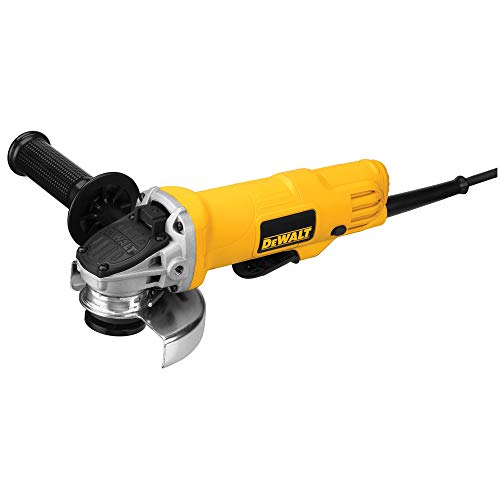
The grinder: the DEWALT DWE4012 is listed at 12,000 RPM, which sits under the representative maximum of 4-1/2 inch discs given below. Always check the number printed on your disc.
Flap Disc vs Grinding Disc vs Sanding Disc
All three fit an angle grinder, and the names get mixed up on store shelves. The easiest way to keep them apart is to look at how each one is built. Benchmark Abrasives describes a grinding wheel as made of sharp-edged abrasive grains, a flap disc as several layers of abrasive-coated flaps and sanding discs as the gentlest of the three, which is why they remove material the slowest.
| Attachment | Construction | Material removal | Finish | Heat |
|---|---|---|---|---|
| Grinding disc | Bonded abrasive grains | Heaviest | Rough, often needs a second step | High |
| Flap disc | Layered abrasive cloth flaps | Fast, but slower than a grinding disc on slag | Blended, but not a fine finish | Lower than a grinding disc |
| Sanding disc | Paper or cloth-backed abrasive sheet | Slowest | Suitable for fine finishing | Lowest |
What a Flap Disc Does
A flap disc grinds and blends in the same pass. As the outer flaps wear, fresh abrasive from the layer below takes over, so the disc keeps cutting while it leaves a smoother scratch than a bonded grinding wheel. That is why welders and fabricators use it to take down a weld bead and blend it into the plate without switching tools.
When a Grinding Disc Is the Better Tool
If you need to remove a lot of material fast, such as slag, a thick weld or a rough casting seam, a grinding disc still wins on pure speed. A flap disc is the better pick when you care what the surface looks like afterward.
When a Sanding Disc Is the Better Tool
For a fine finish on metal, wood or plastic, a paper-backed sanding disc leaves the finest scratch but wears quickly on harder materials. If your job is smoothing metal rather than shaping it, my guide on how to sand metal covers the finishing steps, and the best sandpaper for metal compares the abrasives for it.
Type 27 vs Type 29: Shape and Working Angle
The type number describes the shape of the disc, not the grit or the abrasive. Whitby Abrasives puts it simply: a Type 27 is flat and is worked at a low 5 to 15 degrees to the workpiece, while a Type 29 is conical and is worked at 15 to 25 degrees. DEWALT’s own DW8306 listing, a Type 29, says it is designed for grinding angles of 15 to 25 degrees. Benchmark Abrasives gives the same 5 to 15 degree range for flap discs on flat work.
Type 27: Flat, for Blending and Flat Surfaces
The flat face puts more of the disc on the work at once, which makes it easier to keep a surface level. It suits finishing, blending and flat or corner work, and it is the more forgiving shape if you are new to an angle grinder. You tilt the grinder only slightly, so keep the flaps in contact and the sparks flowing in an even stream.
Type 29: Conical, for Welds, Edges and Contours
The angled face lets you work a weld bead, an outside edge or a shaped part with the grinder tilted further over. Whitby Abrasives lists edges, welds and contours as the Type 29 jobs where faster stock removal matters. Hold it near the upper end of the angle range to remove material and lower the angle as you blend.
Which Is More Aggressive?
Abrasive sellers do not agree on which shape is “more aggressive”, and none of the maker pages I opened settles it, so I wouldn’t rely on that claim. What is clear is the geometry: the working angle and the contact area change how it cuts. If you only buy one, a Type 29 with a mid-range grit handles more jobs, and a Type 27 is the one to add for flat panels.
⚠️ Important
The type number tells you the shape only. A Type 29 and a Type 27 in the same grit and grain are two different tools by angle, not by quality, so match the shape to the surface first and the grit second.
Abrasive Grains: Zirconia, Ceramic and Aluminum Oxide
The grain is the part you pay extra for, and it changes how the disc behaves under pressure. Whitby Abrasives’ guide, which attributes its grit-to-job mappings to manufacturer data, describes the three grains this way.
Aluminum Oxide: The Low-Cost Default
Aluminum oxide is the lowest-cost tier. It is not self-sharpening, so the grains dull in use, but it is the general default for mild steel and wood and it behaves well when you lean lightly on the tool. Under sustained weld-blending pressure it can glaze.
Zirconia Alumina: The Workhorse for Steel
Zirconia is self-sharpening under high heat and pressure. It fits aggressive removal on carbon steel, cast iron and stainless, and it is the grain in the DEWALT DW8306 and in the Norton discs below. It rewards a firm, steady push, and Whitby’s guide warns that on a low-power tool or with a light touch, zirconia and ceramic can glaze and underperform a cheaper aluminum oxide disc.
Ceramic Alumina: The Premium Option
Ceramic micro-fractures as it grinds, constantly exposing sharp edges. Whitby lists it as the premium tier for steel, stainless, titanium, Inconel and aluminum. I did not open a maker page that gives a fixed life or speed advantage I could cite, so treat any percentage you see in advertising as the maker’s claim.
Grit Guide by Job
The same Whitby guide gives these ranges, and they match how most fabricators work. Step through grits on a multi-stage finish rather than using one grit for everything.
| Job | Grit | Best shape |
|---|---|---|
| Heavy stock removal, chamfers, heavy bevels | 36 to 40 | Type 29 |
| Weld grinding and blending | 40 to 60 | Type 29, then Type 27 to blend |
| Deburring, rust removal, lighter blending | 60 to 80 | Type 27 |
| Cleaning, refining and finish prep | 80 to 120 | Type 27 |
40 Grit: Welds and Heavy Removal
This is the disc to put on first when the bead is proud of the surface or the part has scale. It cuts quickly and leaves a visible scratch, so plan on a second pass.
60 to 80 Grit: Blending
Once the bead is down, a finer disc blends the ground area into the surrounding steel and removes the deep scratches left by the coarse grit. This range also fits rust and light deburring.
120 Grit: Finishing
The finest flap discs prepare the surface for paint or for a final pass with a sanding disc. Benchmark Abrasives is clear that flap discs are not suitable for fine finishing, so for a mirror or satin look, follow up with sandpaper, as my sanding metal guide explains.
Flap Discs on Wood and Paint
Benchmark Abrasives lists paint and rust removal and use on metal, wood or plastic among flap disc jobs, so it can be done. It is also an aggressive way to do it. On wood, a spinning 4-1/2 inch disc on a rigid grinder can gouge a surface in a second, and wood fibers and old paint load the flaps fast. For a flat board, a random orbital sander is gentler and easier to control.
Removing Paint with a Flap Disc
On a steel surface with thick, bonded paint, a 40 or 60 grit disc can strip it faster than hand sanding. Expect the flaps to clog and heat up on soft or gummy coatings, and lift the grinder often so you do not smear the paint. Old paint can contain lead, so test it before you grind, and do the work outdoors with a respirator.
Wood: Use Another Tool
For wood, a disc made for carving or a sander is the better call. If your goal is to take paint off a surface, I’d start with the tools in my guide to the best sanders to remove paint rather than a grinder.
If You Do Use One on Wood
Choose a fine grit of aluminum oxide, keep the grinder moving and hold it nearly flat. Zirconia and ceramic are built for pressure on metal and are the wrong grain here.
Flap Wheels: The Cylinder Version
A flap wheel is not the same as a flap disc. Benchmark Abrasives explains that a flap wheel is cylindrical and a flap disc is flat. The disc mounts on a right-angle grinder, while the wheel fits a die grinder, straight grinder or drill. Its comparison sums it up as geometry: flap wheels suit contoured, concave and internal areas, plus pipes and tubes, while flap discs suit flat surfaces, external edges and flat welds.
When to Choose a Wheel
Pick a flap wheel for a curved or rounded part, such as the inside of a tube or a profile. A mounted wheel wraps around the shape in a way a flat disc cannot. If you are weighing a drill-driven option, my page on a drill sanding attachment covers that route.
When to Stay with a Disc
For flat plates, outside edges and straight welds, a disc cuts faster and stays level. The wheel is not the right tool for heavy stock removal on flat metal.
Other Small Rotary Options
For tiny parts, a rotary tool with small bits can reach where neither works; see the guide to Dremel sanding bits, and if you are choosing between cloth and paper abrasives, my comparison of emery cloth and sandpaper helps.
Safety: Guard, Speed and Pressure
An angle grinder with a flap disc is a fast-spinning tool, and a few rules matter more than the rest. These come from Whitby Abrasives’ guidance, which places flap discs under ANSI B7.1 and OSHA rules 1910.215 and 1910.243.
Match the Disc RPM to the Grinder
The disc’s marked maximum RPM must equal or exceed the grinder’s spindle speed. Whitby gives representative Type 27 maximums of about 15,000 RPM for a 4-inch, 13,200 to 13,300 RPM for a 4-1/2 inch, 12,000 RPM for a 5-inch and 8,500 RPM for a 7-inch disc. A 7-inch disc on a 4-1/2 inch grinder running 11,000 RPM can burst, so match the diameter to the tool. Always read the number printed on your own disc, since it can differ from the representative figures.
Keep the Guard On
Fit a proper guard positioned between you and the disc. Many grinders now make that painless: the DEWALT DWE4012 below has a One-Touch guard that you adjust with a single turn, with no buttons or levers, so there is no excuse to remove it.
Let the Disc Do the Work
Leaning on the disc loads the cloth and heats the part without speeding the cut. Use consistent, moderate contact and smooth, overlapping passes. Dwelling in one spot can overheat thin sheet and warp it. Wear eye protection, hearing protection and a respirator, and keep sparks away from anything that burns.
The Discs I’d Buy
These picks come from the makers’ own specs and the listings. I don’t show customer ratings or prices, which change daily, and anything I could not confirm is marked as not stated.
Norton 40 Grit Zirconia Type 29 Flap Discs, 10-Pack
Best for Welds and Heavy Removal
The listing describes ten 4-1/2 inch by 7/8 inch Type 29 flap discs with high-density zirconia alumina flaps on a fiberglass backing plate, sold for stock removal, deburring and surface refinishing. That is the first-pass disc in this guide: the conical shape for welds and edges, 40 grit for taking a bead down. Max RPM is not stated in the listing, so read the number printed on the disc.
- ✅ Zirconia grain from a major abrasives maker
- ✅ Type 29 for welds and edges
- ✅ Ten discs per pack
- ❌ Max RPM not stated in the listing
Best For: Knocking down welds and heavy rust on mild steel.
Norton 60 Grit Zirconia Type 29 Flap Discs, 10-Pack

Best for the Blending Step
The same Norton disc in 60 grit: ten 4-1/2 inch by 7/8 inch Type 29 discs, zirconia alumina on a fiberglass backing. Once the 40 grit has taken the bead down, this is the disc that blends the ground area into the plate and handles rust and deburring. Pair it with the 40 grit pack and you have the first two steps of the grit guide covered with one brand.
- ✅ Blending grit in the same disc family
- ✅ Fiberglass backing, 7/8 inch arbor
- ❌ Type 29 only; add a Type 27 for flat panels
Best For: Blending welds, rust removal and deburring.
3M Cubitron II Flap Disc 967A, 60+ Type 27

Best Ceramic-Grain Option
This is the premium-grain disc I’d look at when you want more than zirconia, and it is the flat Type 27 that the Norton packs lack. The listing is a pack of ten 4-1/2 inch by 7/8 inch discs in 60+ grade, built with 3M Precision-Shaped Grain on a poly-cotton backing, for medium-pressure weld removal, light deburring, scale and oxide removal and surface prep. 3M also says it gouges less than fiber discs and bonded wheels. Check the marked max RPM on the disc against your grinder.
- ✅ Precision-shaped grain, the premium tier
- ✅ Flat Type 27 for blending and panels
- ❌ Built for medium pressure, not heavy grinding
Best For: Flat blending and surface prep when you want the premium tier.
DEWALT DWE4012 4-1/2 Inch Paddle Switch Angle Grinder
Best Grinder to Run Them On
The listing describes a corded 4-1/2 inch paddle switch grinder with a 7.5 amp AC/DC, 12,000 RPM motor. It has DEWALT’s One-Touch guard, adjusted with a single turn, a quick-change wheel release for tool-free disc swaps, a low-profile gear case that fits tight spaces and a 2-position removable side handle. 12,000 RPM sits under the representative 4-1/2 inch disc maximum above, but the number on your disc is the one that counts.
- ✅ 12,000 RPM, 7.5 amp motor
- ✅ Paddle switch
- ✅ Guard adjusts without tools
- ❌ Corded only
Best For: A first angle grinder for flap disc work on the bench or the job site.
How I Put This Guide Together
The facts here come from DEWALT’s product page for the DW8306, the Amazon listings of the Norton and 3M discs and the DEWALT DWE4012, Whitby Abrasives’ flap disc guides and Benchmark Abrasives’ comparisons. Where a source is a distributor rather than a maker, I name it in the text. The products are on sale on Amazon today; I don’t show customer ratings or prices. More on how I choose the products I recommend.
🏆 The Verdict
A flap disc is the tool for grinding and blending metal in one go. Pick a Type 29 for welds and edges, a Type 27 for flat blending, zirconia for general steel and ceramic for stainless, and step from 40 to 80 to 120 grit. Match the disc’s marked max RPM to the grinder, keep the guard on and don’t count on a flap disc for a fine finish. To start, a Norton 40 grit zirconia pack and its 60 grit twin cover welds and blending.
❓ Frequently Asked Questions
What does a flap disc do?+
Can you use a flap disc to remove paint?+
Is there a grinder disc for wood?+
What is the best grinding disc for removing paint?+
What type of sander is best for metal?+
Conclusion
Flap discs earn their place by doing two jobs at once: taking metal off and blending it in. Choose the shape for the surface, the grain for the metal and the grit for the stage, and keep the disc’s marked speed above your grinder’s. For the sandpaper side of the job, see the best sandpaper for metal.

