
As an Amazon Associate I earn from qualifying purchases. All claims are strictly my personal opinion.
My top pick
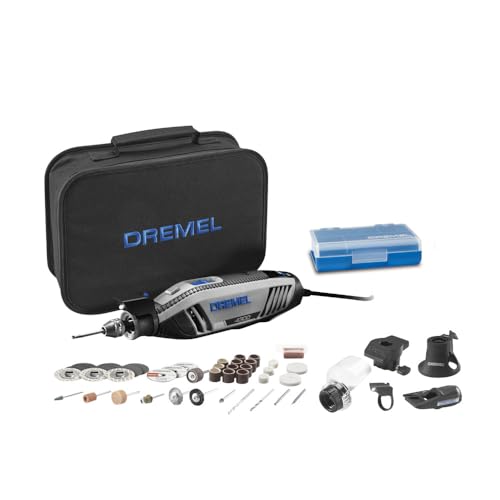
A corded rotary tool with the full 5,000 to 35,000 RPM range and a keyless chuck, so it can run every band, disc and flap wheel in this guide at the speed Dremel lists.

Dremel sanding bits for small jobs on a rotary tool come in four useful kinds: sanding bands on a drum mandrel, sanding discs, flap wheels and abrasive buffs, and the right one depends on the shape of the work and the material. Bands in 60, 120 and 240 grit handle most wood, plastic and rust jobs, discs handle flat edges, and a flap wheel smooths, shapes and deburrs metal. Nothing sands well if the speed is wrong, so the speed dial matters as much as the bit.
Below is a table of each Dremel sanding accessory with its number, what it is for and its grit, then a closer look at drums and bands, flap wheels, discs and stones, the speeds Dremel gives for each material, a short guide by material and the rotary tool I would look at to run them. Drill-mounted discs and sanding pads are a different job, and my guide to a drill sanding attachment covers those.
⚡ Quick Answer
Start here: a 407 drum mandrel with 60, 120 and 240 grit bands. The Dremel 407 comes with one 60 grit band and takes every Dremel half-inch band.
For metal: add the Dremel 502 flap wheel, an 80 grit wheel that Dremel lists for smoothing, shaping and deburring metal.
The tool: the Dremel 4300 for a corded workhorse, or the Dremel 8240 if you want it cordless.
Dremel Sanding Bits at a Glance
Dremel groups its sanding accessories by what they are made of and how fast they can spin. The numbers below come from Dremel’s own sanding page and product pages. Where a page does not say, the table says so.
| Accessory | Dremel number | Best on | Grit | Max speed (Dremel) |
|---|---|---|---|---|
| Sanding band on drum mandrel | 407 mandrel; 408, 432, 445 bands | Wood, fiberglass, rubber, plastic, rust on metal | 60, 120, 240 | 35,000 RPM |
| Sanding disc | Not stated on the sanding page | Wood and metal, flat faces and edges | 60, 240 | 35,000 RPM |
| Flap wheel | 502 | Smoothing, shaping and deburring metal | 80 | 35,000 RPM |
| Finishing abrasive buff | Not stated on the sanding page | Cleaning, deburring and polishing metal, rust and paint removal | 180, 280, 320 | 15,000 RPM |
| Detail abrasive brush | Not stated on the sanding page | Rust and paint removal, surface prep | 36, 120, 220 | 15,000 RPM |
How to Read the Grit Numbers
Dremel’s sanding page gives the same grit advice you would follow on any sander. Low grits, 36 to 80, are for rough wood after cutting or carving, or when you need to remove a lot of material. Medium grits, 120 to 220, smooth after the heavy removal and can be the last grit if the result is smooth enough. High grits, 240 to 320, smooth edges and give a fine finish.
Sanding Drums and Bands
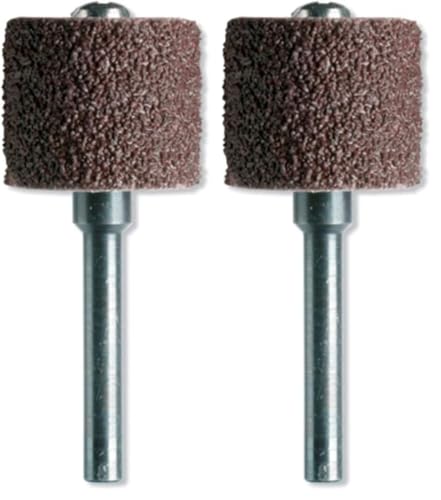
A drum is the accessory most people mean by a Dremel sanding bit. The 407 is a half-inch mandrel with a replaceable abrasive band slid over it, which is why one mandrel gives you several grits. Dremel’s product page says the 407 fits every Dremel half-inch sanding band, including the 408, 432 and 445.
407, 408, 432 and 445: What Each Number Means
The 407 is the mandrel with one 60 grit band in the box. After that, the numbers are band refills. In Dremel’s 48 piece sanding band set, the 408 is the 60 grit band, the 432 is the 120 grit band and the 445 is the 240 grit band, and the set also includes two 407 mandrels. The same page describes 60 grit as aggressive material removal, 120 grit as pre-finishing wood or cleaning surfaces and 240 grit as fine sanding and touch-ups on wood or varnish.
Which Band for Which Job
Dremel lists wood, fiberglass, rubber, plastic, soft stone and shell, drywall and metal for the 407, and its band set adds hardwood, softwood, plastic, aluminum and rust removal on steel. A practical order is 60 grit to shape or strip, 120 to smooth the scratches and 240 to finish. Bands are curved, so they suit rounded edges, inside curves and tight spots where a flat sander cannot reach.
Dremel 407 Sanding Band and Mandrel
Best Starting Drum
Dremel’s product page lists the 407 as a half-inch (12.7 mm) mandrel, 1.5 inches long on a 1/8 inch shank, with one 60 grit aluminum oxide band. Dremel recommends 15,000 to 25,000 RPM for wood, metal, plastic and soft stone or shell, and 15,000 to 20,000 RPM for drywall. The Amazon listing linked here is a pack of two 407 drums.
- ✅ Fits every Dremel half-inch band
- ✅ Aluminum oxide band, 60 grit included
- ❌ 60 grit bands only, so buy 120 and 240 grit bands separately
Best For: Anyone buying their first Dremel sanding drum.
Flap Wheels
A flap wheel is a small cylinder of overlapping abrasive flaps on a 1/8 inch shank. It is gentler than a stone and fits curved surfaces better than a disc, and as the outer flaps wear, the abrasive underneath keeps working. If you want the full picture of how flap abrasives work on an angle grinder, my flap discs guide covers the larger tool.
Dremel 502: What the Page Says
Dremel’s 502 page lists it as an 80 grit flap wheel on a 1/8 inch mandrel, 2.75 inches long overall. The page gives two sizes, a 1-1/8 inch diameter in the specifications and 3/8 inch in the overview, so check the wheel size on the listing before you buy. Dremel’s sanding page says flap wheels are for smoothing, shaping and deburring metal and can run up to 35,000 RPM.
Dremel 502 Flap Wheel

Best for Deburring and Blending Metal
Dremel’s product page gives these speeds for the 502: wood 25,000 to 30,000 RPM, soft metal 20,000 to 25,000, hard metal 25,000 to 30,000, plastic 10,000 to 20,000 and soft stone or shell 10,000 to 25,000. Dremel does not give a single maximum for the 502 on that page, so stay inside the range for your material. The Amazon listing linked here names it as the 3/8 inch, 80 grit flapwheel.
- ✅ 80 grit, medium cut for smoothing and deburring
- ✅ Speed ranges listed by material
- ❌ Page shows two different diameters, confirm the size on the listing
Best For: Deburring and blending small metal parts.
Sanding Discs and Stones
Dremel’s sanding page lists sanding discs in 60 and 240 grit for wood and metal, rated to 35,000 RPM like the bands. Discs give you a flat face, so they suit straight edges, flat surfaces and corners that a drum cannot reach. The page does not give disc part numbers or sizes, so check that the listing names a Dremel-compatible mandrel before you order.
Abrasive Buffs and Brushes
Dremel puts its finishing abrasive buffs, in 180, 280 and 320 grit, at a maximum of 15,000 RPM, and its detail abrasive brushes, in 36, 120 and 220 grit, at the same limit. The page lists the buffs for cleaning, deburring and polishing metal and for removing rust and paint, and says the 280 and 320 grits are for delicate materials such as metals or mahogany. That is well below the 35,000 RPM on the bands, so do not run these at the top of the dial.
Grinding Stones
Aluminum oxide grinding stones turn up in almost every third-party accessory kit. They are for shaping and sharpening, not for sanding, and Dremel’s sanding page does not list them, so I leave their specs as not stated here. When a kit mixes stones, bands and discs, count the bands and discs you will use and treat the stones as a bonus.
Speed Settings
Speed is where a rotary tool goes wrong. Dremel’s own pages give the limit for each accessory rather than a single rule, and the plastic and soft stone figures on the product pages run lower than the metal and wood ones.
| Accessory and material | Dremel speed range |
|---|---|
| 407 drum band on wood, metal, plastic, soft stone or shell | 15,000 to 25,000 RPM |
| 407 drum band on drywall | 15,000 to 20,000 RPM |
| 502 flap wheel on wood or hard metal | 25,000 to 30,000 RPM |
| 502 flap wheel on soft metal | 20,000 to 25,000 RPM |
| 502 flap wheel on plastic | 10,000 to 20,000 RPM |
| Sanding bands and sanding discs (maximum) | 35,000 RPM |
| Abrasive buffs and brushes (maximum) | 15,000 RPM |
Keep the Tool Moving
Dremel’s pages give limits, not technique, so this part is general sanding sense. A small drum concentrates heat in a small spot, so keep the tool moving, use light pressure and let the abrasive cut. If the work smells hot or the band glazes, slow down and lift off.
How to Change Bits in a Dremel
Dremel’s instructions for its 3100 tool, the clearest official steps I found, say to hold the shaft lock button and loosen the collet nut counterclockwise, insert the accessory so that less than 1/4 inch of gap is left to the nut, and tighten by hand while holding the shaft lock. Most accessories have a 1/8 inch shank. Smaller shanks need collets #481, #482 or #483, or the #4485 set. Your tool’s manual is the authority, because a keyless chuck or EZ Lock system changes the steps.
By Material: Wood, 3D Prints, Glass, Metal
Wood
Bands are the wood accessory. Dremel recommends the 407 between 15,000 and 25,000 RPM, and its grit guide suits carving work: 60 grit to remove material, 120 to smooth and 240 to finish. For flat wood, a rotary tool is slow, and a sanding sheet on a proper sander is the better choice. See my how to sand wood guide.
3D Prints
Heat is the problem on plastic prints. My guide to sanding 3D prints says to run a rotary tool at its lowest speed, keep it moving and stop at 220 grit with power tools. The 502 page gives plastic a range of 10,000 to 20,000 RPM, which is the lower part of the dial.
Glass
Glass needs silicon carbide or diamond bits and water, not a standard abrasive band. My how to sand glass guide covers the speeds and the safety rules, including keeping the glass wet.
Metal
Dremel lists aluminum and rust removal on steel for its sanding bands, and metal smoothing and deburring for flap wheels. Use the 502 for deburring and 60 grit bands for rust. For larger metal jobs, see how to sand metal.
⚠️ Important
Wear eye protection and a dust mask. Dremel lists different maximum speeds for different accessories, so check the one printed on the pack against the speed dial before you start.
The Rotary Tool to Run Them
Any Dremel rotary tool takes these accessories. What changes between models is power, speed control and whether there is a cord. For a different tool that sands flat surfaces and corners, see my best oscillating multi-tool guide.
Dremel 4300 Rotary Tool
Best Corded Rotary Tool
Dremel’s 4300 page lists a 1.8 amp motor with variable speed from 5,000 to 35,000 RPM, a keyless chuck that takes all Dremel accessory shank sizes, a 6 foot cord, a pivoting LED worklight and a weight of 25 ounces. The listing linked here is the 4300-5/40 kit, with 5 attachments and 40 accessories.
- ✅ Full 5,000 to 35,000 RPM speed range
- ✅ Keyless chuck, no wrench
- ❌ Corded, with a 6 foot cord
Best For: Regular use and long sanding sessions.
Dremel 8240 12V Cordless Rotary Tool

Best Cordless Rotary Tool
Dremel’s 8240-5 page lists a 12 volt tool with a removable 2.0 Ah battery, variable speed from 5,000 to 35,000 RPM, a motor brake and the EZ Lock quick-change system. The listing linked here is the 8240-5 kit with a fabric carry bag; the full contents are on the listing.
- ✅ Cordless with a variable speed dial
- ✅ Motor brake and EZ Lock
- ❌ Battery runtime not stated
Best For: Work away from an outlet or around a bench.
Dremel 3100 Rotary Tool

Best Entry Corded Model
The 3100 is the corded model whose accessory-change steps I quoted above. Dremel’s 3100 page describes variable speed settings marked 2 to 10, but doesn’t give the RPM range or the motor rating, so those are not stated here; check the listing before you buy, because the low end matters on plastic and glass. The kit linked here is the 3100-1/15, with 1 attachment and 15 accessories.
- ✅ Same Dremel accessory family and 1/8 inch collet
- ❌ RPM range not stated on Dremel’s page
Best For: Occasional small jobs on a budget.
Kits and Accessory Sets
If you are starting from nothing, a Dremel sanding and grinding accessory kit saves you assembling bands one at a time. Dremel’s 771B-01 sanding band variety kit includes 48 pieces in 60, 120 and 240 grit with two 407 mandrels, which is the whole drum system in one box. Other sets often fill the count with stones, so check what a kit actually contains.
How I Put This Guide Together
The facts here come from Dremel’s product pages for the 407, 502, the 48 piece sanding band set, the 4300 and the 8240, and from Dremel’s sanding page and its 3100 instructions. Where Dremel does not say, I write that it is not stated. I don’t show customer ratings or prices. More on how I choose the products I recommend.
🏆 The Verdict
For most small sanding jobs, buy a 407 drum with 60, 120 and 240 grit bands, add a 502 flap wheel for metal, and keep the speed inside the range Dremel gives for the material. Slow right down on plastic and glass. For the tool, the Dremel 4300 is my pick if you want a corded tool that covers the whole speed range.

