
As an Amazon Associate I earn from qualifying purchases. All claims are strictly my personal opinion.
Editor’s Choice
Short on time? Of the 4 types of benchtop sanders on this list, this is the one I'd buy.
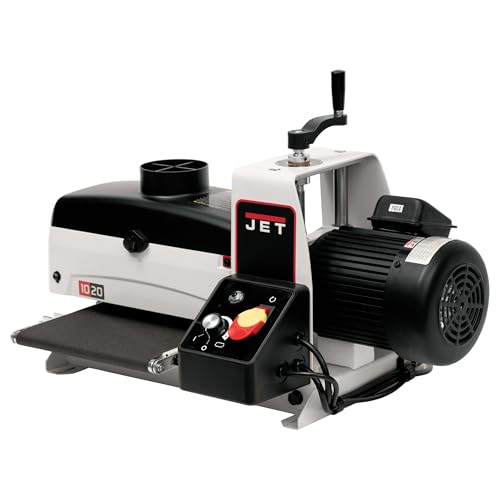
A 1 HP benchtop drum sander that flattens boards up to 10 inches wide in one pass and 20 inches in two.
- Also recommended JET JSG-96
- Also recommended JET JBOS-5

There are six types of benchtop sander, and each one does a different job: a belt/disc combo shapes and squares small parts, a drum sander flattens wide boards, an oscillating spindle sander smooths inside curves, an oscillating belt and spindle sander handles curves and edges in one machine, a disc sander squares ends and miters, and an edge sander trues long edges. Pick the type from the work you do most, then pick the machine. Below is my pick for each type, with a link to the full roundup for that type.
Benchtop sanders occupy a sweet spot that not enough woodworkers take advantage of. They give you the raw power and sanding capacity of a stationary machine without demanding a dedicated floor footprint: all they need is a section of a sturdy workbench and a nearby outlet. Compared to a handheld sander, they’re in a different league: more consistent pressure, more controlled results, and the ability to handle parts that would be awkward to sand freehand.
I’ve personally tested the drum, spindle and belt/disc picks below; the RIDGID belt and spindle pick joined this page later, so for it I’ve stuck to RIDGID’s published specs.
Types of Benchtop Sanders at a Glance
Each type below links to the roundup where I compare every machine of that type.
| Type | What it does best | My pick | Full roundup |
|---|---|---|---|
| Belt/disc combo | Shaping, squaring end grain, small parts | JET JSG-96 | Benchtop belt sanders · Belt and disc sanders |
| Drum sander | Flattening and thicknessing wide boards | JET JWDS-1020 | Drum sanders |
| Oscillating spindle | Inside curves after a bandsaw or scroll saw | JET JBOS-5 | Spindle sanders |
| Oscillating belt and spindle | Inside and outside curves plus edges | RIDGID EB4424 | Belt and spindle sanders |
| Edge sander | Truing long edges of panels and doors | RIDGID EB4424 on the bench; full-size models on a stand | Edge sanders |
| Disc sander | Squaring ends, miters, convex curves | The disc on a belt/disc combo | Disc sanders |
Benchtop Sander Picks Compared
| Product | ⭐ JET JWDS-1020 🏆 EDITOR’S CHOICE |
JET JSG-96 | JET JBOS-5 | RIDGID EB4424 |
|---|---|---|---|---|
| Image | |
 |
 |
 |
| Type | Drum sander | Belt/disc combo | Oscillating spindle | Oscillating belt and spindle |
| Motor | 1 HP | 3/4 HP | 1/2 HP | 3/8 HP, 5 A |
| Sanding size | 10″ (20″ in 2 passes) | 6×48″ belt / 9″ disc | 6 spindle sizes | 4×24″ belt + spindles |
| Dust port | 4″ | 4″ | 2″ | 2-1/2″ |
| Warranty | 5 years | 5 years | 5 years | Lifetime service (registered) |
| Tier | $$$$ | $$$$ | $$$$ | $$ |
| Availability | Shop Now at Amazon | Shop Now at Amazon | Shop Now at Amazon | Shop Now at Amazon |
Key takeaways
- Pick the type before the machine: drum for wide boards, belt/disc for shaping and squaring, spindle for inside curves.
- My top pick is the JET JWDS-1020, a benchtop drum sander for flattening wide boards and glue-ups.
- For most shops’ first benchtop sander, a belt/disc combo like the JET JSG-96 covers the most jobs.
- For curves, the JET JBOS-5 spindle sander, or the RIDGID EB4424 for curves and edges in one machine.
Benchtop Sander Types and My Pick for Each
Here are my reviews of the pick for each type: what each one does well, where it falls short, and who it’s best suited for. Each section links to the full roundup for that type.
💡 Pro Tip
The biggest mistake buyers make with benchtop sanders is treating them all as interchangeable. They’re not: a drum sander, a spindle sander, and a belt/disc combo each excel at different tasks. Before buying, think about your most common use case: flattening wide boards? Drum sander (or a planer; see how a drum sander compares with a planer). Shaping curves and contours? Spindle sander. General-purpose sanding and shaping? Belt/disc combo. Getting this right the first time saves a lot of money and frustration.
Editor's ChoiceBenchtop drum sander
JET JWDS-1020
Drum Sander: JET JWDS-1020
The most capable benchtop sander I've tested: 10 in wide in one pass, 20 in in two.
Shop Now at AmazonSpecs: the seller's Amazon listing; no maker page found
Best for
Flattening wide boards and glue-ups.
- Infinitely variable feed rate
- Aluminum drum sheds heat
Skip it if
You mostly shape edges and curves.
- Specialist tool, not general-purpose
Read full review
If you need to flatten, thickness, or smooth wide boards to a perfectly consistent dimension, the JET JWDS-1020 is the machine I’d recommend without hesitation. I’ve been using drum sanders for years, and nothing else in this class delivers quite this combination of capacity, power, and build quality at the benchtop level. The 1 HP motor is notably powerful for a machine of this footprint, comfortably handling boards up to 3 inches thick and 10 inches wide in a single pass, or up to 20 inches wide in two passes using the open-ended design. The die-cast aluminum and steel construction feels serious and rigid, not the lightweight compromise you sometimes find on benchtop machines.
JET’s patented integrated dust hood is one of the most thoughtful features on this machine: it channels dust directly into the 4-inch dust port, which matters when you’re drum sanding wide panels and generating large volumes of fine dust. The self-cooling aluminum sanding drum protects both the abrasive and the workpiece from heat damage. Infinitely variable speed control lets you dial in the feed rate for different wood species and finish requirements. For anyone working on cabinet panels, tabletops, or wide glue-ups, this is the machine to own. For bigger floor-standing models, see my drum sander reviews.
Best For: Woodworkers who regularly work with wide flat boards, cabinet panels, tabletops, and glue-ups who need a dedicated thicknessing and flattening solution on the benchtop.
Best belt/disc comboBelt and disc sander
JET JSG-96
Belt/Disc Combo: JET JSG-96
A 6 x 48 in belt and 9 in disc, with a graphite platen and cast iron table.
Shop Now at AmazonSpecs: the seller's Amazon listing; no maker page found
Best for
A first benchtop sander for small parts.
- Graphite platen runs cooler
- Belt works at any angle
Skip it if
You only sand small parts now and then.
- Heavy, not easily moved
Read full review
The JET JSG-96 is one of the most versatile and well-engineered benchtop belt/disc sanders on the market, and it’s a machine I keep coming back to as the gold standard in its category. The 3/4 HP motor drives both the 6-inch belt and 9-inch disc with authority. The large 9-inch cast iron disc table is flat, precise, and generous, with pre-set stops at 45 and 90 degrees. The belt operates vertically, horizontally, or at any angle in between, which opens up a huge range of sanding tasks on a single machine.
What I liked most about this machine is the graphite-covered steel platen behind the belt: it reduces friction heat, which means less burning on delicate pieces and longer belt life. The quick-release belt change is fast, and the integrated 4-inch dust port works whether you’re running the disc or the belt. Belt/disc combos are the type most shops buy first, and the range is wide, from compact 1 x 30″ machines to 6 x 48″ models with a 12″ disc: I compare them all in my best benchtop sanders reviews, and every belt and disc combo in my belt and disc sander roundup.
Best For: Dedicated hobbyists and professionals who want one versatile, premium-quality belt/disc machine they can rely on for years of heavy use.
Best for curvesSpindle sander
JET JBOS-5
Spindle Sander: JET JBOS-5
The finest benchtop spindle sander here, for curves cut on a scroll saw or bandsaw.
Shop Now at AmazonSpecs: the seller's Amazon listing; no maker page found
Best for
Smoothing curved edges cleanly.
- Oscillation extends sleeve life
- Gears in a sealed lubricated box
Skip it if
You sand flat stock or square ends.
- Curves only
Read full review
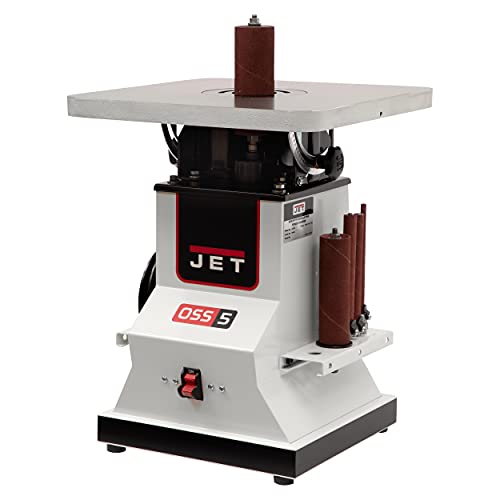
The JET JBOS-5 fills a niche that belt and disc sanders simply can’t cover: sanding inside curves, arcs, and intricate profiles cut on a scroll saw or bandsaw. If your work involves curved or contoured pieces (furniture legs, decorative cutouts, brackets) this machine will become one of your most-used shop tools. The 1/2 HP induction motor drives the spindle with plenty of power for sustained work, and the 1-inch oscillating action spreads wear across the full sleeve rather than concentrating it at one point, which reduces heat and gives a smoother finish.
The cast iron table tilts to 45 degrees for bevel sanding on complex profiles. The 2-inch dust port manages debris, and removable table inserts accommodate all six spindle sizes. The on/off safety switch with removable key is a smart safety detail. I’m also a big fan of the onboard storage racks for inserts and spindles, which keep your bench organised. The 5-year warranty backs up JET’s confidence in this machine’s longevity, and in my experience it’s entirely deserved. Budget spindle sanders and floor models are in my spindle sander reviews.
Best For: Woodworkers who regularly cut curves on a scroll saw or bandsaw and need a dedicated tool for smoothing those curved and contoured edges cleanly.
Curves and edgesBelt and spindle sander
RIDGID EB4424
Belt and Spindle Sander: RIDGID EB4424
A belt and an oscillating spindle in one machine, with tool-free changeover.
Shop Now at AmazonSpecs: RIDGID
Best for
One machine for curves and edges.
- Belt and spindle in one machine
- Lifetime Service Agreement when registered
Skip it if
You only sand inside curves.
- Short 4" x 24" belt
Read full review
The RIDGID EB4424 covers two types in one benchtop machine: an oscillating spindle sander for inside curves and a short oscillating belt for outside curves and edges. Its 3/8 HP induction motor draws 5 A, and both heads oscillate 60 times a minute over a 3/4″ stroke, which spreads heat and wear over more of the sleeve or belt. Changing from belt to spindle is tool-free, and the kit includes sleeves from 1/2″ to 2″ and a 4″ x 24″ belt.
The beveling table is die-cast aluminum with five positive stops, the dust port is a 2-1/2″ opening sized for a wet/dry vac hose, and at about 40 lb it stays put on the bench. RIDGID’s Lifetime Service Agreement covers parts and service if you register within 90 days of purchase. It is also the benchtop pick on my edge sander page, where the full-size 6 x 89″ machines live, and it heads my oscillating belt and spindle sander roundup.
Best For: Home shops that want one machine for curves and edges and plan to keep it for years.
Disc Sanders and Edge Sanders
A benchtop disc sander is a flat abrasive disc spinning against a table with a miter gauge: it squares end grain, trues miters and shapes convex curves to a line. Few shops buy one on its own, because the disc on a belt/disc combo does the same work and the belt comes free; that is why my pick for this type is the disc on the JSG-96 above. My disc sander roundup covers handheld disc sanders and the combos.
A full-size edge sander runs a long 6 x 89″ belt on its side so you can true the edges of panels, doors and tabletops; those are floor machines on a stand, not benchtop tools. On the bench, the RIDGID EB4424’s belt head does the same job on smaller parts.
Which Type of Benchtop Sander Do You Need?
Choosing the right benchtop sander comes down to matching the machine’s strength to the work you actually do. Here are the key factors I think about when recommending a machine to someone.
Sander Type: Match the Machine to the Job
This is the most important decision you’ll make. Get it wrong and you’ll have a machine that’s frustrating to use for most of your work. Drum sanders are for thicknessing and flattening wide boards: if you glue up panels or work with rough lumber regularly, this is your machine. Oscillating spindle sanders are specialists for curved and contoured edges after scroll saw or bandsaw cuts. Belt/disc combo sanders are the general-purpose workhorse of the benchtop world: the belt handles linear shaping and stock removal, while the disc is ideal for flat surfaces and accurate angle work. Most shops start with a belt/disc combo, then add a spindle sander when the need arises.
Motor Power and Belt/Disc Size
More power means more material removal and less bogging down under load, especially important for drum sanders and heavier stock. For belt/disc combos, a 3/4 HP motor is the practical minimum for sustained work; anything less is fine for occasional light use. Belt and disc size matters too: a wider belt (6 inches vs. 1 inch) handles larger workpieces more efficiently, while a larger disc (9 to 12 inches vs. 5 to 6 inches) gives you more working surface for accurate flat-face sanding.
Dust Collection
Dust management is not optional: it’s a safety and quality issue. Benchtop sanders generate large amounts of fine dust very quickly, and fine dust is both a respiratory hazard and a fire risk near electrical equipment. Look for machines with at least a 2.5-inch dust port, and ideally 4 inches for drum sanders and large belt/disc combos. Connect to a shop vac or dedicated dust collector for any serious volume of work: the built-in dust bags on most machines are a last resort, not a primary solution. Working clean also means your abrasives last longer and cut better. This same principle applies whenever you’re doing intensive surface work like deck refinishing.
Build Quality and Warranty
Cast iron and die-cast aluminum are your friends. Cast iron tables and bases absorb vibration, and die-cast aluminum construction (like the JET JWDS-1020) provides rigidity without excessive weight. Cheap pressed steel frames flex under load, which translates directly into inconsistent results and shorter machine life. Warranty length is a useful signal of manufacturer confidence: the three JET picks here carry 5 years, and RIDGID offers lifetime service on the EB4424 when registered.
Variable Speed
Variable speed is a genuine advantage on a drum sander, where controlling the feed rate for different wood species and finish requirements makes a real difference to results. On belt/disc combos it’s less critical: most of these machines run at a fixed speed that suits the broad range of woodworking tasks they’re designed for.
ℹ️ Did You Know?
An abrasive cleaning stick (also called a belt cleaning block or rubber stick) pressed lightly against a running belt or disc will break loose clogged sawdust and restore cutting performance, so the abrasive lasts longer before it needs replacing. It’s a small investment that pays for itself quickly in any active sanding shop.
🏆 The Verdict
Choose the type first. For wide boards and glue-ups, the JET JWDS-1020 drum sander is my overall Editor’s Choice: it’s the most capable, best-built benchtop sander I’ve tested. For a first benchtop sander that does the most jobs, a belt/disc combo like the JET JSG-96 is the benchmark. If curves and contours are your focus, the JET JBOS-5 is the finest spindle sander at the benchtop level, and the RIDGID EB4424 adds a belt for edges in the same machine.
❓ Frequently Asked Questions
What’s the difference between a drum sander, a spindle sander, and a belt/disc combo?+
What type of sander should I use for a table top?+
Can a bench grinder be used for sanding?+
Do I need to connect my benchtop sander to a dust collector?+
Can I use a benchtop belt sander for metalworking?+
How do I extend the life of my sanding belts and discs?+
Conclusion
There’s no single best benchtop sander for every shop, because the types do different jobs. Start from the work: wide boards, curves, or small parts that need shaping and squaring.
My overall recommendation remains the JET JWDS-1020 for anyone who works with wide flat boards. If you want a versatile belt/disc machine, the JET JSG-96 is the one I’d buy. For curves, the JET JBOS-5 or the RIDGID EB4424. Thanks for reading: feel free to drop any questions in the comments below!
