
As an Amazon Associate I earn from qualifying purchases. All claims are strictly my personal opinion.
My top pick

Forney 71804 Emery Cloth, 120 Grit Bench Roll
A 1 inch cloth-backed roll in 120 grit, sold for hand cleaning metal and pipe ends, right in the range used to clean copper before soldering.

Emery cloth is a flexible, cloth-backed abrasive for metal, and sandpaper is the paper-backed family that covers everything else, so the real difference is the backing and the grain, not a magic property of the word “emery.” Cloth bends around pipe and rod without tearing, which is why it is the standard way to shine copper before soldering and to knock light rust off steel. Paper is stiffer, cheaper per sheet and better on flat work. One thing to know before you shop: emery is a natural abrasive, and by one reference’s account it has been replaced in large measure by synthetic aluminum oxide in manufacturing, so a lot of “emery cloth” on the shelf today is worth reading the label on.
Below is a side-by-side comparison, what emery cloth is actually used for, what the grits mean, where plain sandpaper is the better call, what to use if you have none, and the products I’d look at.
⚡ Quick Answer
Cleaning pipe, rod or bolts by hand? A cloth-backed bench roll like the Forney 71804 Emery Cloth, 120 grit.
Smoothing bare metal or primer on a flat surface, especially wet? 3M Wetordry paper.
Rust on a big steel surface with an orbital sander? The Dura-Gold Ceramic Variety Pack.
Emery Cloth vs Sandpaper at a Glance
| Feature | Emery Cloth | Sandpaper (paper or film backed) |
|---|---|---|
| Backing | Cloth | Paper or film |
| Abrasive grain | Emery, or in practice often aluminum oxide (check the label) | Aluminum oxide, silicon carbide, ceramic, garnet and others |
| Flexibility | ✅ Wraps around pipe and rod | ❌ Stiffer, creases and tears on tight curves |
| Tear resistance | ✅ High | Varies by backing weight |
| Flat panels | Works on a block, but slow | ✅ Better, and fits power sanders |
| Wet use | Mostly used dry | ✅ Wet/dry paper is made for it |
| Best for | Copper pipe, rod, bolts, light rust, hand polishing | Flat metal, primer, wood, paint, wet sanding |
| Typical price tier | $ | $ to $$ |
What Is Emery Cloth?
Emery cloth is a sheet or roll of abrasive grain glued to a cloth backing. The “emery” part is a natural abrasive mineral; the “cloth” part is what makes it different from the paper in a normal sandpaper sheet. The cloth gives it strength in the direction you pull and flexibility around curves, so you can hold a strip in both hands and draw it back and forth around a pipe, a shaft or a bolt, the way you would shine a shoe.
Is Emery Cloth the Same as Aluminum Oxide Cloth?
Not strictly. Emery is a natural abrasive, and one abrasives reference says both corundum and emery have been replaced in large measure by synthetic alumina (aluminum oxide). In stores the two names get blurred: some products labeled emery cloth are real emery, and others are aluminum oxide on a cloth backing sold under the familiar name. 3M’s emery cloth is described by a 3M distributor as combining various mineral oxides on a cloth backing that resists shredding and tearing, in fine, medium and coarse grades. If the mineral matters for your job, read the label or the spec sheet instead of assuming. For the job of cleaning pipe by hand, either one does it.
Why the Cloth Backing Matters
The same 3M listing makes a point worth repeating: a cloth backing resists shredding and tearing, so it doesn’t fall apart under hard hand pressure. Paper under that kind of load folds, splits at the crease and leaves you with a ragged strip. On a pipe, the cloth is also what lets one strip reach all the way around the circumference at once.
What Is Emery Cloth Used For?
Cleaning Copper Before Soldering
This is the job it is best known for. Copper oxidizes in air, and an oxidized surface doesn’t take solder or braze well. An HVAC training guide from Coalinga College tells students to use an HVAC-rated pipe cleaning brush, emery cloth or sandpaper in the 120 to 180 grit range to remove oxidation, to wrap the abrasive around the pipe and rotate it back and forth until the surface is shiny, and to clean at least 1 inch beyond the intended joint area. It also says to clean the pipe immediately before assembly, because oxidation can come back.
Removing Light Rust and Corrosion
Emery cloth suits surface rust on steel tools, bolts, hinges and rods. 3M lists its emery cloth for removing rust, corrosion and paint from metal, for hand or machine sanding. On heavy, flaking rust it is slow, and a wire brush or flap disc does the first pass faster; my guide to the best sandpaper for metal sorts the options by job.
Polishing and Deburring Small Parts
With a fine grit, emery cloth takes the dull gray off a shaft or pin, softens the sharp edge left by a saw cut and removes light tarnish. Because the cloth conforms, you can polish a round part evenly in a way a flat sheet won’t. For the full process on bare steel, aluminum and painted metal, see how to sand metal.
Emery Cloth Grits
Grit works the same way here as on any sandpaper: a lower number means bigger grain and faster, rougher cutting, and a higher number means smaller grain and a finer scratch. Emery cloth is sold both as single grits and in assorted packs, and many shop packs simply label sheets coarse, medium and fine. The table below is a practical guide to what each range is for; it is a rule of thumb, not a standard, and different brands label the same number a little differently.
| Grit range | Use it for | Watch out for |
|---|---|---|
| 80 and coarser | Heavier rust and scale on rod and bolts | Deep scratches you will need to remove with finer grits |
| 120 to 180 | Cleaning copper pipe and fittings before soldering or brazing | Don’t press hard on thin tube |
| 240 to 320 | Smoothing metal after rust removal, deburring, prep for paint | Clogs on soft metals like aluminum |
| 400 to 600 | Polishing shafts, pins and tarnished parts | Too fine to remove rust quickly |
What Grit Is Plumber’s Emery Cloth?
There is no single standard. The HVAC guide above names 120 to 180 grit for cleaning copper, and plumbing suppliers sell rolls in a range of grits, so the safe answer is “somewhere around 120 to 180.” If you only buy one roll for pipe work, pick a grit in that range.
Going Up Through the Grits
On a polishing job, work through the grits one at a time, starting at the coarsest you need and stopping at the finish you want. Skipping from coarse straight to fine leaves the coarse scratches behind. The same logic applies to any sanding, and I cover it in my guide to the types of sandpaper, which is also where the different abrasive minerals are explained in full.
Where Sandpaper Wins
Flat Panels and Large Areas
A strip of cloth wrapped around a block still covers a small area at a time. For a flat steel panel, a tabletop or a car body panel, a paper or film sheet on a sanding block or an orbital sander covers the ground far faster and leaves a more even surface.
Wet Sanding
Wet/dry paper is designed to be used with water. The water carries swarf away, keeps the grain from clogging and lets you take metal and primer to a smooth finish at high grits. Emery cloth is generally treated as a dry hand tool. If your job is primer or paint between coats, reach for wet/dry paper.
Power Sanding
Cloth strips don’t mount on an orbital sander, and a hand-cut piece of cloth won’t stay put. Discs on a hook-and-loop pad do. For metal that needs power sanding, the practical answer is a pack of discs, not emery cloth.
Wood and Paint
Emery cloth is a metal tool. On wood, paper does the job better and costs less. For bare paint and body-shop work, there are better grains and backings still.
Plumber’s Emery Cloth
Plumber’s cloth is emery cloth sold specifically for pipe work, usually as a narrow roll, often an inch or so wide, so you can tear off a length, loop it around a pipe and pull it back and forth. The method is the same as in the HVAC guide: wrap it around the pipe or fitting, rotate until the metal is bright, and clean past the area the joint will cover.
How to Clean Copper Pipe with Emery Cloth
- Cut the pipe square and remove the inside burr first.
- Wrap a strip of 120 to 180 grit cloth around the pipe and work it back and forth until the copper is shiny, covering at least 1 inch beyond the joint area.
- For the inside of a fitting, roll a strip around a finger and twist it in the socket.
- Wipe off the dust, apply flux and assemble straight away, before the metal oxidizes again.
Do You Have to Use Emery Cloth on Copper?
No. The HVAC guide lists a pipe cleaning brush as an equal option, and plumbers use brushes designed for the job. Emery cloth is the cheap, tool-free version, and it is the one you can use on pipe already installed in a tight space.
What Can You Use Instead of Emery Cloth?
If you don’t have emery cloth, these do the same job in different situations.
- Wet/dry sandpaper: in the same 120 to 180 range for copper and light rust. The HVAC guide lists sandpaper of that grit as an acceptable option alongside emery cloth.
- Aluminum oxide cloth or sanding strips: the closest relative, and often the same product sold under another name.
- Nylon abrasive pads or steel wool: light cleaning and polishing. Steel wool can leave fibers behind, so keep it away from a joint you intend to solder.
- Wire brush or pipe cleaning brush: for oxidation on copper and for loose rust.
- Flap discs or sanding discs on a grinder or orbital sander: for large rusty surfaces. I explain how these differ in flap discs explained.
The Ones I’d Buy
These are picks based on what each product is built for and what its listing says, one for each job in the comparison.
Forney 71804 Emery Cloth, 120 Grit Bench Roll
Best for Pipe and Rods
A 1 inch by 10 yard bench roll of cloth-backed abrasive in 120 grit, sold for hand sanding and cleaning metal, wood and pipe ends. 120 sits at the coarse end of the 120 to 180 range the HVAC guide gives for copper, so it is the one roll I’d keep in a plumbing bag. Note what the listing says about the grain: it is aluminum oxide, which is exactly the naming blur described above. Forney also sells the same roll in 80 and 180 grit if you want a coarser or finer second roll.
- ✅ Cloth backing wraps around round stock
- ✅ 120 grit, right for cleaning copper
- ✅ Tear-to-length 1 inch roll
- ❌ A single grit; polishing needs a finer roll
3M Wetordry Sandpaper
Best Paper Alternative
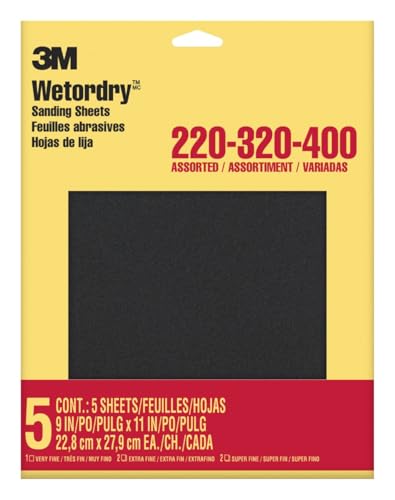
The paper-backed answer when the job is flat. This pack is five 9 x 11 inch sheets of silicon carbide on waterproof paper, in assorted grits, sold for sanding between coats of paint, lacquer and other finishes, wet or dry. That suits primer, bare metal and the finer grits where cloth isn’t the right tool. The listing doesn’t say which grits are in the assortment.
- ✅ Designed for wet use
- ✅ Better on flat work than cloth
- ❌ Paper backing tears on tight curves
Dura-Gold Ceramic Variety Pack

Best for Power Sanding Metal
Fifty 5-inch film-backed discs, five each of ten grits from 60 to 1000, with ceramic grain fused with zirconia and eight holes, for a 5-inch random orbital sander. This is the pick when your rust or primer is on a surface big enough that hand cloth would take all afternoon. Check that your sander pad has the same hole pattern.
- ✅ Ten grits from 60 to 1000
- ✅ Fits a 5-inch random orbital sander
- ❌ Useless for pipe and rod; use cloth there
🏆 The Verdict
Use emery cloth when the part is round or the work is by hand: copper pipe, rod, bolts and light rust. A 120 grit roll like the Forney 71804 covers most pipe work. Use sandpaper when the surface is flat, wet or power sanded, with 3M Wetordry for wet work and the Dura-Gold discs for an orbital sander. Most metal projects end up needing a bit of both.
❓ Frequently Asked Questions
What is an emery cloth used for?+
What grit is plumbers emery cloth?+
What can I use as a substitute for emery cloth?+
What do plumbers use to clean copper pipes?+
What is emery used for?+
Not sure which one your job needs? Describe it in the comments and I’ll tell you what I’d reach for.

