
As an Amazon Associate I earn from qualifying purchases. All claims are strictly my personal opinion.
My top pick
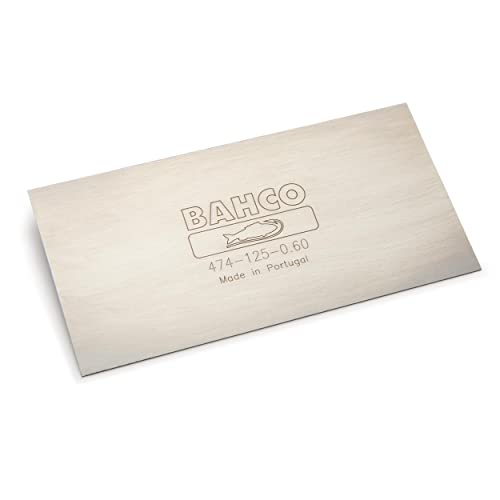
A plain rectangular card is the best way to learn the file, hone and burnish routine every other scraper depends on.

A card scraper is a thin, flat piece of steel that cuts wood with a microscopic burr on its edge, and on figured or tear-out-prone hardwood it often leaves a cleaner surface than sandpaper does. It makes curls and fine shavings instead of dust, it works with or against the grain, and it costs very little. The price of that is a skill: you have to sharpen the burr yourself, and a scraper that isn’t sharp just skips and polishes the wood.
Below is how a card scraper compares with sandpaper, the difference between card, gooseneck and cabinet scrapers, how to file, hone and burnish the burr, how to hold and flex the blade, what can stand in for a burnisher, and the jobs where you should simply sand.
⚡ Quick Answer
Scrape: on figured or interlocked hardwood, glue squeeze-out, and the last smoothing pass before a clear finish. A rectangular card scraper is the place to start.
Sand instead: on large flat areas, profiles and anything you need done fast. My guide to sanding wood covers that side.
Skill to learn: turning the burr with a burnisher. Once you can raise a burr, the scraper is the easiest tool in the shop to keep sharp.
Card Scraper vs Sandpaper
Sandpaper abrades: thousands of hard grains scratch the surface until it looks smooth. A scraper shears: the burr lifts a thin curl off the surface, much like a very small plane. Woodcraft’s scraper guide says a scraper can be used in any direction relative to the grain without tear-out and can level machine marks when worked diagonally. That is the whole reason woodworkers reach for one on curly maple, bird’s-eye, burl and swirling oak.
| Factor | Card scraper | Sandpaper | What it means |
|---|---|---|---|
| Tear-out on figured wood | Handles it | Handles it slowly | A scraper can be pushed against the grain; sanding removes the same wood in more steps |
| Dust | Shavings | Fine dust | A sharp scraper gives curls; a dull one gives dust |
| Surface left behind | Cut, burnished look | Scratch pattern | Cut surfaces tend to take clear finishes evenly; sanding scratches show under stain if you stop too coarse |
| Curves and profiles | Gooseneck or shaped blade | Easy with sponges | Sandpaper follows any shape; a scraper needs a matching blade |
| Large flat areas | Tiring by hand | Fast with a sander | A power sander covers a tabletop far faster than flexing a card |
| Upkeep | Re-burnish by hand | Replace the sheet | One steel card can last for years; paper wears out |
What a Scraper Is Good At
Woodcraft lists the usual jobs: removing glue, smoothing knots and figured wood, stripping paint and knocking down finish nibs. Between coats of varnish, a scraper takes off a dust nib without the haze that fine sandpaper can leave. It also cleans up a glue line after a panel glue-up without rounding over the edge of the joint.
Why It Beats Sandpaper on Tear-Out
Tear-out happens when a cutting edge lifts a fibre ahead of itself. A scraper’s burr is pushed or pulled at a steep angle, so it shears the fibre rather than prying it. That is why the same blade works on grain that reverses direction. If a plane or a random orbital sander is leaving ridges or fuzz on a board, a few strokes with a sharp card is a cheap fix.
Card, Gooseneck and Cabinet Scrapers
The names overlap, and that confuses buyers. Woodworker’s Journal describes the cabinet scraper as the broad term and calls the rectangular card scraper a rectangular cabinet scraper, often just called a card scraper. Woodcraft covers two of the common shapes.
Rectangular Card Scrapers
These are flat rectangles of spring steel, held in both hands and flexed with the thumbs. Woodcraft recommends a starter pair: a thin 0.6 mm card, which flexes more and suits finesse work, and a medium 0.8 mm card for heavier scraping. They have four edges that can each carry a burr, so one card gives you several fresh cutting edges before you re-file.
Gooseneck Scrapers
A gooseneck scraper has a curved edge, often used for machine marks and burns on curved parts. Woodcraft says you won’t use it as often as the straight-edged cards, which matches how most people end up buying: a rectangular set first, a curved blade for a particular job later.
Cabinet Scrapers With a Body
Some tools are sold as a cabinet scraper because the blade sits in a metal body with a sole and adjustment screws, like a small plane that you push. I haven’t confirmed the specifications of any of these from the makers, so I leave them out. The blade still works through a burr, so the sharpening below applies. The advantage over a bare card is that your hands don’t have to flex the steel, which saves your thumbs on long work.
How to Sharpen a Card Scraper
Woodworker’s Journal puts it plainly: the burr does the cutting, and raising it is a bit of an art. It also notes that a scraper doesn’t rely on a sharp bevel the way a chisel does. If you already sharpen chisels, much of the edge work is familiar; see my guide on how to sharpen chisels.
- File the edge square. Use a fine mill file to joint the long edges so they are flat and at a right angle to the face. Woodcraft suggests a grooved jointing block to keep the file square and says to stop when a permanent marker line along the edge disappears. Woodworker’s Journal says the file also removes the work-hardened edge left by the last burnishing.
- Hone on a stone. Smooth the file marks on a whetstone, keeping the card flat on the stone so you don’t round the corner. Woodcraft hones the edges and the outer half inch of each face and uses a 6000-grit waterstone, noting that finer stones show no clear benefit.
- Draw the burr. With the card flat, draw the burnisher along the edge with a few light passes, tilted a degree or two, to push the edge material outward.
- Turn the hook. Tilt the burnisher a little more and stroke again with firm pressure. Woodcraft increases the angle gradually to about 5 degrees and says smaller hooks seem to last longer than 15-degree hooks. Woodworker’s Journal slopes the burnisher between 5 and 15 degrees. The sources differ a little, so start low and see what cuts best for you.
- Repeat on the other edges. Turn the card over and burnish the opposite edge, tilting the burnisher the other way, then do the short edges if you want them.
- Test on scrap. A good burr makes shavings. If it makes dust or just skips, go back to the burnisher.
How Often to Re-Burnish and When to Re-File
Woodcraft says you can re-hook a fresh burr about four to six times before the metal becomes brittle and the edge needs re-filing. Woodworker’s Journal gives the reason: burnishing work-hardens the edge, so refile and restone it before you burnish again. Don’t skip the file because a card looks fine. A card that has been burnished many times has a tired edge that won’t hold a hook.
Mistakes That Ruin a Burr
- Too much pressure or too many strokes. Woodworker’s Journal says over-burnishing leaves a ragged edge instead of a clean one, and that a burr that is too large can split.
- An edge that isn’t square. A burr rolled from an out-of-square edge cuts on one side and skips on the other.
- Rounded faces. Lifting the card on the stone rounds the corner where the burr forms. Keep it flat.
How to Use a Card Scraper
Two things matter: the angle and the flex. Woodcraft says to hold the scraper perpendicular to the work and then tilt it, about 60 degrees in its example, until the hook catches and makes shavings.
- Push or pull. Woodcraft describes a push method that bows the card with your thumbs for a more aggressive cut, though it can dish the surface. The pull method is gentler and leaves a flatter result.
- Flex only as much as you need. A bigger bow means a more aggressive cut. Start with a slight bow and add only if the card isn’t cutting.
- Work in overlapping strokes across the whole board, not one spot, so you don’t leave a hollow. Diagonal strokes help level machine marks, as Woodcraft notes.
- Stop when the shavings become dust. A dull card skips or makes dust, according to Woodcraft, and that is your signal to re-burnish.
The card gets warm in your thumbs on a long job. Take a break, or step up to a body-mounted scraper if you have a lot of area to cover.
What Can Replace a Burnisher?
The burnisher is a hardened, polished steel rod. Woodworker’s Journal says cabinet scrapers are tempered to roughly 50 to 55 on the Rockwell C scale, lower than chisels, which is what allows them to be burnished, and that the burnisher itself should be 64 or harder. That is the one rule for a substitute: it has to be harder than the scraper and smooth, because a soft or scratched rod will not turn a clean hook.
I haven’t found a manufacturer source naming a specific household tool as a safe stand-in, so I won’t claim one. If you want to improvise, check two things first: that the rod is hardened and not mild steel, and that its surface is polished with no nicks, because every nick prints into the burr. A purpose-made burnisher costs little, and it is the easiest part of the kit to get right. The burnisher kit below is one option built for this job.
When to Sand Anyway
A scraper isn’t a replacement for every abrasive job.
- Big, flat surfaces. A tabletop or floor is faster with a sander. For floors, the dust and edge work are covered in my guide to sanding wood floors.
- Furniture refinishing. Stripped pieces with carving and profiles need sandpaper and sponges. See the best sanders for furniture refinishing.
- Staining. After scraping, a light pass with fine sandpaper can even out the surface. If you need a grit to start on, my grit guide for wood recommends what to use at each stage.
- When you can’t keep the burr alive. If you haven’t practiced the burnishing step, a dull scraper will do more harm than a sheet of 220 would.
The Scrapers I’d Buy
I haven’t confirmed the specifications of the products below from the makers’ own pages, so I describe what each is for and leave the numbers out. I don’t show customer ratings or prices, which change daily.
Bahco 474 Card Scraper
Best Starter Card Scraper
The 474 is Bahco’s rectangular card scraper. The listing linked here is the 5-inch card in 0.60 mm, the thin card Woodcraft suggests for finesse work; Bahco also sells it in a 0.80 mm thickness, the medium card for heavier scraping, and buying one of each gives you Woodcraft’s starter pair. A plain rectangular card is where I’d start, because it teaches the filing and burnishing that every other scraper needs.
- ✅ Simple rectangular shape
- ✅ Four edges to turn burrs on
- ✅ Right shape for learning the burr
- ❌ Thumbs do the flexing on long jobs
Best For: Flat panels, glue lines and figured boards.
Hermit Tools Burnisher and Scraper Set
Best Burnisher for Beginners
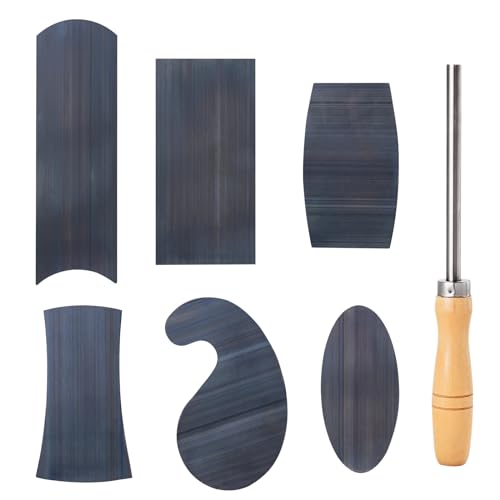
A burnisher is the tool that turns a filed edge into a cutting scraper. Lee Valley’s Veritas burnisher is the well-known one, but I couldn’t find it on Amazon, so the kit linked here is the Hermit Tools set: a burnisher packed with six scrapers in different shapes, which also gives you curved profiles to practice on. Hardness of the rod: not stated in the listing title, so check the listing against the 64 HRC rule above.
- ✅ Burnisher and six shaped scrapers in one kit
- ✅ Curved blades for profiles as well as straight ones
- ❌ Rod hardness not stated in the title
- ❌ Not a file or a stone
Best For: Anyone who can file an edge but struggles to roll a clean hook.
Bench Dog No. 80 Cabinet Scraper

Best for Long Scraping Sessions
The No. 80 is the classic body-mounted cabinet scraper: a handled holder that carries the blade, so you don’t have to bow the steel with your thumbs. Stanley made the original; the one linked here is the No. 80 pattern sold by Rockler under its Bench Dog name. Blade size and steel: not stated here, so check the listing before you buy.
- ✅ No thumb flexing
- ✅ Handles for two-handed control
- ✅ Familiar design, easy to find blades
- ❌ Bigger and heavier than a card
Best For: Larger flat surfaces like tabletops and cabinet doors.
Crown Gooseneck Scraper

Best for Curves
If you work on curved parts, a gooseneck blade gets you where a straight card can’t. Woodcraft says to expect to use it less often than a rectangular card, which is why I’d buy it second. The one linked here is the Crown 3763 gooseneck cabinet scraper. Dimensions and steel: not stated here.
- ✅ Curved edge for shaped parts
- ✅ Reaches machine marks and burns on curves
- ✅ Same burr method as a card
- ❌ Less versatile than a rectangle
Best For: Curved edges, cabriole legs and bowls.
How I Put This Guide Together
The process facts come from Woodcraft’s scraper guide and Woodworker’s Journal’s cabinet and card scraper article, both read on November 20, 2026. Product facts I could not confirm from a maker are marked as not stated. I don’t show customer ratings or prices. More on how I choose the products I recommend.
🏆 The Verdict
A card scraper beats sandpaper on figured hardwood, glue lines and the last smoothing pass before a clear finish, because it shears instead of scratching and doesn’t care which way the grain runs. It loses on large flat areas and on profiles. Buy a rectangular card set, a burnisher, and learn to file, hone and turn the burr; after that, add a handled or curved scraper only if a job asks for it.
❓ Frequently Asked Questions
What is a wood scraper used for?+
What can I use instead of a burnishing tool?+
Can I make my own card scraper?+
What are scrapers made of?+
Should you sand after using a card scraper?+
Conclusion
A card scraper is cheap, quiet and almost dust-free, and on difficult hardwood it often finishes the job faster than another round of sandpaper. The catch is the burr, so practice filing, honing and burnishing on scrap until it makes curls every time. For the jobs a scraper can’t do, my guide to sanding wood and the grit guide tell you where to go next.

