
As an Amazon Associate I earn from qualifying purchases. All claims are strictly my personal opinion.
My top pick

Griot's Garage G9 Random Orbital Polisher
A 6" DA with a 9 mm orbit, a 1,000 W motor and six speed settings: a forgiving first machine for paint correction.

Wet sanding leaves a dull, hazy surface, and a machine is what turns it back into gloss. For most people doing paint correction at home, the best car polisher is a dual-action (DA) polisher with a 6″ or 5″ backing plate and a variable speed dial, because the pad both spins and oscillates and that makes it very hard to burn paint. A rotary is faster, but it is the tool that burns edges and leaves holograms in the hands of a beginner.
Below are four DA polishers I’d put on a shortlist, a comparison table of what the makers and their listings publish, short reviews, and a plain guide to the choices that matter: orbit size, pad size, power and cord or battery. If you are still at the sanding stage, start with my guide to the right grit of sandpaper for car paint and come back when the panel is ready to polish.
Best Car Polishers: Comparison
The table lists what each maker or its authorized listings publish. Where a figure could not be confirmed on a maker page, it says “not stated” instead of a guess.
| Product | ⭐ Griot’s Garage G9 🏆 EDITOR’S CHOICE |
Porter-Cable 7424XP | Chemical Guys TORQX | Milwaukee 2684-20 |
|---|---|---|---|---|
| Image | |
 |
 |
 |
| Price | $$ | $$ | $$ | $$$ |
| Power source | Corded | Corded | Corded | Cordless, M18 |
| Orbit | 9 mm | Not stated | 9 mm | 15 mm |
| Backing plate | 6″, 5″ optional | For 6″ pads | Not stated | 5″ |
| Power | 1,000 W | 4.5 A | 800 W | Brushless, 18 V |
| Speed | 2,000-6,400 OPM, six steps | 2,500-6,800 OPM | Not stated | 2,650-5,100 RPM, 8 steps |
| Weight | Not stated | Not stated | 4.7 lb | Not stated |
| Cord | 10 ft | Not stated | Not stated | None |
| Best For | First serious polisher | Budget start | Machine and kit in one box | No outlet, M18 owners |
| Availability | Shop Now | Shop Now | Shop Now | Shop Now |
Key takeaways
- A DA polisher is the safe first buy: the pad rotates and oscillates, so heat and holograms are much harder to create than with a rotary.
- Orbit size sets how fast the machine cuts. A bigger orbit covers more paint per pass; a smaller one is easier to control on edges and curves.
- A 6″ plate covers a hood or roof faster; a 5″ plate reaches pillars, mirrors and bumpers. Many polishers accept both with a plate swap.
- Variable speed is not optional: you run slower to spread product and faster to cut.
- The pad and the compound matter as much as the machine, so budget for foam pads and a matching compound and polish.
Best Car Polishers: Reviews
Figures come from the makers’ pages and manuals where I could open them, and are marked “not stated” where I could not. I have not run any of these machines, so each pick below is chosen on published specs and the job it suits. Each one is a different answer to the same question: how do you get the haze out of a wet-sanded panel without damaging the paint?
Editor's Choice6-inch DA polisher
Griot's Garage G9
Griot’s Garage G9 6″ Random Orbital Polisher
A 6" DA with a 9 mm orbit, six speed settings and a 10 ft cord.
Check price on AmazonSpecs: Amazon listing (Creators API, November 2026)
Best for
Home users who want one polisher for a whole car.
- 9 mm orbit between control and cut
- 6" plate, 5" system optional
- Six speed settings
Skip it if
You want to work away from an outlet.
- Corded
- 5" plate sold separately
Read full review
Best DA Polisher for a First Serious Machine
The Griot’s Garage G9 is a dedicated car-care DA. Its listing gives it a 1,000 W motor, a 9 mm orbit and six speed settings from 2,000 to 6,400 OPM, with a 6″ vented backing plate on the machine and a 10 ft quick-connect cord. It converts to a 5″ pad system with an optional 5″ backing plate.
What makes it my first pick is the balance. A 9 mm orbit sits between the small orbits that are gentle but slow and the large orbits that cover more paint but ask for more care near edges. The six steps are easy to read, and 6″ pads are the size most polishing kits are built around. After a wet-sanded panel, that is the machine and pad size I would start with, then add a smaller plate for pillars and bumpers later.
Best budget6-inch DA polisher
Porter-Cable 7424XP
Porter-Cable 7424XP 6″ Variable-Speed Polisher
A simple corded variable-speed DA for 6" pads, for a first correction on a budget.
Check price on AmazonSpecs: Amazon listing (Creators API, November 2026)
Best for
Beginners on a small budget.
- Takes 6" pads
- Electronic variable speed
- Simple controls
Skip it if
You want the most motor or the lightest tool.
- Orbit not stated
Read full review
Best Budget Corded DA Polisher
The Porter-Cable 7424XP is a corded random orbit polisher with an electronic dial for variable speed. Its listing gives a 4.5 A motor, a range of 2,500 to 6,800 OPM and a counterbalance for use with a 6″ pad. The listing does not give the orbit diameter or the cord length, so I leave those as not stated rather than guess.
This is the machine to look at if the budget is tight and you want a plain DA with a speed dial and nothing else to learn. The trade-off with any simple, lower-priced polisher is the same: fewer comfort features and less torque under heavy pressure, so you let the pad and compound do the work instead of leaning on it.
Best kitDA polisher kit
Chemical Guys TORQX
Chemical Guys TORQX Random Orbital Polisher Kit
A 9 mm orbit DA sold as a 9-piece kit with the brand's pads and products.
Check price on AmazonSpecs: Amazon listing (Creators API, November 2026)
Best for
Beginners who want everything in one box.
- 9 mm orbit
- Kit with pads and products
- 4.7 lb tool
Skip it if
You already own pads and compounds.
- Speed range and plate size not stated
Read full review
Best Beginner DA Polisher Kit
The Chemical Guys TORQX (BUF503) is a random orbital polisher from a company that also makes the pads, compounds and polishes that go with it, and this listing sells it as a 9-piece kit. The listing gives an 800 W motor, a 9 mm orbit and a tool weight of 4.7 lb. It does not give the speed range or the backing plate size, so those stay as not stated.
The appeal is starting with everything in one box. A first-timer who buys a bare polisher still has to choose pads and products; a kit from one brand puts the machine, pads and products on one set of instructions. The 9 mm orbit is the same middle ground as the G9, and the lighter motor means you let the pad and compound do the work instead of leaning on it.
Best cordlessCordless DA polisher
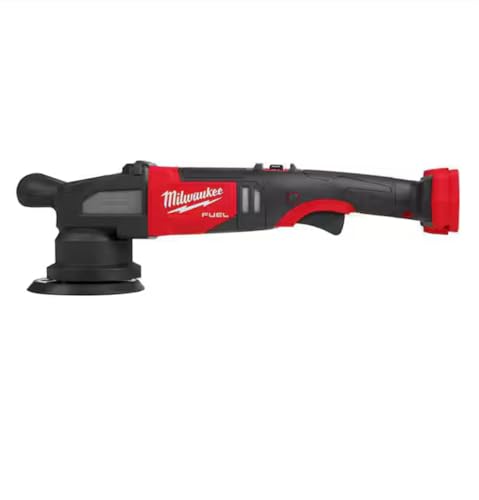
Milwaukee M18 FUEL 2684-20
Milwaukee M18 FUEL 15mm Random Orbital Polisher 2684-20
A cordless 5" DA on M18 batteries with an 8-position speed dial.
Best for
M18 owners and anyone polishing away from an outlet.
- No cord on paint
- 8-position speed dial
- M18 battery platform
Skip it if
You need a 6" plate for fast coverage.
- Tool only, battery and charger separate
- 5" plate only
Read full review
Best Cordless DA Polisher
The Milwaukee 2684-20 is the cordless option here. Milwaukee’s page lists a 5″ backing plate in the box, a 15 mm orbit in the model name and an 8-position dial covering 2,650 to 5,100 RPM. The “-20” means tool only: the battery and charger are sold separately, and it works on M18 batteries. Milwaukee’s page did not list weight, so I leave it out.
Cordless matters on a car because the cable is the thing that scratches paint when you drag it across a panel. If you already own M18 batteries, this removes both the cord and the extension lead. If you do not, price the battery and charger into the decision, because they are not in the tool-only box.
DA, Long-Throw or Rotary?
Three kinds of machine do the same job in different ways. A standard DA spins the pad on a spindle that is offset, so the pad also wobbles and never follows a single path. A long-throw or large-orbit DA does the same with a longer stroke, covering more paint per pass. A rotary spins the pad in a fixed circle, which cuts fast and builds heat quickly; in the hands of a beginner that is how paint gets burned and holograms get left behind.
For wet-sanding recovery at home, start with a DA, and before you buy any large polisher check whether its motion is rotary or random orbit, because the listing title does not always make it obvious. My full comparison is in DA vs rotary polisher: which one a first-time paint corrector should buy.
Orbit Size and Pad Size Explained
Orbit size
The orbit is the size of the small circle the pad travels. A small orbit, in the 8 to 9 mm range, is easy to control and finishes well on curves. A large orbit, around 15 mm, covers more paint per pass and cuts faster on flat panels. Neither is “better”; pick on the panels you will polish and the way you work.
Pad size
A 6″ plate covers a hood or roof in fewer passes; a 5″ plate follows pillars, mirrors and bumpers. If a machine takes both with a plate swap, you get both jobs from one polisher. A 3″ plate on a small DA is for the places neither bigger plate can reach.
Power, speed and weight
Variable speed matters more than raw power. Run the polisher slowly to spread product on the panel, then speed up to cut. A heavier machine is not worse; it pushes itself against the paint, so you spend less effort on pressure. Check the cord length and think about whether a cordless model suits the way you move around the car.
Pads and Compounds to Start With
The polisher only moves the pad; the pad and the product do the cutting. As a general rule, a firmer, more aggressive pad and a rubbing-type compound remove sanding marks, and a softer pad with a finer polish brings the gloss back. How the products differ is covered in rubbing compound vs polishing compound, which also shows which one follows which wet-sanding grit.
- Cutting pad plus compound: the first step after wet sanding, to remove the sanding scratches.
- Polishing pad plus polish: the second step, to refine the paint and restore the gloss.
- Finishing pad plus fine polish or wax: a last pass if the panel needs it.
Wet-sanding the clear coat first is its own skill, and the order matters: see my guide to wet sanding clear coat before you reach for the polisher, and my picks for the best sander for auto body work if you need a sanding machine for the earlier stages.
⚠️ Edges and Body Lines Burn First
Paint is thinnest on edges, body lines and panel corners, and that is where a polisher burns through first. Keep the pad flat, keep it moving, avoid tilting it onto an edge and start on a test spot before you commit to the whole panel.
How I Chose These Car Polishers
I started from what people ask about polishing cars: which polisher is best for home use, whether a DA and an orbital polisher are the same thing, and what professionals use. Then I shortlisted polishers from established makers with a published orbit, plate size and speed range, or a clear way to confirm them. I have not run these machines myself. The picks come from the makers’ published specs, and a figure that I could not find on a maker page is marked as not stated. The criteria, in order:
- Dual-action motion: a DA first, because it is the forgiving tool for a first correction.
- Orbit and plate size: a spread from a middle 9 mm orbit to a large 15 mm orbit, on 5″ and 6″ plates.
- Power source: corded and cordless, because the right answer depends on where you polish.
- Ecosystem and accessories: plates, pads and cords you can buy for each.
I do not show star ratings or prices: prices change daily, so each pick carries a price tier and the Amazon button shows the live price.
🏆 The Verdict
For most home paint correction, the Griot’s Garage G9 is my pick: a 6″ DA with a 9 mm orbit and six speed steps. On a tighter budget, the Porter-Cable 7424XP is the simple corded starter, and the Milwaukee 2684-20 is the cordless one if you already own M18 batteries. If you want the pads and products in the same box, the Chemical Guys TORQX kit is the easy start.
❓ Frequently Asked Questions
What is the best value-for-money car polisher?+
Is an orbital polisher the same as a DA polisher?+
Is there a difference between a polisher and a buffer?+
What do the professionals use to polish a car?+
What is the best car polisher for home use?+
Conclusion
For polishing paint at home, buy a DA, not a rotary, then spend on the pads and compound to match. The Griot’s Garage G9 is my pick for a first serious machine, the Porter-Cable 7424XP is the budget route and the Milwaukee 2684-20 is the cordless option.
If you are still sanding, my guide to how to sand a car covers the stage before polishing, and the right grit of sandpaper for car paint shows the grit steps that lead into the compound. Questions about your paint? Leave a comment below.
