
As an Amazon Associate I earn from qualifying purchases. All claims are strictly my personal opinion.
How to stain a deck in one line: strip or sand off any failing finish (stop at 60 to 80 grit), wash the boards with a deck cleaner and a brightener, let them dry until they absorb water within seconds, then apply the stain two or three boards at a time along their full length, in mild, dry, shaded weather, and wipe or brush out anything that hasn’t soaked in. The stain itself is the quick part. A deck stain fails early for the same few reasons every time: dirty or damp wood, boards sanded too smooth, the wrong weather, or too much product left on the surface.
Below is the full process the stain makers give in their data sheets, step by step: when to stain, how to prepare old and new wood, the cleaner and brightener, the moisture check, how to apply each type of stain, and the mistakes that make it peel. If you haven’t picked a product yet, start with my best deck stain comparison. Staining furniture or indoor wood is a different job, with finer grits and wipe-on stains: that’s in how to stain wood.
⚡ Quick Answer
Prep: remove old finish with a stripper or a 60 to 80 grit sanding, then scrub with a deck cleaner and neutralize with a wood brightener.
Wait: until water drops soak in within seconds, or a moisture meter reads 12% or less for oil-based stain.
Stain: in the shade, typically between 50 and 90°F with no rain due, railings first, then 2 or 3 boards at a time end to end with a stain brush or pad.
How to Stain a Deck: The Short Version
Whatever stain you buy, the job follows the same order. The makers disagree on details like coats and dry times, so the label always has the last word, but none of them skips a step here:
- Pick your weather window: mild, dry, no rain forecast, and shade on the boards.
- Clear and repair the deck: furniture off, loose boards fixed, nails set.
- Remove old, failing finish with a stripper or by sanding at 60 to 80 grit.
- Clean the wood with a deck cleaner and a stiff brush, then rinse.
- Brighten with an oxalic acid wood brightener to neutralize the cleaner and open the pores.
- Let it dry until it passes the water test or reads dry on a moisture meter.
- Protect the surroundings: plants, siding, concrete.
- Stain railings and stairs first, then the deck boards, a few at a time along their full length.
- Remove what doesn’t soak in, apply a second coat only if the label calls for it, and keep off the deck until it’s dry.
When to Stain a Deck: Weather and Timing
The weather decides more about how long a deck stain lasts than the brand does. Every data sheet sets limits on temperature, sun and rain, and they vary enough between products that it’s worth reading yours before you plan the weekend.
Best Time of Year to Stain a Deck
Spring and fall are the easiest seasons: DEFY says so directly, and puts the ideal below 80°F. Summer works if you stain early in the morning or in the evening, which is what TWP recommends in very hot, sunny weather, and in the afternoon after a heavy dew. Late fall gets tricky with water-based and slow-drying oil stains, because the nights fall below the minimum temperatures the makers set for the 24 to 48 hours after you apply.
Temperature, Sun and Rain by Product
These are the application limits from each maker’s data sheet or product page:
| Stain | Temperature | Rain and sun |
|---|---|---|
| Cabot Australian Timber Oil | 50°F or above, and staying above for 48 hours | Not in direct sun, not on hot surfaces, not when rain is imminent |
| Sikkens ProLuxe SRD | 50 to 90°F | No rain, snow, heavy dew or below 40°F for 48 hours; not in direct sun |
| Thompson’s WaterSeal | Above 50°F during and for 48 hours after | No rain forecast within 24 hours |
| DEFY Extreme | 45 to 95°F | No rain expected within 12 hours; avoid direct sun |
| TWP 1500 | No cold on the day and the day after | No rain or cold for 2 to 3 days after |
| Olympic Maximum Solid | 35°F to below 90°F, above 35°F for 24 hours | Rain-ready in 12 hours; avoid direct sun |
| Ready Seal | No restrictions | Can go on in direct sun; rain within hours is fine on dry, bare wood |
Direct sun is the limit most people break. A hot board dries the stain before it soaks in, which leaves lap marks and a surface film that wears off early. Work the shaded side of the deck first and follow the shade around, or start early.
What If It Rains After You Stain?
It depends on how far the stain has soaked in and dried. A water-based stain that has had its 12 to 24 hours is usually safe; one hit by rain within the first few hours can spot or wash off the surface and need a touch-up once dry. Ready Seal is the exception: as long as the wood was clean, bare and at 12% moisture or less and the stain wasn’t over-applied, Ready Seal says rain within hours won’t wash it away. If the forecast is uncertain, wait a day.
How Long to Wait Before Staining a New Deck
New lumber, and pressure-treated lumber above all, is wet and often has a glazed surface from the mill that stops stain from getting in. The makers’ waits differ a lot: Thompson’s asks for 30 days on new pressure-treated wood, DEFY for 3 to 6 months on new wood (kiln-dried lumber can be stained right away), and TWP for 6 to 12 months on pressure-treated and hardwoods and 4 to 6 on cedar and redwood. Ready Seal and PPG rely on a moisture reading instead of a date. Whichever you use, remove the mill glaze with a cleaner before the first coat.
Step 1: Clear and Repair the Deck
Move everything off the deck, including planters, which leave rings. Set any nails that have popped, replace or screw down loose and split boards, and sweep out the gaps between boards so water can drain. Cover plants, shrubs and grass with plastic, and wet down concrete or stone next to the deck if you’re using an oil stain; Ready Seal suggests this because the water delays penetration long enough to wipe up spills. Don’t wet the deck boards themselves.
Step 2: Remove the Old Finish
New stain can’t soak through old stain. Ready Seal, Cabot and DEFY all say their product won’t go over a previously painted, sealed or film-forming finish, so if the deck still has failing, peeling or mismatched coating, it has to come off first.
Stripping a Deck
A deck stain stripper is the fastest route on a big deck with a lot of old film. Brush it on, let it work, scrub with the grain, then rinse it off with a pressure washer at a low setting. Strippers are strongly alkaline, and that’s why the brightener in step 4 matters: Ready Seal’s protocol neutralizes a stripper with an oxalic acid solution before anything else touches the wood.
Sanding Before Staining: Stop at 60 to 80 Grit
Sanding removes the gray, loose fibers and patches of old finish a wash leaves behind, and it’s the only way to fix raised grain and splinters. The rule every stain maker agrees on is don’t sand a deck fine. TWP and Ready Seal both say to sand at 60 to 80 grit, PPG’s Sikkens data sheet specifies 60 to 80 for horizontal surfaces, and DEFY warns that fine grits stop the stain from penetrating. Sanding a deck to 120 or 150 like furniture polishes the surface shut. The full grit table and the board-by-board process are in my guide on how to sand a deck, and the sanders that do it fastest are in best sanders for deck refinishing.
Can You Stain a Deck Without Sanding?
Yes, if the deck is bare or has only a worn penetrating stain of the same type. Ready Seal actually advises against sanding, because sanding closes the pores; a good clean and brightening open them instead. Sanding becomes necessary when a cleaner can’t remove the old finish, when the grain is fuzzy or splintered, or when the makers’ prep calls for it, as PPG’s does for Sikkens SRD.
Step 3: Clean the Deck
Even a deck that looks clean carries dirt, mildew, gray UV-damaged fibers and, on new wood, mill glaze. A deck cleaner removes all of them and opens the surface so the stain can soak in evenly. Most current cleaners are oxygen bleach (sodium percarbonate) powders: DEFY’s, for example, is mixed with warm water, used within six hours, applied to damp wood with a pump sprayer and scrubbed with a stiff brush. One 2 lb container makes 5 gallons and covers 500 to 1,000 sq ft. Rinse thoroughly, by hose or with a pressure washer on a low setting: Ready Seal suggests 800 to 1,200 psi at most, and PPG 500 to 800 psi with the nozzle 8 to 12 inches away. Higher pressure tears up the grain and means more sanding.
Some makers use a bleach solution instead. Ready Seal’s own protocol uses 25% household bleach for new wood and 50% for gray old wood, and TWP’s uses one part bleach to one part water. Never mix chlorine bleach with an oxygen cleaner or with a brightener.
Step 4: Brighten the Wood
A wood brightener is an oxalic acid solution applied after the cleaner. It does three jobs: it neutralizes the alkaline cleaner or stripper, it removes the dark tannin and rust stains from nails and leaves, and it opens the pores. DEFY’s concentrate makes 5 gallons, each gallon of diluted brightener covers 100 to 200 sq ft, and DEFY says not to mix it with its own cleaner or with chlorine bleach. Apply it, let it stand, rinse, and the boards come up noticeably lighter. Cedar and redwood benefit most, because their tannins can bleed through a semi-transparent stain.
Step 5: Let the Deck Dry
This is where most deck stains are lost: they go onto wood that looks dry but isn’t. The makers give two ways to check:
- The water test. Sprinkle a few drops on several boards. DEFY says they should soak in within a few seconds; PPG allows 30 seconds to 2 minutes depending on climate. If they bead, the wood is still wet or still glazed.
- A moisture meter. Ready Seal wants a pin meter to read 12% or less (14 to 15% in very humid areas), and PPG 18% or less before Sikkens SRD. Check corners, knots and boards near the house, which dry last.
In good weather that usually means 24 to 48 hours after washing for oil stains, and Cabot asks for 24 to 48 hours after cleaning. Water-based DEFY can go on the same day, once the wood is visibly dry. Shaded decks and humid climates take longer.
Step 6: Apply the Stain
Stir the stain thoroughly, scraping the bottom of the can, and keep stirring as you work, because the pigment settles. If the job needs more than one container, mix them together first: Cabot and Ready Seal both say so, to keep the color even from board to board. Test the color on a hidden board before you start.
Railings, Stairs and Edges First
DEFY’s directions start with the railings, benches and the undersides of upper decks, then move to the floor. It’s the right order for any stain: drips from the railings land on boards you haven’t stained yet, and you won’t kneel on finished work. Stain the board ends too; end grain soaks up water fastest.
Brush, Roller, Pad or Sprayer?
A stain brush pushes stain into the grain and is the tool PPG prefers for Sikkens SRD. A stain pad covers one deck board per pass and is the quickest way to keep a wet edge. A roller works with oil stains like Ready Seal, though DEFY doesn’t recommend one for its water-based stains, since rollers leave a stippled surface and push stain around instead of in. A sprayer is fastest on railings and balusters, but Cabot, Olympic, DEFY and TWP all tell you to back-brush right after spraying (Ready Seal is the exception), so it saves time on application, not on brushing. On the deck boards, most people get the best result with a pad or brush.
Work Two or Three Boards at a Time
Lap marks happen when wet stain overlaps stain that has already dried. To avoid them, Cabot says to work 1 to 3 boards at a time from one end to the other, and TWP says to finish 2 or 3 continuous board lengths and never stop in the middle of a board. Keep a wet edge, brush out puddles and drips as you go, and don’t let stain pool in the gaps.
One Coat or Two?
Follow the label, because it changes from one product to the next. Cabot Australian Timber Oil, Sikkens SRD and Thompson’s are one-coat stains. Ready Seal goes on as two light coats. DEFY and TWP apply the second coat wet-on-damp or wet-on-wet, within 10 to 30 minutes, and only on wood that absorbed the first; on dense woods, both say one coat is all it will take. Solid stains like Olympic Maximum go on as two thin coats a few hours apart.
Remove What Doesn’t Soak In
Penetrating stains protect from inside the wood, not on top of it. TWP tells you to remove any excess 30 to 60 minutes after the last coat with a dry cloth, brush or pad, and Penofin’s data sheet for its Red Label oil says to wipe the surface after 20 to 30 minutes. Stain left on the surface stays tacky, turns glossy and peels. DEFY’s rule is the easiest to remember: a flat stain that dries shiny was over-applied.
Step 7: Let It Dry and Cure
Dry times range from a few hours to three days. DEFY needs 24 hours before use, Olympic Maximum 24 to 48 hours before foot traffic or furniture, Sikkens SRD 48 hours to light foot traffic and 72 to full service, and Cabot Australian Timber Oil 24 to 48 hours to dry. Ready Seal dries within hours on properly prepared wood, but takes up to 14 days to cure and reach its final tone. Wait a few days before putting rugs back, and soak oily rags in water in a sealed metal container before throwing them away: TWP, PPG and Penofin all warn they can catch fire on their own.
How Much Stain Do You Need?
Coverage runs from about 100 sq ft per gallon (DEFY Extreme, two coats) to 600 (Cabot Australian Timber Oil on smooth boards), and weathered wood sits at the bottom of every range. Measure the deck boards, add the railings and stairs, and divide by your stain’s rate for each coat, or let my deck stain calculator do it with the makers’ figures. Buy it all at once so the color matches.
⚠️ Common Deck Staining Mistakes
Staining in direct sun or on hot boards. Staining wood that hasn’t dried, or new treated lumber too soon. Sanding to 120 grit or finer. Putting a penetrating stain over old film-forming finish. Over-applying and leaving the excess on the surface. Stopping halfway along a board. Skipping the brightener after a stripper. Each one is in the makers’ instructions as a cause of peeling, blotches or a short life.
The Kit for Staining a Deck
Apart from the stain itself (my picks are in the best deck stain comparison) and a sander for the prep, this is what makes the job easier. Specs are from each maker’s site or, where the maker doesn’t publish them, the Amazon listing.
DEFY Wood Cleaner
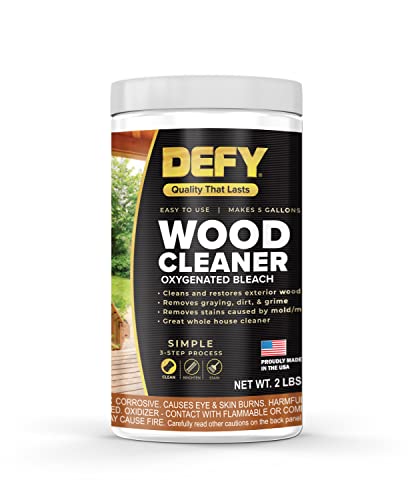
Best Deck Cleaner Before Staining
An oxygen bleach powder (sodium percarbonate) that you mix with warm water: a 2 lb container makes 5 gallons and cleans about 500 to 1,000 sq ft. DEFY says it removes graying, mildew stains and mill glaze, won’t harm wood fiber, grass or most plants, and doesn’t need a pressure washer if you scrub with a stiff brush. Use the mix within six hours.
- ✅ Removes mill glaze from new boards
- ✅ Safe around most plants
- ❌ Needs scrubbing on horizontal surfaces
Best For: Gray, dirty or new decks before any stain.
DEFY Wood Brightener

Best Wood Brightener
A liquid oxalic acid concentrate that makes 5 gallons, with each diluted gallon covering 100 to 200 sq ft. It brings the wood back to a neutral pH after a cleaner or stripper, removes tannin and rust stains, and opens the pores, which DEFY says helps its stains absorb. Apply it after the cleaner, never mixed with it.
- ✅ Neutralizes cleaners and strippers
- ✅ Removes tannin and rust stains
- ❌ An extra step and an extra rinse
Best For: Cedar and redwood decks, and any deck that was stripped.
General Tools MMD4E Pin Moisture Meter
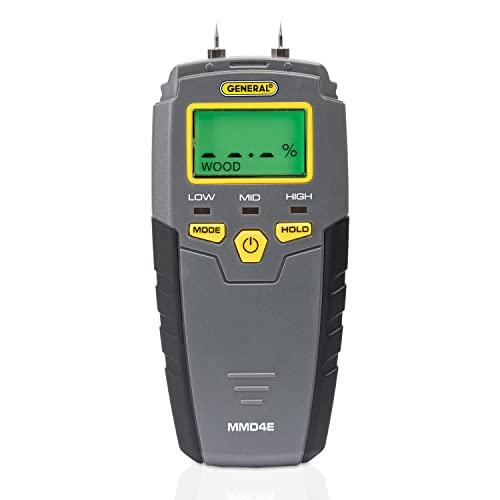
Best Way to Know the Deck Is Dry
Ready Seal calls checking the moisture content one of the two most critical steps for its stain, and says an entry-level meter is enough. This pin meter reads 5 to 50% moisture in wood on a backlit display, with low, medium and high tones, a hold button, spare stainless steel pins and a cap that doubles as a calibration check, according to its listing. Push the pins into a few boards, including the shaded ones, and stain when they read 12% or less.
- ✅ Takes the guessing out of dry time
- ✅ Reusable at every maintenance coat
- ❌ Leaves two small pin holes
Best For: Oil-based stains and humid climates where “looks dry” isn’t dry.
Wooster Bravo Stainer 5-1/2″ Deck Stain Brush
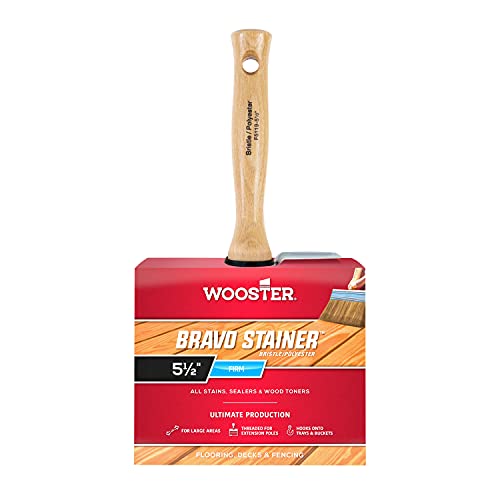
Best Deck Stain Brush
A wide stain brush for both oil-based and water-based stains and sealers. The listing describes a white China bristle and polyester blend with a square trim, a nickel-plated ferrule and a threaded hardwood handle that takes an extension pole, so you can back-brush deck boards standing up. At 5-1/2″ wide, it matches the actual width of a standard 6-inch deck board.
- ✅ Works with oil and water-based stains
- ✅ Threaded handle for an extension pole
- ❌ Slower than a pad on open boards
Best For: Back-brushing and stains whose maker prefers a brush.
Cabot 6″ Stain Applicator Pad
Best Applicator for Deck Boards
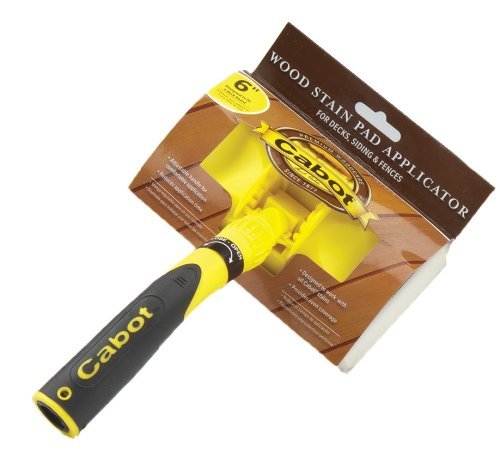
Cabot lists stain pads among its application methods, and a 6″ pad is about one deck board wide, which makes it easy to work end to end and keep a wet edge. This one is made for smooth surfaces such as deck boards and planed fence pickets, and it works with stains, sealers and other finishes. Use a brush for railings and the pad for the floor.
- ✅ One board per pass
- ✅ Even coat with less dripping
- ❌ Not for rough-sawn wood
Best For: Fast, even coats on smooth deck boards.
How I Put This Guide Together
The steps, temperatures, dry times, coats and waiting periods come from the makers’ own documents: Ready Seal’s 2023 information and protocol sheet, the TWP 1500 product data sheet, PPG’s data sheet for ProLuxe (Sikkens) SRD, Cabot’s data sheet for Australian Timber Oil, Olympic’s data sheet for Maximum Solid, Penofin’s Red Label sheet, and DEFY’s and Thompson’s WaterSeal product pages. The sanding grits match my deck grit guide. The kit is on sale on Amazon today; I don’t show customer ratings or prices, which change daily. More on how I choose the products I recommend.
🏆 The Bottom Line
A deck stain is only as good as the wood under it. Strip or sand off failing finish at 60 to 80 grit, clean with a deck cleaner and a brightener, wait until the boards absorb water in seconds or read 12% or less on a moisture meter, and stain in mild, dry shade, two or three boards at a time, leaving nothing on the surface.
❓ Frequently Asked Questions
What not to do when staining a deck?+
What month is the best time to stain a deck?+
Is it better to spray or roll stain on a deck?+
What if it rains 3 hours after I stain my deck?+
Do I really need to sand my deck before staining?+
How do you stain a new deck for the first time?+
Conclusion
Learning how to stain a deck is mostly learning to wait: for the right weather, for the wood to dry, and for each coat to soak in before you add more. Get the prep right, with a 60 to 80 grit sanding where it’s needed, a cleaner, a brightener and dry boards, and almost any good stain will last as long as its maker says. To choose the stain, see my best deck stain picks; to work out how much to buy, use the deck stain calculator; and if the boards need sanding first, start with how to sand a deck. Questions about your deck? Ask in the comments.

