
As an Amazon Associate I earn from qualifying purchases. All claims are strictly my personal opinion.

Wood filler and wood putty do opposite jobs. Wood filler goes into bare wood before you sand and finish: it dries hard, you sand it flush, then paint or stain over it. Wood putty goes on after the finish: it stays soft, comes pre-colored to match a stain, and you press it into nail holes and wipe off the excess with no sanding. The quick rule: bare wood, use filler; finished wood, use putty. For holes that must hold a screw or for broken corners, use a two-part or epoxy filler.
The confusion comes from the labels. Some products called “putty” harden like a filler, and some fillers are sold as “putty” in a stick. Below is a side-by-side comparison, what each product type really is, which one to use for nail holes, screw holes, stained furniture, outdoor trim and floors, and the products I’d look at, using what each maker says about its own product. For more fillers by type of repair, see my best wood filler picks.
⚡ Quick Answer
Nail holes in trim or furniture that’s already finished: a color-matched putty such as Minwax Wood Putty.
Holes, dents and cracks in bare wood before painting or staining: a filler such as DAP Plastic Wood-X.
Broken corners, rot and screw holes: a two-part epoxy such as J-B Weld KwikWood.
Wood Filler vs Wood Putty at a Glance
| Feature | Wood Filler | Wood Putty |
|---|---|---|
| When you use it | Before sanding and finishing, on bare wood | After staining and topcoating |
| Does it harden? | Yes, dries hard | No, stays soft (oil-based putties and wax sticks) |
| Sanding | Sanded flush once dry | Not sanded; excess is wiped off |
| Color | Natural or tinted, painted or stained after | Pre-colored to match stains |
| Paint and stain over it | Paintable; stain results vary, test first | No: DAP says its putty can’t be painted, stained or coated |
| Indoor or outdoor | Many are both, painted or coated outdoors | Mostly indoor (DAP: interior only) |
| Hole size | Nail holes to cracks; deep holes in layers | Nail holes, small scratches and gouges |
| Holds a screw | Some do (DAP Plastic Wood-X, epoxies) | No |
| Cleanup | Water for latex fillers | Mineral spirits for oil-based putty |
| Examples | DAP Plastic Wood-X, Minwax Stainable, Gorilla, Bondo, KwikWood | Minwax Wood Putty, DAP Plastic Wood Putty, Minwax Blend-Fil |
What Is Wood Filler?
Wood filler is a paste (or a powder you mix) that fills holes, dents, cracks and gouges in raw wood, dries hard, and becomes part of the surface you sand and finish. Because it hardens, it can be shaped, and the stronger ones can be drilled and screwed into. There are three main kinds.
Water-Based (Latex) Fillers
The tubs and tubes you find in every hardware store. Minwax Stainable Wood Filler is a latex filler for “unfinished indoor and outdoor wood surfaces”; Minwax says not to use it on holes larger than 3/4″ and to fill deeper holes in 1/4″ layers, letting each dry 2 to 6 hours. DAP Plastic Wood-X with DryDex goes on pink and turns natural when it’s dry, so you know when to sand, and DAP says it can be sanded, planed, cut, drilled, screwed or nailed. Gorilla Wood Filler dries in about an hour in shallow holes, cleans up with soap and water, and can go outdoors if it’s coated with exterior paint.
Two-Part and Epoxy Fillers
For damage that has to be rebuilt, not just filled. 3M Bondo Wood Filler is a two-part filler you mix with a hardener. J-B Weld KwikWood is a hand-kneaded epoxy putty in a stick: 15 to 25 minutes of working time, and after 60 minutes J-B Weld says it can be machined, drilled, tapped, sanded and painted. These cure harder than latex fillers, don’t shrink back out of deep holes, and suit missing corners, rotted spots and screw holes that have to hold.
Powder Fillers (“Water Putty”)
Durham’s Rock Hard Water Putty is the product that causes most of the confusion. Its maker calls it “a powder wood filler”: you mix about 3 parts powder to 1 part water, it sets fast, and it can be sawed, chiseled and sanded once it’s hard (Durham’s suggests about 8 hours before sanding). It dries a cream color and, in Durham’s words, “will NOT take most surface stains,” so it’s a filler for painted work, not for stained wood.
What Is Wood Putty?
Wood putty is a soft, pre-colored compound for hiding small holes and blemishes in wood that is already finished. It never cures hard, which is the point: trim and furniture move a little, and putty moves with them instead of cracking out.
Oil-Based Putty
Minwax Wood Putty is a “non-hardening, pre-mixed putty color-matched to Minwax Wood Finish stains.” Minwax’s instructions are clear on the order of work: stain and topcoat first, then press the putty in and wipe off the excess, and it “will not harden to a sandable surface.” DAP Plastic Wood Wood Putty is the same idea: DAP’s data sheet describes it as a non-hardening putty “for prefinished interior surfaces after assembly and finishing,” based on a blend of vegetable and mineral oils, interior use only, and it states the product “cannot be painted, stained or coated.” It needs 24 to 36 hours to dry, and tools clean up with mineral spirits.
Wax Sticks and Pencils
Wax fill sticks such as Minwax Blend-Fil pencils are the quickest putty of all. Minwax sells them for “scratches and nail holes in stained and finished wood”: pick the color closest to the stain, rub it into the hole, and wipe away the excess. Colors can be blended for a closer match.
The Name on the Can Isn’t the Test
Durham’s is called a putty and hardens like a filler. KwikWood is sold as an “epoxy putty” and cures hard enough to drill and tap. Meanwhile many people call any wood filler “putty.” So ignore the name and ask two questions instead:
- Does it harden? If it dries hard and you sand it, it behaves like a filler.
- Does it go on before or after the finish? Before means filler. After means putty.
The answers are always on the product’s own label or data sheet, and they decide whether you can sand, paint or stain over it.
Which One to Use, Repair by Repair
Nail Holes in Finished Trim and Furniture
Putty. Press a color-matched putty or wax stick into each hole after the finish is dry, and wipe off the excess. No sanding, no touching up the finish around it. This is exactly what Minwax Wood Putty, DAP Plastic Wood Putty and Blend-Fil pencils are for.
Nail and Screw Holes Before Painting
Filler. On trim and cabinets that will be painted, fill each hole with a latex filler, let it dry, sand it flush and prime. Overfill slightly and sand it back: a second skim is faster than a dimple showing through gloss paint.
Screw Holes That Have to Hold a Screw
Neither soft putty nor a light latex filler. Use a filler whose maker says it can be drilled and screwed, such as DAP Plastic Wood-X, or an epoxy like KwikWood. For stripped holes in hinges, a glued-in hardwood dowel or toothpicks is the traditional fix and is stronger than any filler.
Cracks and Gouges in Wood You’ll Stain
This is the hard case. Fillers rarely take stain exactly like the surrounding wood. DAP’s advice for Plastic Wood-X is to stain first and fill afterward, and Minwax tells you to test the stain over its Stainable Wood Filler on a scrap before you commit. The cleanest result usually comes from staining and finishing the piece, then hiding the hole with a color-matched putty or wax stick.
Outdoor Trim, Siding and Decks
Filler, and paint it. Minwax Stainable, DAP Plastic Wood-X and Gorilla are all rated for outdoor use, with Gorilla and DAP asking for an exterior paint or coating over the repair. Oil-based putty is out: DAP limits its putty to interior use. For rot, cut out the soft wood and rebuild with a two-part filler.
Hardwood Floors
For nail holes in a floor that’s already finished, a matching putty or wax stick is the easy fix. Before sanding and refinishing, fill nail holes and small dents with a filler and sand it with the floor. Wide gaps between boards are a different problem: boards open and close with the seasons, and a hard filler pressed into the gaps tends to crack out.
Cabinets and Furniture
Painted cabinets: filler before priming. Stained cabinets and furniture: finish first, then putty or wax for the small holes, and an epoxy for broken edges or corners.
How to Use Wood Filler and Wood Putty
Wood Filler, Step by Step
- Clean out loose fibers and dust from the hole.
- Press the filler in with a putty knife, slightly proud of the surface. Fill deep holes in layers, as the maker directs (Minwax: 1/4″ at a time).
- Let it dry fully. DryDex fillers change color when ready; others list a dry time on the label.
- Sand flush, starting around 120 grit and finishing with the grit you use on the rest of the piece. My guide to wood fillers covers how each one sands.
- Prime and paint, or test your stain on a sample first.
Wood Putty, Step by Step
- Finish the piece completely: stain, then topcoat.
- Pick a putty color that matches, or blend two.
- Press the putty into the hole with a finger or a plastic knife.
- Wipe off the excess with a cloth, following the label (Minwax uses a damp cloth). Don’t sand it.
Wood Fillers and Putties to Consider
Minwax Wood Putty (Golden Oak, 3.75 oz)
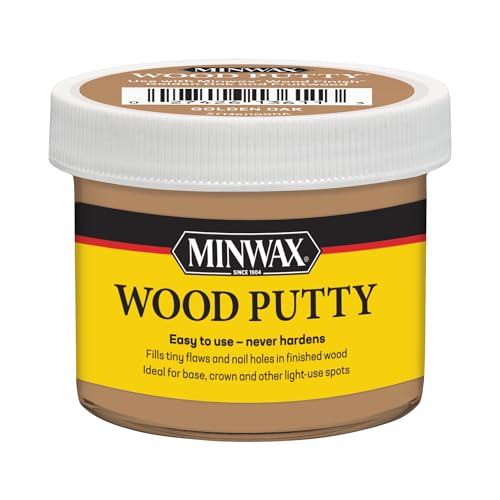
Best Wood Putty for Stained Wood
The classic non-hardening putty. Minwax describes it as pre-mixed and color-matched to Minwax Wood Finish stains, for minor scratches, gouges and nail holes. You stain and topcoat first, press the putty in, and wipe off the excess; Minwax notes it will not harden to a sandable surface, which is exactly why it doesn’t crack out of trim. Golden Oak is linked here; it also comes in other colors, such as Natural Pine.
- ✅ Matched to Minwax stains
- ✅ No sanding
- ✅ Flexes with the wood
- ❌ Can’t be sanded
- ❌ Only for small holes
Best For: Nail holes in stained trim, doors and furniture.
DAP Plastic Wood Wood Putty (Dark Walnut, 3.7 oz)

Best Putty for Prefinished Interior Wood
DAP’s data sheet describes a non-hardening putty for prefinished interior surfaces, based on a blend of vegetable and mineral oils, in 12 colors. Finish the wood first, then fill: DAP says the putty cannot be painted, stained or coated, won’t harden enough to sand, and is for interior use only. It takes 24 to 36 hours to dry, and tools clean up with mineral spirits. Deep holes may need a second application.
- ✅ Wide color range
- ✅ No sanding
- ✅ Stays flexible
- ❌ Interior only
- ❌ Can’t be painted or stained over
Best For: Prefinished paneling, molding and cabinets.
Minwax Blend-Fil Pencil (Brown Tone Medium)

Fastest Fix for Nail Holes
A fill stick for scratches and nail holes in stained and finished wood. Choose the color closest to the finish, rub the pencil into the hole until it’s filled, and wipe away the excess. Minwax says the colors can be blended for a closer match. Nothing to open, mix or clean up, which makes it the quickest way to touch up a room of trim.
- ✅ No mess, no tools
- ✅ Colors can be blended
- ✅ Pocket-sized
- ❌ Tiny holes and scratches only
- ❌ Not for bare wood
Best For: Touching up nail holes after installing finished trim.
DAP Plastic Wood-X with DryDex (16 oz)

Best Wood Filler for Bare Wood
A latex filler that changes color as it dries: it goes on pink and turns natural, so you know when to sand. DAP says it can be sanded, planed, cut, drilled, screwed or nailed, won’t shrink or crack, and works indoors and out (coated outdoors). Shallow fills dry in 2 to 6 hours and deep fills in about 36; damage deeper than 1/4″ goes in layers. If the piece will be stained, DAP’s advice is to stain before filling.
- ✅ Dry-time indicator
- ✅ Drillable and screwable
- ✅ Indoor and outdoor
- ❌ Deep fills need layers and time
- ❌ Stain match not guaranteed
Best For: Holes, dents and cracks before painting.
Minwax Stainable Wood Filler (6 oz)
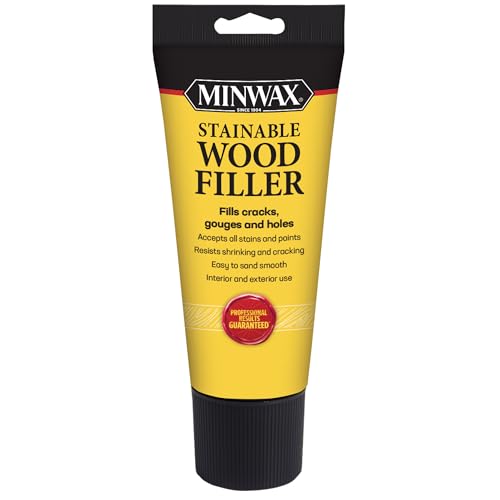
Best Filler for Wood You’ll Stain
A latex filler made to be stained and painted, for unfinished indoor and outdoor wood. Minwax says not to use it on holes larger than 3/4″, to fill deeper holes in 1/4″ layers (2 to 6 hours each), to sand it flush before finishing, and to test your stain on a scrap first, because filler and wood rarely absorb stain the same way.
- ✅ Made for staining
- ✅ Indoor and outdoor
- ✅ Clear limits from the maker
- ❌ Not for holes over 3/4″
- ❌ Stain match still needs a test
Best For: Small repairs in furniture and trim that will be stained.
J-B Weld KwikWood Epoxy Putty Stick (1 oz)

Best for Corners, Rot and Screw Holes
Called a putty, works like the strongest filler on this list. You cut off what you need and knead the two parts by hand; J-B Weld gives 15 to 25 minutes of working time, says it cures to the same density as wood, and after 60 minutes it can be machined, drilled, tapped, sanded, filed and painted. It works indoors and out and contains no solvents.
- ✅ Rebuilds missing wood
- ✅ Holds screws
- ✅ Fast cure
- ❌ Small stick for big jobs
- ❌ Short working time
Best For: Broken edges, stripped screw areas and small rotted spots.
Durham’s Rock Hard Water Putty is worth knowing for painted repairs that need to be very hard, but it doesn’t take most stains. For a full comparison of fillers by repair, including Bondo and Gorilla, see my best wood filler guide.
🏆 The Verdict
Use wood filler on bare wood, before you sand and paint: it hardens and becomes part of the surface. Use wood putty on finished wood, after the stain and topcoat: it stays soft, matches the color and needs no sanding. When the repair has to be strong, rebuild a corner or hold a screw, skip both and use a two-part or epoxy filler.
❓ Frequently Asked Questions
Does wood putty harden like wood?+
Can I use wood filler instead of putty?+
How big of a gap can you fill with wood filler?+
What are the disadvantages of using wood putty?+
When should you not use wood filler?+
Got a repair you’re not sure about? Describe it in the comments and I’ll tell you which one I’d use.

