


As an Amazon Associate I earn from qualifying purchases. All claims are strictly my personal opinion.
To remove stain from wood, strip off the clear topcoat first, then sand the stained wood back to bare fibers, and bleach whatever color is left. Stain isn’t a coating that sits on top like paint: it soaks into the wood. That’s why a chemical stripper alone usually leaves the color behind, and why the right order matters.
This guide covers the three methods (strip, sand and bleach), which one your piece needs, how to deal with dark stain that won’t budge, and how to lift the other kind of stain, the spots and rings on finished wood.
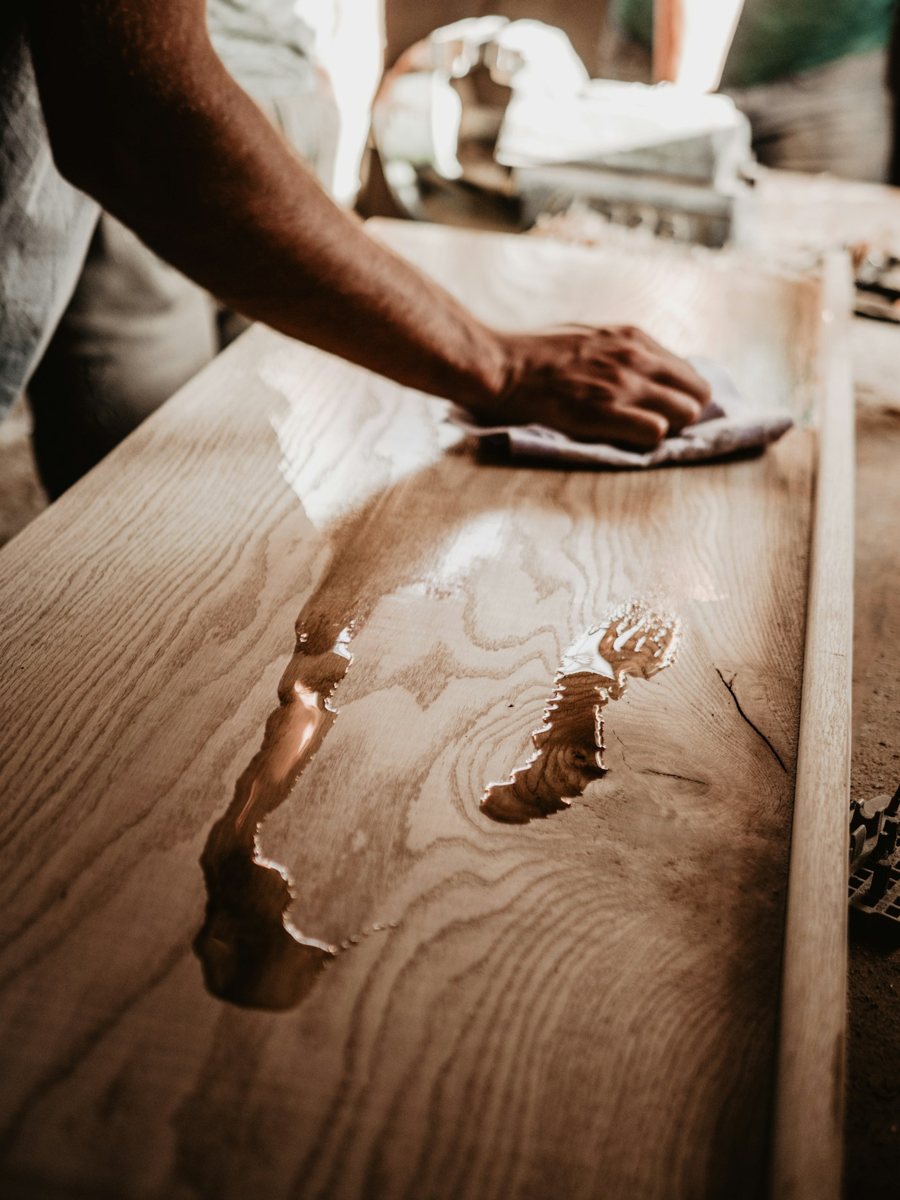
⚡ Quick Answer
Solid wood with a clear coat over the stain: strip the topcoat with a gel stripper such as Citristrip, then sand the stain out with a random orbital sander.
Veneer: strip and scrub only, then use wood bleach. Sanding goes through veneer fast.
Bare wood with no topcoat (decks, fences, raw furniture): sand it, or use a stain stripper made for decks.
What You’ll Need
The kit for a typical piece of furniture. The first three do most of the work; the sanders make the sanding part fast.
| Tool | What it does | Price | Buy |
|---|---|---|---|
| Citristrip Stripping Gel | Softens the varnish, lacquer, poly or shellac over the stain | $ | Shop Now at Amazon |
| Bahco 665 Carbide Scraper | Lifts the softened finish off flat surfaces | $ | Shop Now at Amazon |
| 3M Fine Sanding Sponge | Scrubs residue out of grain and profiles, wet or dry | $ | Shop Now at Amazon |
| Bosch ROS20VSC Random Orbital | Sands the stain out of flat surfaces fast | $$ | Shop Now at Amazon |
| DEWALT DWE6411K Sheet Sander | Gets into inside corners a round pad can’t reach | $$ | Shop Now at Amazon |
What it does
- Citristrip Stripping Gel
- Softens the varnish, lacquer, poly or shellac over the stain
- Bahco 665 Carbide Scraper
- Lifts the softened finish off flat surfaces
- 3M Fine Sanding Sponge
- Scrubs residue out of grain and profiles, wet or dry
- Bosch ROS20VSC Random Orbital
- Sands the stain out of flat surfaces fast
- DEWALT DWE6411K Sheet Sander
- Gets into inside corners a round pad can’t reach
Price
- Citristrip Stripping Gel
- $
- Bahco 665 Carbide Scraper
- $
- 3M Fine Sanding Sponge
- $
- Bosch ROS20VSC Random Orbital
- $$
- DEWALT DWE6411K Sheet Sander
- $$
Buy
- Bahco 665 Carbide Scraper
- Shop Now at Amazon
- 3M Fine Sanding Sponge
- Shop Now at Amazon
- Bosch ROS20VSC Random Orbital
- Shop Now at Amazon
- DEWALT DWE6411K Sheet Sander
- Shop Now at Amazon
Also: chemical-resistant gloves, eye protection, plastic sheeting, mineral spirits or the cleanup your stripper’s label calls for, and 80, 120, 150 and 180-grit abrasives.
First, Know What You’re Removing
Most stained furniture has two layers: the stain, which is color that has soaked into the wood fibers, and a clear topcoat over it, such as polyurethane, varnish, lacquer or shellac. Two quick checks tell you what you’re dealing with:
- Is there a topcoat? Drop a little water on the surface. If it beads and sits there, there’s a finish on top. If it darkens the wood and soaks in, the stain is exposed, which is common on decks and fences.
- Is it solid wood or veneer? Look at an edge or the end grain. If the grain on the top doesn’t continue down the edge, or you see a thin layer over plywood or particleboard, it’s veneer. Veneer can be sanded only very lightly.
Is It Better to Sand or Strip Stained Wood?
On most furniture the answer is both, in that order. A stripper is the fastest way to take off a clear topcoat, and sanding a thick poly finish is slow and clogs paper. But stripper won’t pull out much of the stain that has soaked into the fibers, so after stripping you sand to remove the color.
- Strip first when there’s a thick film finish, carved details, turned legs, or veneer you can’t sand hard.
- Sand only when the piece is solid wood with flat surfaces and a thin finish, or bare stained wood with no topcoat.
- Add bleach when stain is still in the grain after stripping and you can’t sand any deeper.
Method 1: Strip the Topcoat
Citristrip Paint & Varnish Stripping Gel

Citristrip removes varnish, lacquer, polyurethane and shellac from wood, according to the maker. It’s a gel, so it clings to legs and vertical panels, and it stays wet and active for up to 24 hours, which gives it time to work through several coats. It contains no methylene chloride and is sold for indoor use, but it still carries a California Prop 65 warning, so wear gloves and eye protection and keep the room ventilated. For other options, see my picks for the best paint stripper for wood.
How to Strip the Finish Off Stained Wood
- Set up. Work outside or with good airflow, on plastic sheeting. Remove hardware and take off drawers and doors.
- Apply a thick coat. Brush the gel on generously in one direction. Don’t brush back and forth: let it sit undisturbed.
- Wait. Follow the label and check a small spot with the scraper. When the finish lifts and wrinkles down to the wood, it’s ready. Old, thick finishes take longer.
- Scrape with the grain. On flat surfaces use a scraper held low, going with the grain so you don’t gouge.
- Scrub the details. Use a fine sanding sponge or a stiff nylon brush on carvings, spindles and grooves.
- Clean the residue. Wipe down with the cleaner your stripper’s label specifies and let the wood dry fully before sanding.
Bahco 665 Carbide Scraper
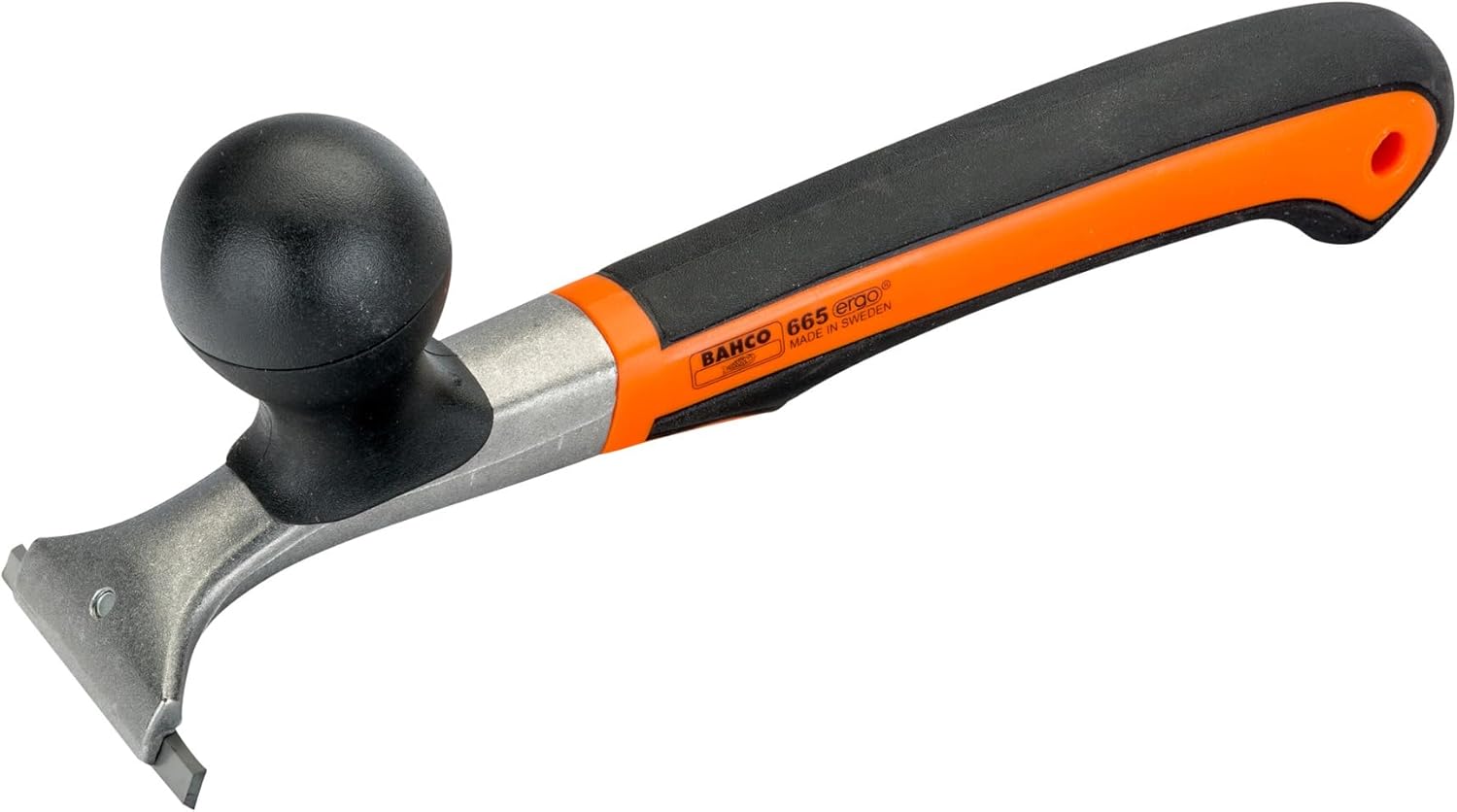
A plastic putty knife works, but a carbide scraper lifts softened finish faster and doesn’t dull. The Bahco 665 has a 2-1/2″ blade and a two-hand handle for steady pressure, and it takes four blade shapes for different profiles. Bahco says the carbide stays sharp up to 50 times longer than steel. Keep it flat and light on softwoods like pine: a carbide edge cuts wood as happily as finish.
3M Fine Sanding Sponge

For stripper residue in the grain and on curved parts, a flexible sanding sponge does what a brush can’t. This 3M fine-grit block is extra large (2-7/8 x 8 in), can be used wet or dry, and rinses clean to reuse. It also handles the final hand-sanding on legs and spindles once the piece is dry.
Method 2: Sand the Stain Out
Once the topcoat is gone, the stain left in the wood comes out with sanding. How deep it goes depends on the wood and the stain: on dense hardwoods like maple it’s often just below the surface, on open-pored oak and soft pine it goes deeper and hangs on in the pores.
The Grit Sequence
- 80 grit to cut through the stained layer on solid wood. Skip it on veneer.
- 120 grit to remove the 80-grit scratches and the last of the color.
- 150 to 180 grit to finish, before you re-stain or clear-coat.
Move one step at a time and clean off the dust between grits. The full chart is in my what grit sandpaper for wood guide.
For Flat Surfaces: Bosch ROS20VSC Random Orbital Sander

Tabletops, drawer fronts and door panels go much faster with a random orbital sander. The Bosch ROS20VSC has a speed dial from 7,500 to 12,000 OPM, so you can slow it down on veneer, and a pad dampening system Bosch designs to reduce swirl marks. Keep the pad flat and moving, and let the tool’s weight do the work. For bigger jobs, see my best sanders for furniture refinishing.
For Corners: DEWALT DWE6411K Sheet Sander

A round pad can’t reach into the inside corner of a drawer box or a frame-and-panel door, and stain left in a corner shows. A 1/4-sheet sander like the DEWALT DWE6411K (2.3 A, 14,000 OPM) has a square pad that gets right in. It clamps ordinary sandpaper, so you can cut sheets in any grit. For tighter spots, a triangular detail sander is the next step.
⚠️ Veneer Warning
Furniture veneer can be thinner than a sheet of paper. One pass with 80 grit and a power sander can burn through to the glue layer, and that can’t be fixed with filler. On veneer, strip, scrub, hand-sand lightly at 150 grit or finer, and use bleach for what’s left.
Method 3: Bleach What Won’t Come Out
When color is still trapped in the grain after stripping and you can’t sand deeper, wood bleach is the next step. There are three kinds, and each works on a different stain:
- Two-part wood bleach (A/B, sodium hydroxide and hydrogen peroxide): lightens the wood itself and most pigment and dye stains. The strongest option, used for making dark wood lighter.
- Oxalic acid: for black water marks and iron stains, the dark rings from a plant pot or a steel tool left on oak. It doesn’t lighten ordinary stain much.
- Household chlorine bleach: can remove some dye stains without changing the wood’s natural color much.
Whichever you use, follow the label, neutralize and rinse as it directs, let the wood dry completely, and sand lightly afterward because bleach raises the grain. Then finish as normal.
How to Remove Dark Stain from Wood
Dark stains, especially on oak and pine, are the hardest to remove because pigment packs into the open pores and soft earlywood. Work in this order: strip the topcoat, scrub the pores with a fine sponge or a brass brush, sand to 120 grit on solid wood, then use a two-part bleach on what’s left. Accept that open-pored woods may keep a little color in the pores: going a shade darker on the new finish hides it far more easily than chasing the last bit out.
Removing Stain from Tables, Doors and Decks
Wood Table
Strip the top and sand it with a random orbital, then treat the legs and apron by hand. The step-by-step is in my guides to sanding and refinishing a table and how to sand a table.
Wood Door
Take it off the hinges and lay it flat so the stripper doesn’t run. Panel doors have inside corners a round pad can’t reach, so use a sheet or detail sander there. See my best sanders for doors.
Deck
Deck stain has no topcoat over it and is weathered, so use a deck stain stripper made for exterior wood, or sand it off. My guide on how to sand a deck covers the process.
Removing Stains ON Wood (Spots, Rings and Grease)
Sometimes “stain” means a mark on finished wood, not the color in it. Try the gentlest fix first:
- White rings and cloudy spots are moisture trapped in the finish, not in the wood. They often fade with gentle heat (a hair dryer on low) or a light rub with a non-gel toothpaste on a soft cloth.
- Grease and grime: a few drops of mild dish soap in warm water on a damp, well-wrung cloth, then dry immediately.
- Black rings: the water has reached the wood and reacted with it. That needs the finish removed and oxalic acid, as above.
- Ink and marker: if it’s in the finish, a light rub with mineral spirits may lift it; if it’s in the wood, it’s a strip-and-sand job.
After the Stain Is Gone
Clean the dust, fill any holes with a stainable filler (see my best wood filler picks), test your new stain on the underside, then apply the finish. If you’re using polyurethane, my guide to sanding between coats of polyurethane covers the part that decides how smooth it ends up. And if the piece is painted rather than stained, the process is different: see how to strip paint from wood.
🏆 The Short Version
Strip the topcoat with a gel like Citristrip and a carbide scraper, sand the stain out with a random orbital sander on flat surfaces and a sheet sander in the corners, and bleach whatever color is left. On veneer, skip the heavy sanding. On a deck, use a deck stripper or sand. And test the new finish on a hidden spot before you commit.
❓ Frequently Asked Questions
Is it better to sand or strip stained wood?+
Is Dawn dish soap a good stain remover?+
Can you remove wood stain without sanding?+
Can you remove a stain after it’s been dried?+
How do you remove dark stain from wood?+
How do you remove stain from wood without chemicals?+
Stuck on a piece that won’t give up its color? Tell me the wood and the finish in the comments and I’ll suggest the next step.

