
As an Amazon Associate I earn from qualifying purchases. All claims are strictly my personal opinion.

To sand a bowling ball, clean the oil off first, then sand the whole ball evenly with foam-backed pads (Abralon or similar), rotating it so every part of the surface gets the same time. Lower grits (500-1000) make the ball grip the lane earlier; higher grits (3000-4000) and polish give it more length and a sharper backend. Sand with a little water, by hand or on a ball spinner, and only before league or tournament play starts.
Your bowling ball’s surface is one of the most important, and most overlooked, variables in your game. The coverstock texture controls how much friction the ball generates against the lane, which determines when it hooks, how strongly, and how it carries the pins. Over time, oil from the lanes soaks into the coverstock and fills the microscopic pores that create that friction. The ball gets shiny, the hook fades, corner pins start appearing, and no adjustment to your delivery fixes it. Sanding is the solution.
This guide covers everything: what sanding does, when to sand, what grit to use, wet vs dry, sanding by hand vs on a spinner, how to dull or polish a ball, how often you can do it, and what the USBC rules allow. The grit guidance comes from Storm’s surface adjustments guide and MOTIV’s finish guide, the maintenance intervals from Storm, MOTIV and Brunswick, and the competition rules from the USBC Playing Rules.
⚡ Quick Answer
Best bowling ball sanding pads: KR Strikeforce Abralon 4-pack, 500, 1000, 2000 and 4000 grit.
Best bowling ball sander: Bowlerstore Personal Ball Spinner, a 1/3 HP motorised spinner for home resurfacing.
Best for hand sanding: TonGass rotating ball cup plus Windspeed pads.
Clean before and after: Storm Reacta Foam; polish with TruCut Polish Plus.
What Does Sanding a Bowling Ball Do?
Sanding cuts a fresh pattern of microscopic peaks and valleys into the coverstock, and that texture decides how the ball reacts. Storm calls surface “the #1 factor in ball motion”, ahead of core design and layout, and compares it to tire grip:
- A rougher surface (lower grit number) means more friction. MOTIV explains that the larger peaks and valleys “absorb oil and create traction”, so the ball reads the lane sooner and hooks earlier and more smoothly. That’s what you want on heavy oil.
- A smoother surface (higher grit number or polish) means less friction up front. Oil beads on the surface instead of soaking in, the ball skids further down the lane, and it saves its energy for a sharper move at the back end. That’s what you want on lighter oil.
- Sanding also restores a tired ball. Resanding to the box finish removes the worn, oil-glazed track and brings back the reaction it had new.
So sanding doesn’t simply “add hook”. It changes where the ball hooks. That’s why surface adjustment is a genuine competitive tool, not just routine maintenance.
When Should You Sand Your Bowling Ball?
There are two reasons to sand, and they call for different grits and timing:
- Maintenance sanding: restoring a ball that has lost its reaction. Storm’s list of signs: the track area is visibly worn, the motion softens or becomes inconsistent, or oil extraction no longer brings the motion back. A surface that looks shiny where it used to be matte is another giveaway.
- Performance adjustment: changing the grit on purpose to match the lanes. Heavier oil patterns call for a rougher surface; lighter or drier conditions call for a smoother one so the ball doesn’t hook too early and burn up before the pins.
How Often Should You Sand Your Bowling Ball?
The makers give different intervals for different jobs, so it helps to see them side by side:
| Job | How often | Source |
|---|---|---|
| Clean the surface | After every use | Brunswick |
| Refresh a dull (sanded) finish | Every 15-25 games | MOTIV |
| Oil extraction | Once a ball has 50+ games on it | Brunswick |
| Full resurface | Every 60-80 games | Storm |
| Polished finish | Less often; finer finishes last longer | MOTIV |
MOTIV adds that the lower the grit, the more often you’ll need to maintain it. If you bowl one league night a week, that works out to a quick refresh every month or two and a full resurface a couple of times a season.
Does Your Ball Need Sanding or Just Cleaning?
Try cleaning first. Oil soaked into the coverstock deadens the reaction even when the surface texture is fine. Brunswick’s maintenance sheet recommends cleaning after every use and, once a ball has more than 50 games on it, removing absorbed oil, ideally with a pro shop’s oil-extraction machine or a warming device such as a Revivor or Rejuvenator. It also warns: “Do not use a home oven to remove oil”, because the temperature can’t be controlled and the ball may crack. Storm lists the same approved methods: pro shop detox or rejuvenator, plus a spinner resurface. A hot-water soak is a common home method, but neither maker lists it, so on an expensive ball it’s at your own risk. If the reaction still isn’t back after the oil is out, or the track is visibly worn, sand.
What Grit Sandpaper for a Bowling Ball?
Grit selection is the most important decision in bowling ball sanding, because it sets when the ball grips the lane. Storm’s surface guide runs from 180 to polish; these are the grits you’d actually bowl on:
- 500 grit: maximum early traction and the strongest early read. Storm recommends it for heavy oil, and pairs it with speed-dominant bowlers who struggle to make the ball hook.
- 1000 grit: balanced traction and control. Storm calls it a versatile benchmark and good for most house shots, and a fix when the box finish is too sharp.
- 2000 grit: “the most popular surface”, according to Storm. A smooth transition and a predictable arc on medium oil.
- 3000 grit: length with a smooth backend; cleans through the front and works on medium-to-dry lanes. Good for taming a polished ball.
- 4000 grit: length plus a strong backend for light-medium oil, and the usual base before adding shine.
- Polish: the most length and the sharpest backend. MOTIV describes polished finishes as 4000-5500 grit with polish; dull finishes as 1000-3000.
Two grits are for resurfacing only: Storm describes 180 as “heavy cut, resurfacing only” and 360 as primarily a resurfacing grit. They take out deep scratches and the track, and are always followed by finer grits. These numbers are bowling-pad grades; for how they compare with ordinary sandpaper grits, see my sandpaper grit chart.
💡 Pro Tip
Start from the box finish. MOTIV says factory finish “is always the first choice”, every ball’s product sheet lists it, and Brunswick’s first recommendation when a ball loses its reaction is to restore exactly that finish. Change one grit step at a time from there (Storm’s advice for newer bowlers too), so you can see what each change did.
Can You Sand a Pearl Bowling Ball?
Yes. A pearl’s coverstock is reactive resin like any other, so it sands the same way. If yours has a polished box finish, sanding it takes away some of its length and makes it read the lane earlier, which can be exactly what you want on heavier oil. To put it back, Brunswick’s method for high-gloss balls is to sand to 500 grit and then restore the shine with compound and polish.
How to Sand a Bowling Ball: Step-by-Step
Step 1: Clean the Ball Thoroughly
Before any pad touches the ball, clean it with a bowling ball cleaner such as Storm Reacta Foam and a microfibre towel to remove lane oil, dirt and debris. Storm’s rule is simple: clean surface = consistent sanding. Anything trapped under the pad scores the surface unevenly. Let it dry before you start.
Step 2: Choose Your Grit
For a full restoration, start at the grit that removes the track (often 500, or 180-360 if the track is deep), then work up to your target finish. For a light refresh, one pass at the target grit is enough.
Step 3: Sand Evenly, in a Pattern
Storm’s pattern: sand in overlapping circles with steady, even pressure, and rotate the ball 4-6 times so every quadrant gets the same treatment. On a spinner, Storm works the ball in four positions: grip centred on top, flipped 180 degrees, rotated 90 degrees, then flipped again, with vertical passes and a little water. The pad does the work, not force.
Step 4: Work Through the Grit Sequence
Each grit removes the scratches the coarser one left. Don’t jump from 500 straight to 4000; step through the grits in between.
Step 5: Check Coverage
Wipe the ball and look at it under good light. Storm’s warning: “Random sanding = unpredictable reaction.” The whole surface should look the same, with no shiny patches left in the track area.
Step 6: Polish (If Desired)
If you want length and backend, finish at 4000 and apply a ball polish such as TruCut Polish Plus with a clean towel or on the spinner. Polish reduces friction up front: only add it if that’s the reaction you want.
Step 7: Clean Again and Test
Remove the dust, clean the ball again, then throw some shots. Storm notes you may need a small adjustment to match the lane. Watch the first few frames: they tell you whether the change did what you wanted.
Wet Sanding vs Dry Sanding a Bowling Ball
Both work, and each has its place:
- Wet sanding: a little water on the pad or the ball. Storm’s spinner method uses “light water”, and Brunswick says to wet sand dull balls with the pad grit on the product sheet. Water lubricates the pad, keeps it from loading up, carries away heat, and gives a more even, consistent finish. It’s the default for anything from 1000 grit up.
- Dry sanding: faster cutting and more feel for what the pad is doing. Better suited to the coarse grits where speed matters more than refinement. The risk is heat and a patchy finish if you press too hard, so keep the pad moving.
For a complete restoration starting at 500 grit, I recommend a practical hybrid approach: dry sanding the initial coarse passes and switching to wet sanding from 1000 grit onwards for the refinement stages.
How to Sand a Bowling Ball By Hand
You don’t need a machine to sand a bowling ball at home. Hand sanding is slower and takes more care to keep even, but it works. What you need:
- Foam-backed bowling pads in your chosen grits, such as a 500/1000/2000/4000 Abralon set
- A spray bottle or small bowl of water
- Microfibre towels for cleaning between grits
- A ball cup, so the ball doesn’t roll and you can turn it easily

- Set the ball in the cup, finger holes up, and mark a starting point with a strip of tape so you can count rotations.
- Sand in overlapping circles over the exposed half with light, even pressure for a set time (say, 30 seconds).
- Turn the ball a quarter in the cup and repeat the same time and pressure. Work through all four positions, then flip it to reach the area under the holes.
- Spray a little water on the pad from 1000 grit up.
- Wipe and inspect before moving to the next grit. Shiny patches mean a spot was missed.
Equal time per position is the whole trick; counting seconds keeps the surface uniform, which matters more by hand than on a spinner. Change the pad when it stops cutting: a loaded pad slides and polishes instead of sanding. If you sand by hand often, the foam sanding sponges used in woodworking show the same idea: a soft backing that follows a curve.
Bowling Ball Sanding Machines and Spinners
A ball spinner is the tool that makes consistent sanding much easier. It holds the ball and turns it at a steady speed while you hold the pad, so every part of the surface gets the same treatment. Storm describes the spinner resurface as “the same method used in pro shops”. There are two kinds for home use:
- Motorised spinners, like the Bowlerstore Personal Ball Spinner (1/3 HP), are what most people mean by a “bowling ball sander”. They’re worth it if you resurface every few weeks or keep several balls.
- Rotating ball cups, like the TonGass cup, turn by hand on bearings. They don’t spin the ball for you, but they hold it steady and make turning it between positions quick.
For a deep track or heavy resurfacing, Brunswick recommends a pro shop’s resurfacing machine (it names Haus), then restoring the factory finish.
How Many Times Can You Sand a Bowling Ball?
No maker publishes a maximum number of sandings. A refresh at 2000 or 4000 grit removes almost nothing; a full resurface from 180 or 360 removes more, which is why those grits are kept for resurfacing only. MOTIV still cautions against sanding too often, because “every resurface gradually reduces the ball’s texture, eventually changing how it reacts”. What ends a ball’s life is usually not the sanding count but the coverstock: Storm’s guidance is to replace a ball when multiple resurfaces no longer help, when cracking or core separation appears, or once it has logged 300 to 600+ games. Brunswick says that combining factory-finish restoration, track resurfacing and oil removal keeps its balls reacting like new “for hundreds of games”.
How to Dull a Bowling Ball
Dulling means sanding to a lower grit. It adds friction, so the ball reads the lane earlier and hooks sooner and more smoothly: the fix when a shiny ball skids too far and hooks too late on oily lanes. Pick the grit for the amount of change you want (2000 for a mild change, 1000 for a stronger one, 500 for heavy oil), sand the whole ball evenly at that grit, and test. Go one step at a time: it’s easier to sand rougher again than to undo a surface that’s too aggressive.
How to Add Length Instead
If your ball is hooking too early and burning up before the pins, go the other way: a higher grit (3000-4000) cleans up the front of the lane, and polish adds the most length. Storm’s suggestion for rev-dominant bowlers is 3000-4000 or polish to “delay the hook, save energy for the backend”.
Can You Sand a Bowling Ball During Competition?
No. The USBC Playing Rules (2025 edition), Rule 18, say that while bowling in USBC competition a ball cannot have its surface altered by an abrasive or be cleaned with any liquid or cleaning agent, and a ball that is must be removed from competition. You may sand, polish or clean before competition starts; once anyone throws a ball for score, it’s a dry towel only. The rule also covers balls you haven’t used yet that day.
ℹ️ Sand the Whole Ball, Not Just the Track
USBC’s own answer under Rule 18 is that you can’t use an abrasive, cleaner or polish on just the track, because “USBC specifications require that the entire surface of the ball be prepared in a uniform manner.” It’s the rule and also good practice: a ball with an uneven surface reacts unpredictably.
The Best Bowling Ball Sanding Pads and Tools
KR Strikeforce Tournament Abralon Pads, 4 Grits

Best Bowling Ball Sanding Pads
The four grits most bowlers actually use, as foam-backed Abralon pads: 500 for a rough surface, 1000 for rough to medium, 2000 for medium and 4000 for a glossy surface. That covers everything in the chart above except polish and the resurfacing-only grits. Abralon’s foam backing follows the curve of the ball, so it cuts evenly where folded paper doesn’t.
- ✅ The four bowling grits that matter
- ✅ Works by hand or on a spinner
- ❌ One pad per grit
Best For: League bowlers adjusting surface between sessions.
Bowlerstore Personal Ball Spinner, 1/3 HP

Best Bowling Ball Sander for Home
A motorised spinner with a 1/3 horsepower motor, sold for sanding and polishing your own ball surface at home instead of waiting for the pro shop. It spins the ball while you hold the pad, which is what makes a spinner finish more even than hand sanding, and it’s the setup Storm’s resurfacing instructions are written for.
- ✅ Motorised: even, repeatable surface
- ✅ Sanding and polishing
- ❌ The priciest item here; worth it only if you sand often
Best For: Bowlers with several balls or a team to maintain.
TonGass Rotating Ball Cup and Towel Kit

Best for Hand Sanding
A manual ball cup on steel ball bearings in impact-resistant PETG, with a microfibre towel. It holds the ball steady and turns it 360 degrees by hand, so you can work the four positions of the hand-sanding method without the ball rolling away. TonGass lists it for plastic, urethane and reactive resin balls.
- ✅ Cheap, no power needed
- ✅ Holds the ball steady for even coverage
- ❌ You turn it; it doesn’t spin on its own
Best For: Occasional sanding and cleaning at home.
Windspeed 6+1 Pack Bowling Ball Sanding Pads

Best Budget Pads
Six sand-and-sponge pads in 500, 1000 and 2000 grit (two of each) plus a microfibre bowling towel. That covers dulling and the most popular 2000 finish, with a spare of each grit for when the first one loads up. There’s no 3000-4000, so pair it with a polish if you want length.
- ✅ Two pads per grit, plus a towel
- ✅ Budget price tier
- ❌ Stops at 2000 grit
Best For: First-time sanders adding hook on heavier oil.
Storm Reacta Foam Bowling Ball Cleaner
Best Cleaner Before and After Sanding
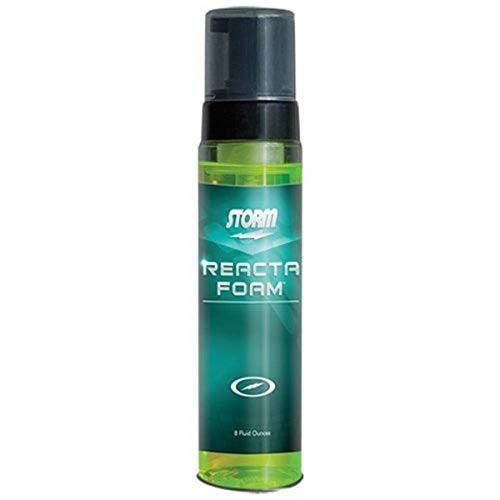
An 8 oz foaming cleaner from Storm, one of the two cleaners Storm’s own surface guide names for step one (clean the ball before you sand). Use it before sanding so oil doesn’t contaminate the pad, and after, to take off the dust before you bowl. Remember Rule 18: cleaners are for before competition starts.
- ✅ Named in Storm’s own surface guide
- ✅ Foam clings to the ball
- ❌ Small bottle
Best For: The cleaning steps before and after every sanding session.
TruCut Hand Applied Polish Plus
Best Polish for More Length
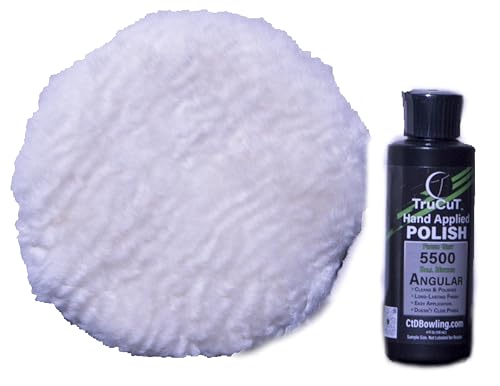
A hand-applied ball polish from Creating the Difference, made with Turtle Wax. The maker says it polishes to 6000 grit by hand or 6500 with a ball spinner, adds length and backend motion to reactive balls, and doesn’t clog the pores or affect hardness. It’s labelled for use before and after competition only, which matches USBC Rule 18.
- ✅ Works by hand, no spinner needed
- ✅ Adds length and backend
- ❌ Polish, not a cleaner: sand and clean first
Best For: Finishing a 4000-grit surface for drier lanes.
✨ The Bottom Line
Sanding your bowling ball is the cheapest way to change how it reacts. Clean it, pick the grit for your lanes (lower to hook earlier, higher to go longer), sand the whole ball evenly with foam pads and a little water, and test before changing anything else. A spinner makes the finish more even; a ball cup and patience work too. Just do it before competition, never during.
Frequently Asked Questions
Is it better to wet sand or dry sand a bowling ball?+
Can you sand a bowling ball with regular sandpaper?+
How often should you sand your bowling ball?+
What does 2000 grit do to a bowling ball?+
How can I resurface my bowling ball at home?+
Can I use an orbital sander on a bowling ball?+
Final Thoughts
Surface maintenance is one of the most effective, and most underused, tools available to any serious bowler. A correctly sanded ball matched to your lane conditions often does more for your scores than a new ball with the wrong surface. The investment is small (a set of pads, a towel, a cleaner), and the reward is a more consistent, predictable reaction.
Start by tracking your ball’s reaction over a few games, then change the surface one grit at a time. Test one adjustment at a time so you can clearly see what changed, and keep the sanding for before league night, not during it. Good luck on the lanes!
